

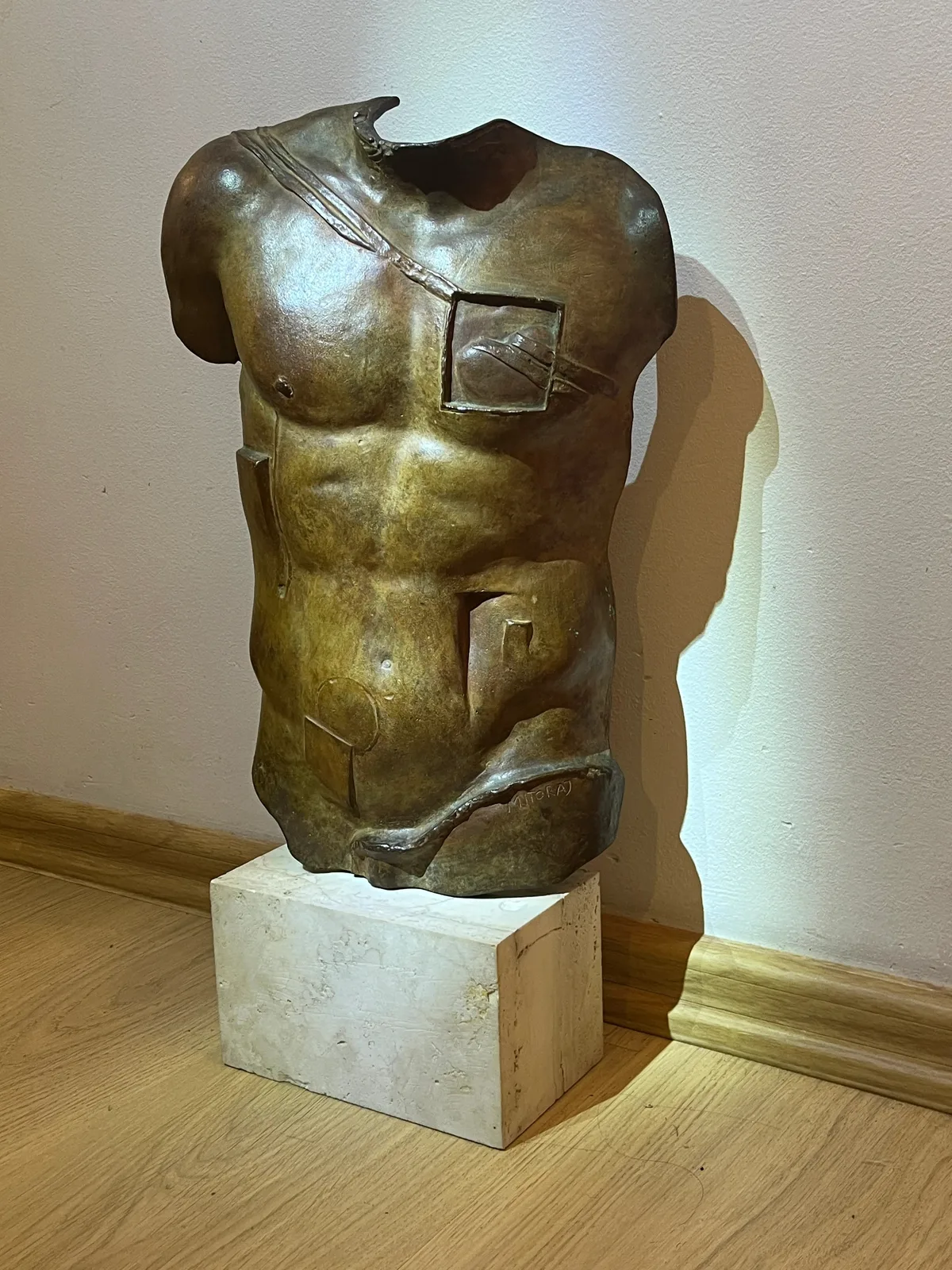
ペルセ

してWhatsAppを開き — その後
写真を直接お送りください。
ブロンズ · 1988 · エディション 1000 + HC · 3パティナ

| 作品名 | ペルセ(Perseus) |
| 素材 | ブロンズ |
| 年 | 1988 |
| エディション | 1000 + HC |
| パティナ | 茶色、緑色(2種) |
| 台座 | トラバーチン台座 |
| サイズ | 台座なし38cm · 台座込48cm |
| 署名 | トラバーチン台座にMITORAJ刻印 |
作品について
ペルセ(1988年)は、ミトライの成熟期を代表する作品です。胸と鎖骨を貫く矩形の開口部——神話的魂への窓——が特徴的なブロンズ・トルソ。アルチュリアルから1000+HCのエディションで発行されており、3つの異なるパティナ(暖かみのある茶色2種と緑色)が存在します。
アスクレピオスとの対として展示された場合、二次市場で最も求められる作品構成の一つとなります。


Persée — Technical Details
A helmet-wearing male head — the Persée is typically 25–35 cm in height in the standard edition, mounted on a separate stone or bronze base. The signature appears engraved at the base of the neck or on the lower edge, with the edition number on the reverse. The bronze surface shows Mitoraj's characteristic treatment of helmet and facial features: the helmet is resolved and detailed; the face is partially present, partially erased. Three principal patina variants are documented: warm brown (most common), green-black (oxidised, antiqued appearance), and silver (burnished, metallic). Provenance for documented examples spans private collections across France, Italy, Germany, Poland, and the United Kingdom.
The Three Patina Variants
ペルセ・エディションにおける最も重要なコレクター上の区別はパティナです。3つの主要バリアントは大きく異なる視覚的性格を表し、二次市場の価格もこれを反映しています。
ブラウン・パティナ — ケントゥリオーネやケアエディションと類似する暖かい銅褐色 — は最も一般的で、最も「クラシック」なミトライの色調です。古代のブロンズとの直接的な連続性を感じさせ、1990年代から2000年代にギャラリーの文脈でペルセに出会った大半のコレクターはブラウン・パティナ版を知っています。
グリーン・ブラック・パティナは最もドラマチックで最も希少です。深く酸化した表面は、考古学的な文脈で発見された古代ブロンズの実際の状態を想起させます — ミトライはエトルリアとローマのブロンズに深い関心を持っており、グリーン・ブラック・パティナはペルセをその視覚的伝統の中に最も明示的に位置づけます。グリーン・ブラック例は、一貫してオークションで prices than brown patina examples of comparable condition.
シルバー・パティナ — 研磨され、金属地肌が透けて見える — は視覚的に最も現代的で、コレクターの間で最も意見が分かれます。ある人には銀色が装飾的すぎると映り、他の人にとっては磨き上げられた表面と損傷した顔とのコントラストが3つの解釈の中で最も力強いものです。シルバー例は二次市場で比較的稀 than brown patina.
Persée & Asclépios — The Duo
Among the most significant presentations of the Persée subject is the Persée & Asclépios pairing — two bronze heads displayed together, the warrior-hero and the healer facing one another. Asclépios (Aesculapius in the Roman form) was the god of medicine, identified by the serpent staff that later became the caduceus. In Mitoraj's version, Asclépios is characterised by a softness and interiority that contrasts directly with the military exterior of the Persée. Together, the two heads constitute one of Mitoraj's most explicit statements about the dual nature of classical culture: force and healing, destruction and repair.
ペルセ&アスクレピオスの対は、当サイトのコレクションに記録されています。専用ページで詳細を紹介しています: Persée & Asclépios →


このコレクションの温かみのある茶色のパティナを持つペルセウス・トルソーの追加7視点を、トラバーチンの台座上で撮影。胸部と腹部の埋め込み細工、ちぎれた肩の縁、背面の取付金具など、通常のカタログ画像では読み取りにくいディテールを捉えています。
ペルセウス トルソー — 追加ビュー


ペルセウスを同じ個人コレクションの他のミトライ・ブロンズ作品と並べた5枚の写真 — 大理石台座上の小さな緑黒パティナのヘルメット頭部と、巻かれたブロンズ・トルソー。これらのグループは、ペルセウス・トルソー(40–50 cm)の相対的なスケールを伴侶作品と比較しながら、樫の床の自然光下で記録しています。
コレクション内のペルセウス


回転ビュー
売り手が競売より直接販売を選ぶ理由
最近の事例:ペルセウス(1988年)を所有するコレクターが、競売評価額€3,000を受け取りました。数字を計算した結果、代わりに私に売却しました。
| 競売 | ここで直接販売 | |
|---|---|---|
| 評価額/オファー | €3,000 | 大幅に高い |
| 売り手手数料 | −20% (−€600) | なし |
| 売り手への純額 | €2,400 | 合意価格の100% |
| 支払いまでの時間 | 売却後6〜8週間 | 即時(銀行振込または現金) |
| 売れ残りリスク | 出品料、失われた月日 | なし |
競売評価額は意図的に保守的に設定されます — オークションハウスの仕事は入札者を引き寄せることであり、あなたの収益を最大化することではありません。それに加えて、20〜25%の売り手手数料がChristie's、Sotheby's、Artcurial、Desa Unicumで業界標準となっています。決済は通常落札後6〜8週間後に行われ、その時点で作品はすでにあなたの手を離れています。ブロンズが最低価格に達しない場合、売れ残り料金も支払う必要があるかもしれません。
専門コレクターへの直接販売とは、公正な市場価値での確定オファー、引き取り時の全額支払い、完全な秘密保持を意味します。手数料の差し引きなし、待ち時間なし、売れ残るリスクなし。
この作品について質問がありますか?
AI アシスタントに質問 — コレクションのページに基づき、あなたの言語で回答。
この作品をお持ちですか?
ワルシャワを拠点とするプライベートコレクターが直接購入します。オークション手数料なし。迅速・秘密厳守・公正価格。
その他のミトライ作品も歓迎 — あらゆる主題、状態、フォーマット。
ミトライの作品を売却しませんか? 売却ページをご覧ください →