ΕΠΙΚΟΙΝΩΝΙΑ
HOME 🗺 MAP BRONZES BIOGRAPHY
CITIES
🇵🇱 Warsaw 🇵🇱 Kraków 🇫🇷 Paris 🇮🇹 Rome 🇩🇪 Bamberg ✉ Contact
Own a Mitoraj? ✉ Contact

Igor Mitoraj — Anielskie Drzwi

Kościół Jezuitów · ul. Świętojańska 10 · Warsaw Old Town · 2009

Anielskie Drzwi (Angel Doors) by Igor Mitoraj — bronze, 2009 — Jesuit Sanctuary, Warsaw Old Town

The Anielskie Drzwi (Angel Doors) are bronze entrance doors created by Igor Mitoraj for the Jesuit Sanctuary of Our Lady of Grace (Sanktuarium Matki Bożej Łaskawej) in Warsaw's Old Town. Consecrated on 12 September 2009 — the Feast of the Most Holy Name of Mary and the anniversary of the Battle of Vienna — they represent Mitoraj's most significant religious commission in his native Poland and one of the most important examples of contemporary sacred bronze in Europe.

The Commission

The doors were created for the 400th anniversary of the Jesuit church on ul. Świętojańska 10, one of the oldest ecclesiastical buildings in Warsaw's Old Town. The commission came about through an act of cultural recognition: Father Andrzej Kiełbowski, prior of the sanctuary, visited Rome in the mid-2000s and encountered Mitoraj's bronze doors at the Church of Santa Maria degli Angeli e dei Martiri — the Michelangelo-reconstructed ancient baths on the Piazza della Repubblica. Upon learning that the artist was Polish, he contacted Mitoraj directly and proposed a related commission for Warsaw. Mitoraj agreed.

The Warsaw doors are a significant adaptation of, and dialogue with, the Rome commission: the same classical-sacred vocabulary, the same fragmentation and reconstruction of the antique body, the same sense of figures emerging from ancient stone — but here addressing a specific Polish sacred narrative rather than a universal Roman one.

The Annunciation

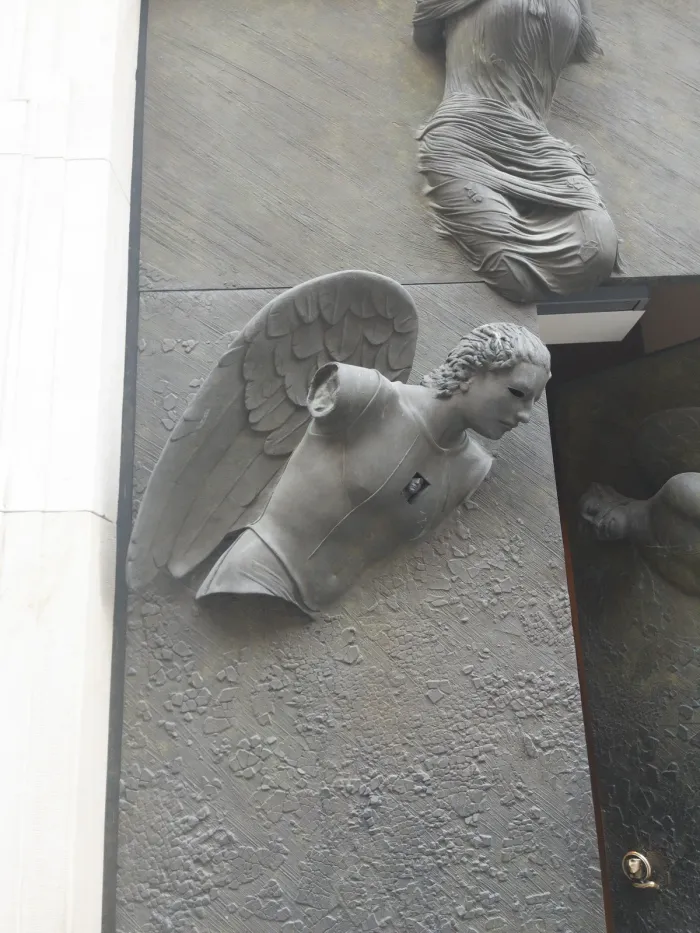
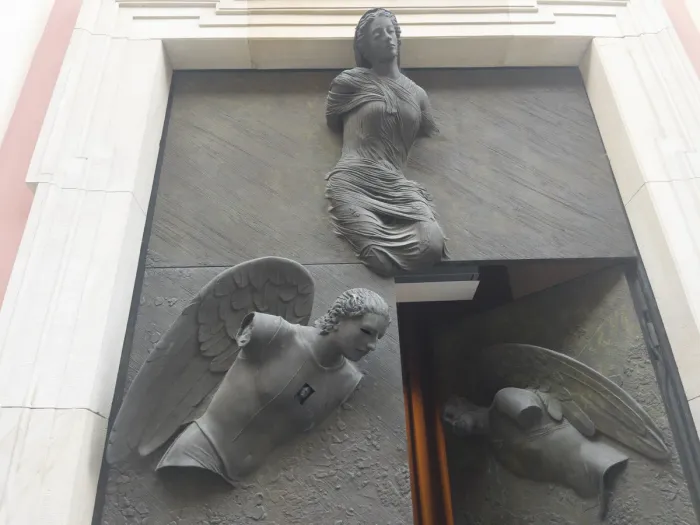
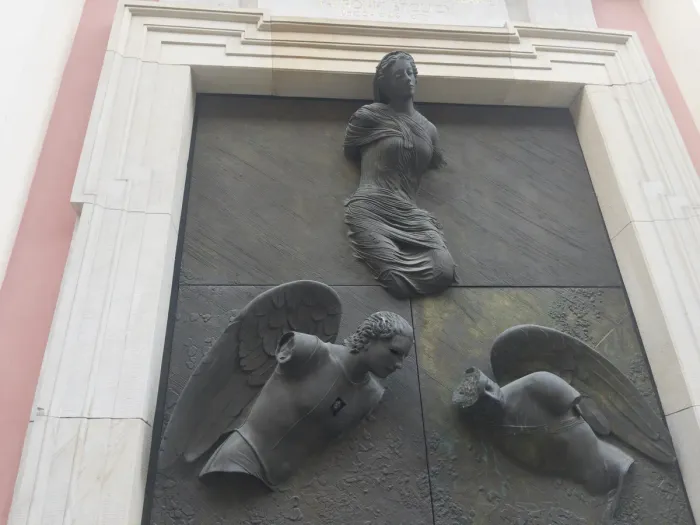
The doors depict the Annunciation of the Blessed Virgin Mary. The composition spreads across three elements — a fixed upper transom and two opening wings — bringing the viewer into the moment of divine announcement as they enter the church. The figure of Mary occupies the upper central field: slender, contemplative, her form drawn in the language of antique sculpture — upright, complete yet somehow ancient, reminiscent of the Venus de Milo in her serene self-containment. On the two opening wings, two angels hover in flight, their forms caught between movement and stillness in the way Mitoraj's figures so often are.

The result is a work that belongs simultaneously to classical antiquity and to Christian iconography — a union that was the defining project of Mitoraj's entire artistic practice. The doors frame the entrance to the sanctuary the way ancient gates framed the entrances to temples: as a threshold between the ordinary world and a space of different meaning.

Photographs — Anielskie Drzwi

Anielskie Drzwi — Mitoraj bronze doors, Jesuit Church Warsaw, full view
Full Door — OverviewBronze · Jesuit Sanctuary, Warsaw Old Town · 2009
Anielskie Drzwi — angel relief detail, Igor Mitoraj
Angel Figure — DetailRelief sculpture · hovering angel wing
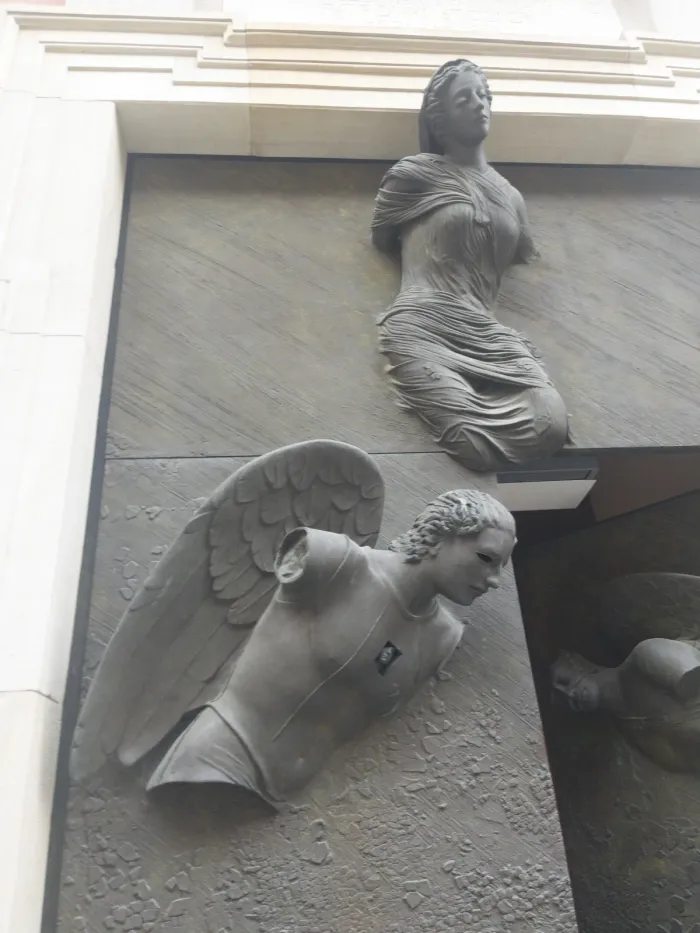
Anielskie Drzwi — Virgin Mary figure, Mitoraj bronze
Mary — Upper FieldCentral figure · classical antique form
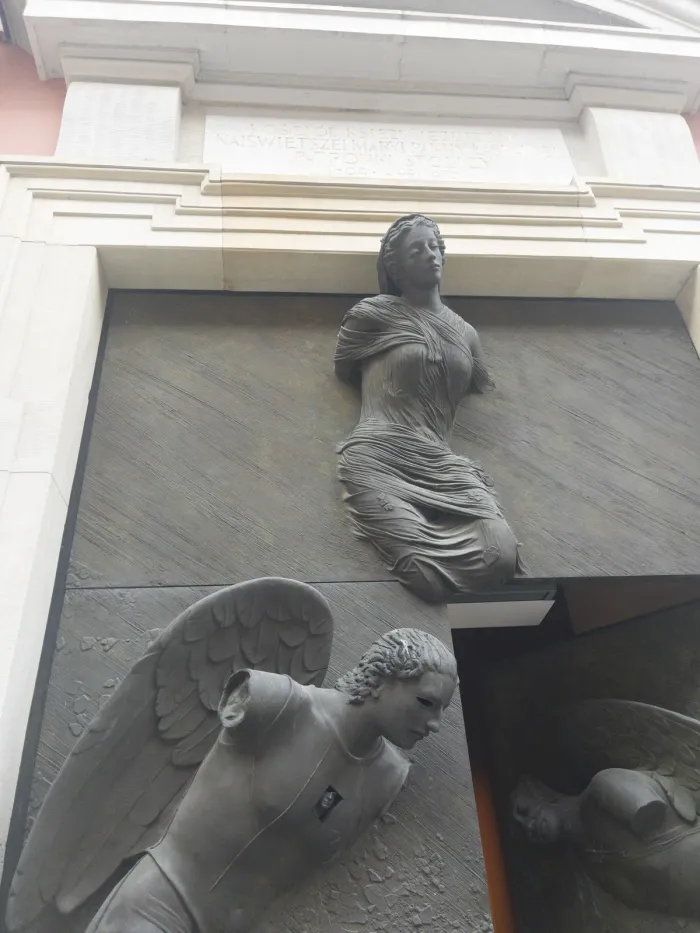
Anielskie Drzwi — door panel relief, Mitoraj Warsaw 2009
Door Panel — ReliefOpening wing detail · figural composition
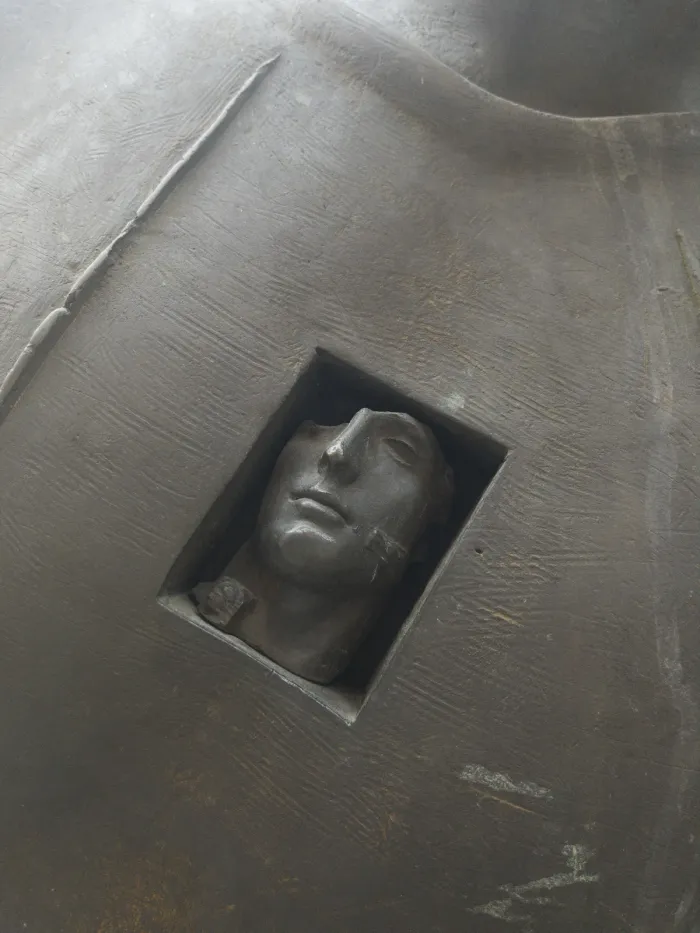
Anielskie Drzwi — Mitoraj bronze, Jesuit Church portal
Church Portal ViewDoors in architectural context
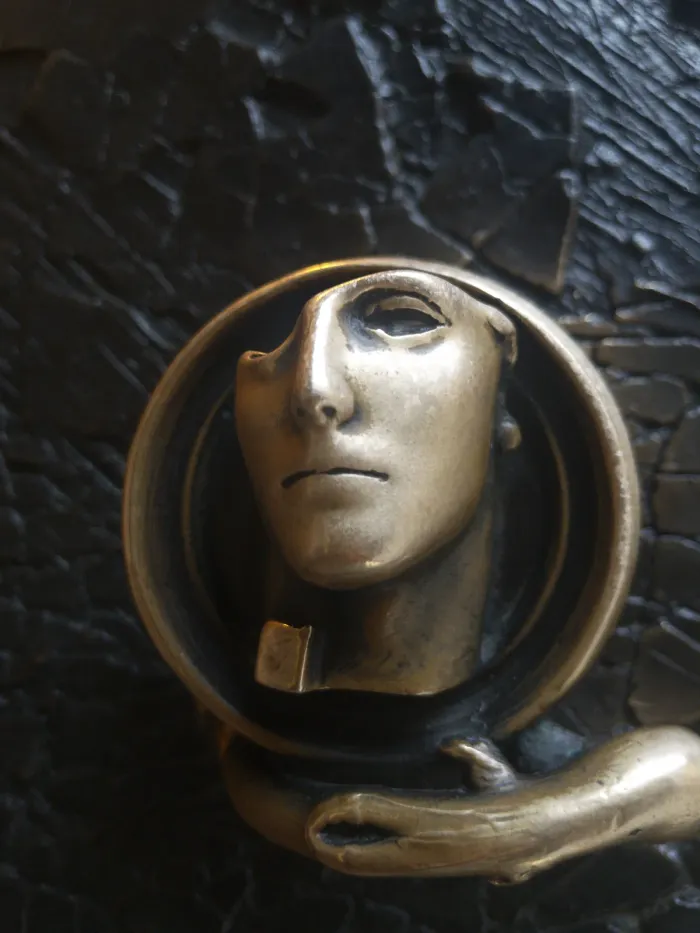
Mitoraj angel doors Warsaw — bronze relief close-up
Relief Close-upBronze surface · Mitoraj figural detail
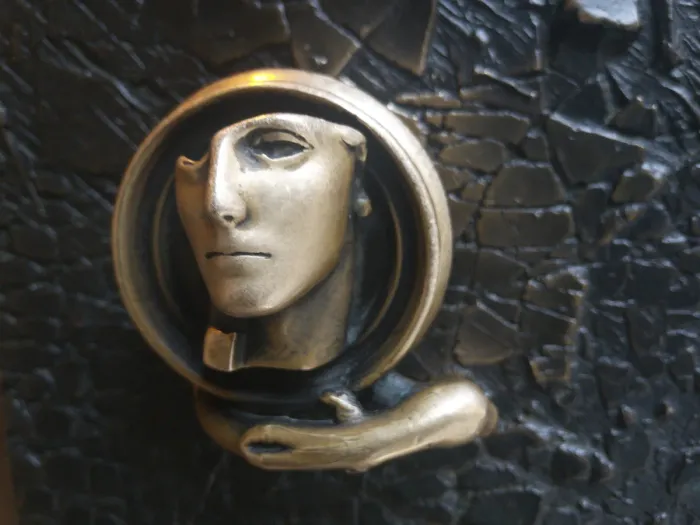
Mitoraj Warsaw Jesuit church — exterior with doors
Church Exteriorul. Świętojańska 10 · Warsaw Old Town
Anielskie Drzwi — left door panel detail, Mitoraj
Left Wing — PanelAngel in motion · Annunciation composition
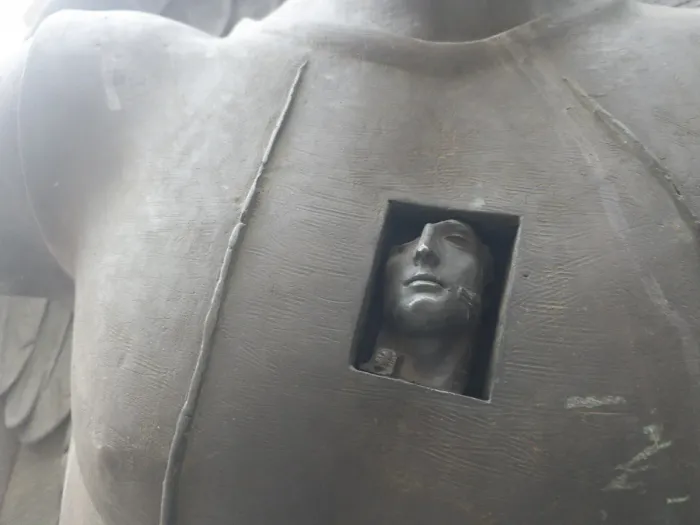
Mitoraj doors Warsaw — bronze casting detail
Bronze Casting DetailPatina and surface texture
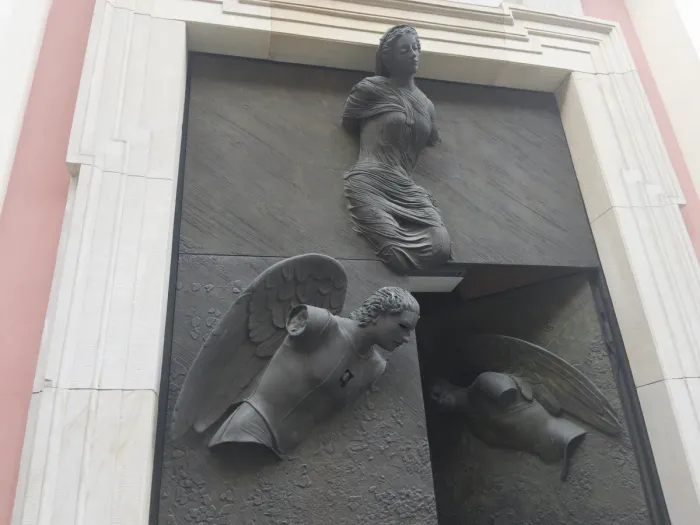
Anielskie Drzwi — architectural setting, Jesuit Sanctuary Warsaw
Architectural SettingSanctuary portal · Old Town context
Mitoraj Warsaw Jesuit church — doorway view
Doorway ViewApproaching the portal
Anielskie Drzwi — Mitoraj signature detail
Exterior DetailBronze and stone · Old Town Warsaw
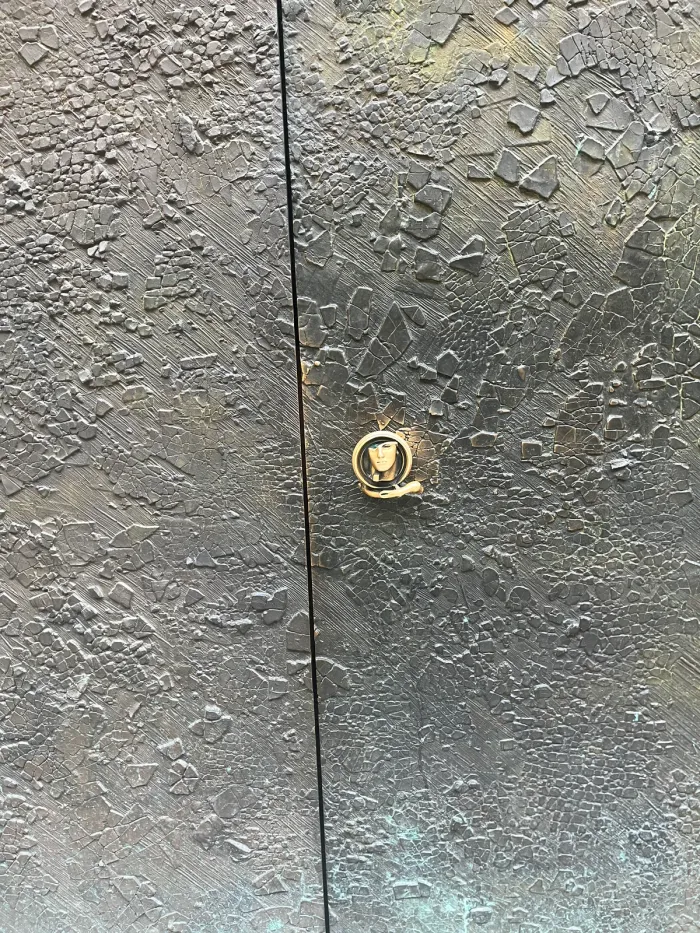
Anielskie Drzwi — brass door handle and bronze surface texture, Mitoraj 2009
Door Handle DetailBrass fitting · bronze surface texture
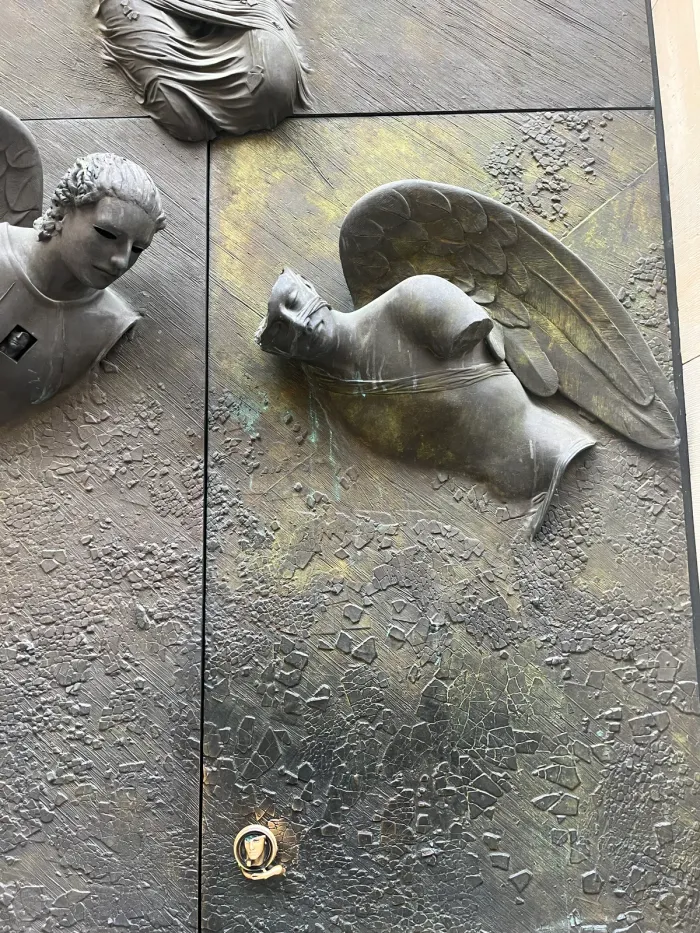
Anielskie Drzwi — two angel reliefs, upper door composition, Mitoraj Warsaw
Upper Composition — Two AngelsRelief figures · upper door area
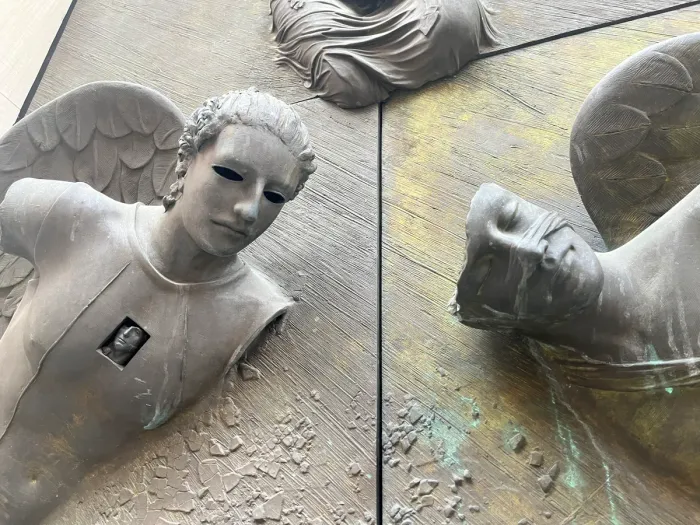
Anielskie Drzwi — angel face with hollow eyes, Mitoraj bronze door detail
Angel Face — Hollow EyesClassical features · bronze relief
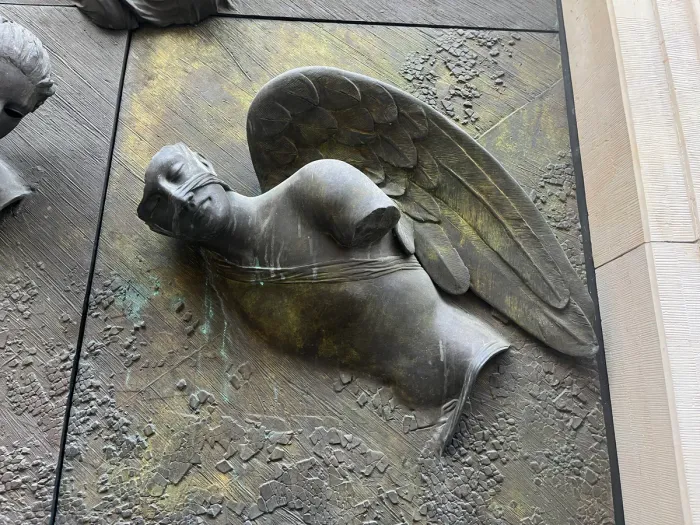
Anielskie Drzwi — flying angel, full relief figure, Mitoraj Warsaw Jesuit church
Flying Angel — Full FigureAngel in flight · complete relief
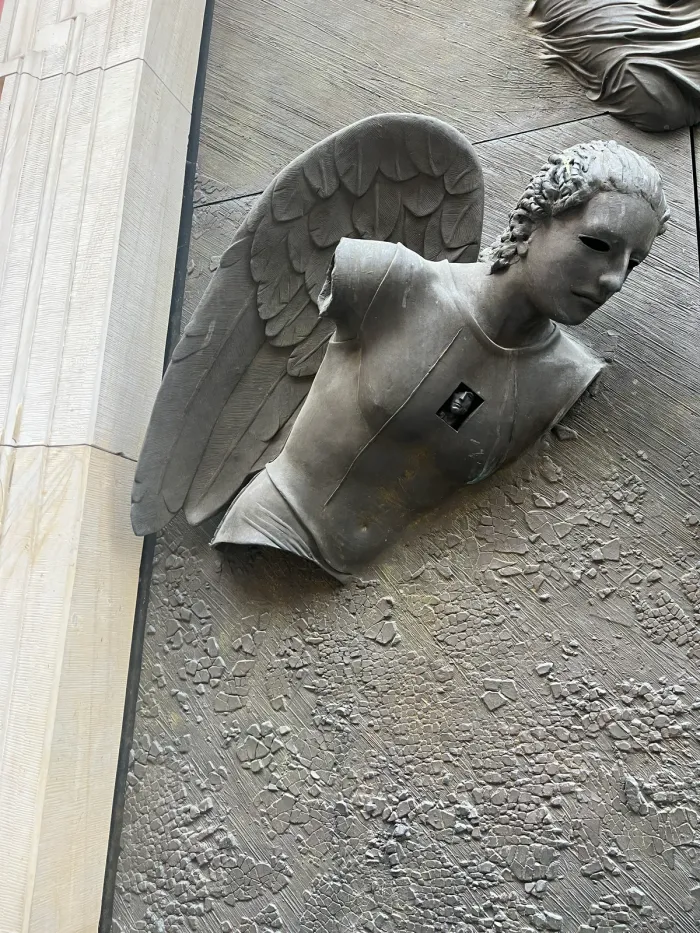
Anielskie Drzwi — angel torso and bust, Mitoraj bronze door, Warsaw
Angel — Torso DetailBronze relief · figure fragment
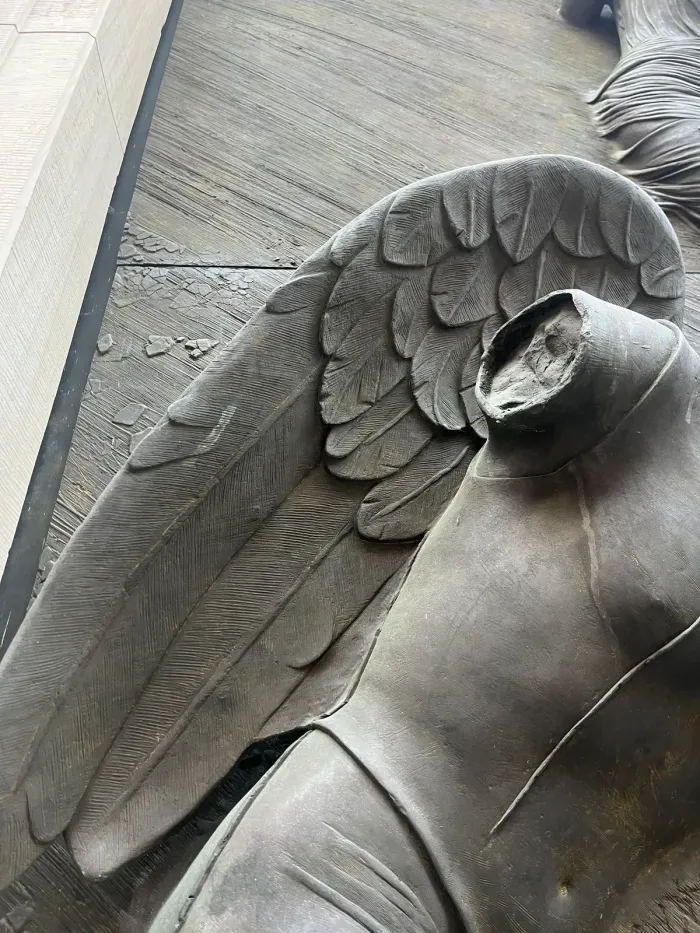
Anielskie Drzwi — wing feather detail, Mitoraj bronze casting, Warsaw 2009
Wing Feathers — Close-upBronze casting · feather texture
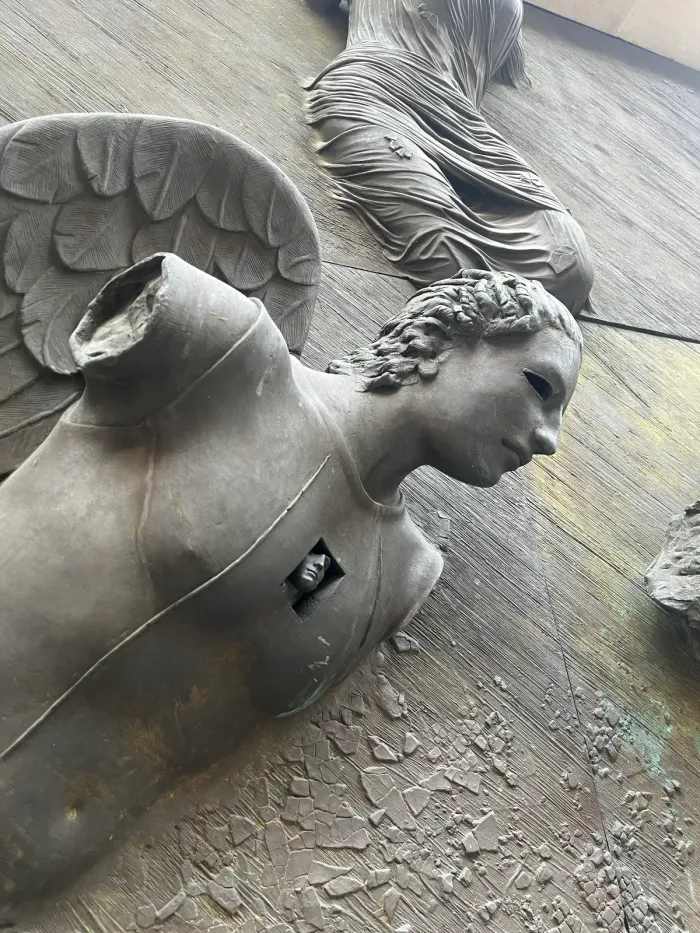
Anielskie Drzwi — angel face looking upward, Mitoraj bronze, Jesuit church Warsaw
Angel — Looking UpFace detail · upward gaze
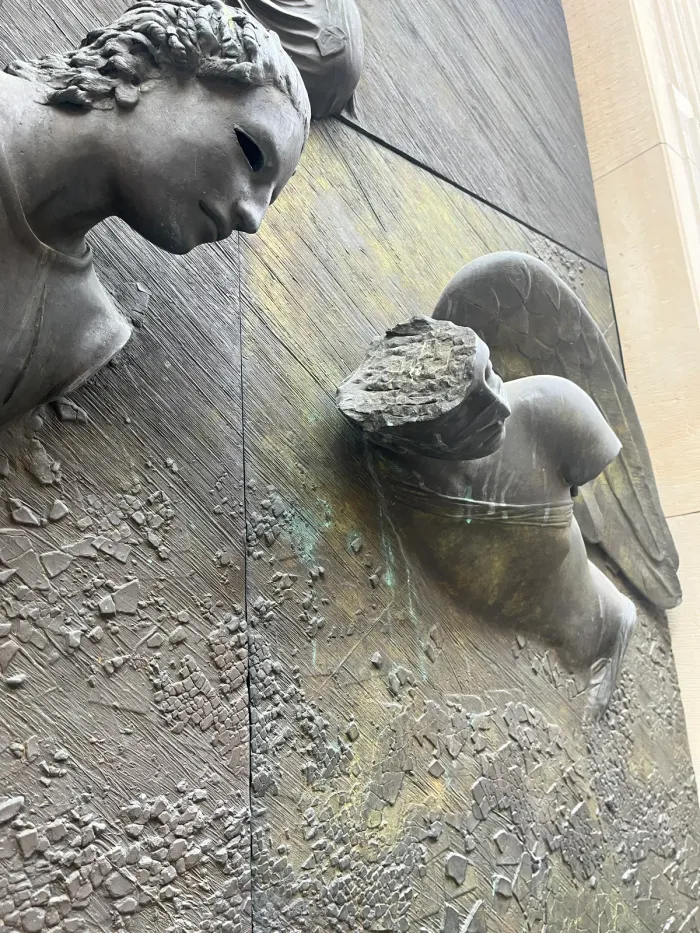
Anielskie Drzwi — wing tip above angel head, Mitoraj door detail, Warsaw
Wing and Head — Panel DetailComposition fragment · angel and wing
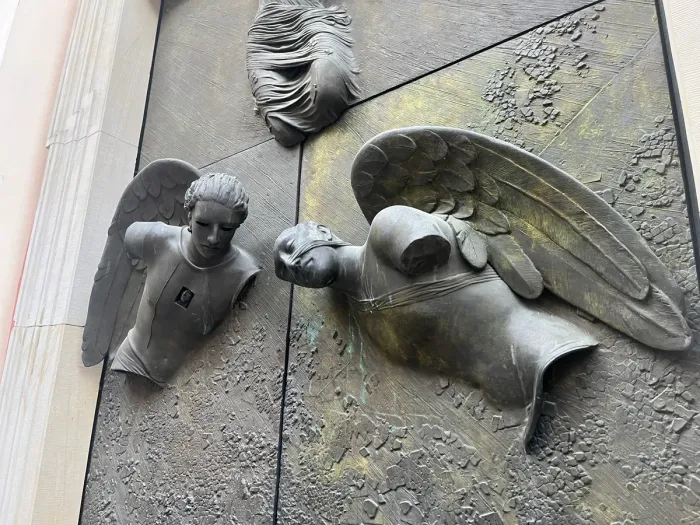
Anielskie Drzwi — two figures on door panel, Mitoraj bronze relief, Warsaw 2009
Two Figures — CompositionAngel and figure · central panel
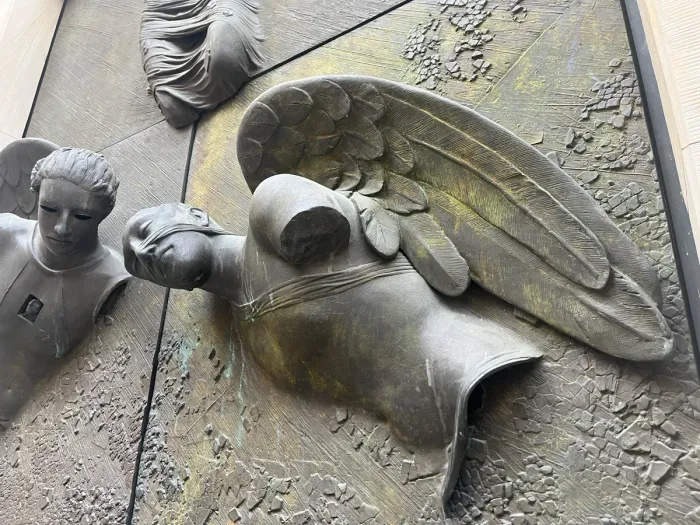
Anielskie Drzwi — two angels facing each other, Mitoraj Warsaw Jesuit church
Angels — Facing Each OtherDialogue composition · bronze relief
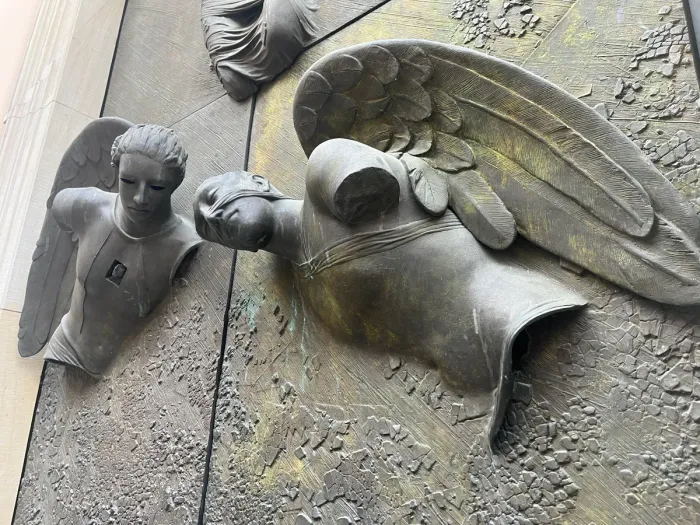
Anielskie Drzwi — angel pair, Mitoraj bronze door panel, Warsaw 2009
Angel Pair — Door PanelDouble figure · wing and torso
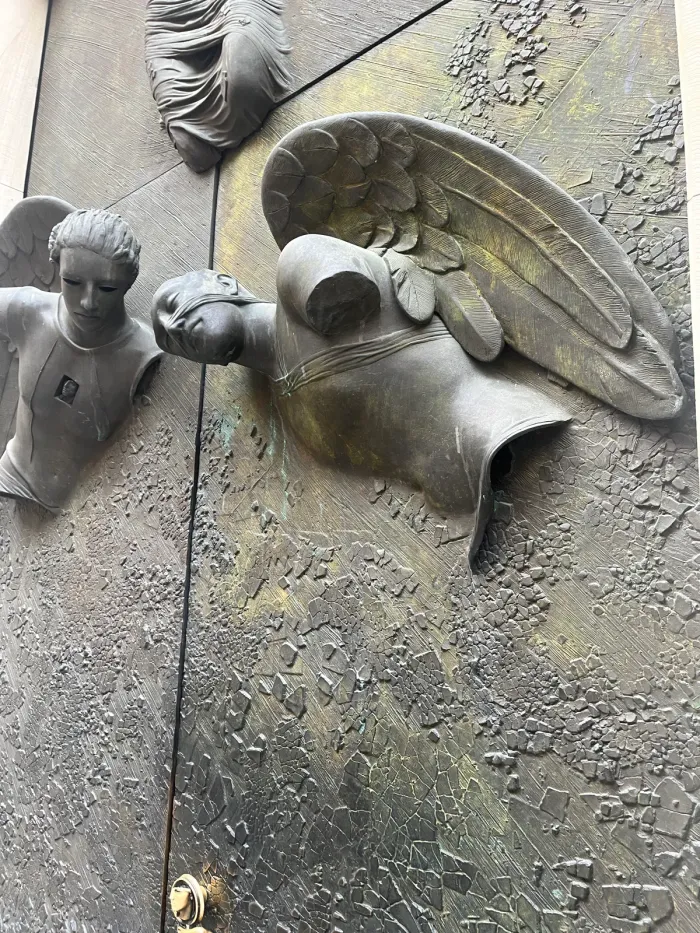
Anielskie Drzwi — angel wing and raised head, Mitoraj bronze detail, Warsaw
Angel — Wing and ProfileProfile view · wing spread
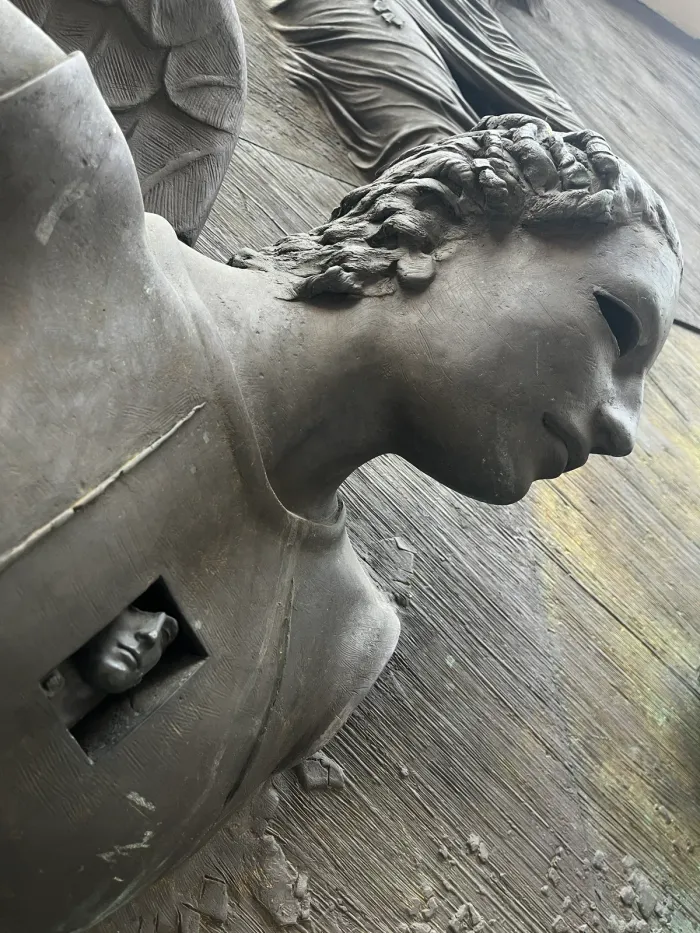
Anielskie Drzwi — angel face close-up gazing upward, Mitoraj Warsaw 2009
Angel Face — Upward GazeClose detail · bronze patina
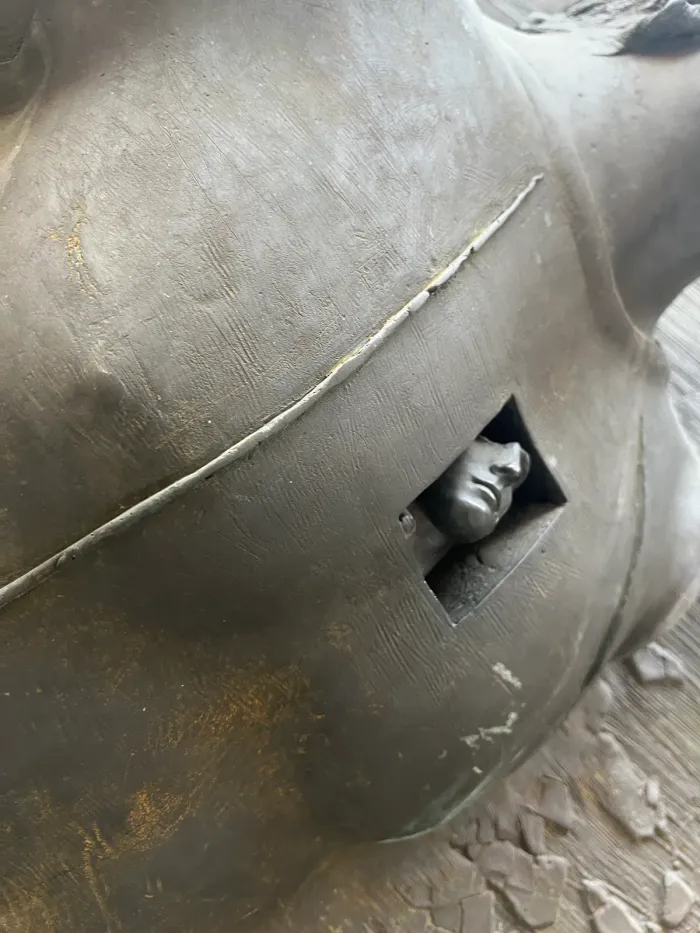
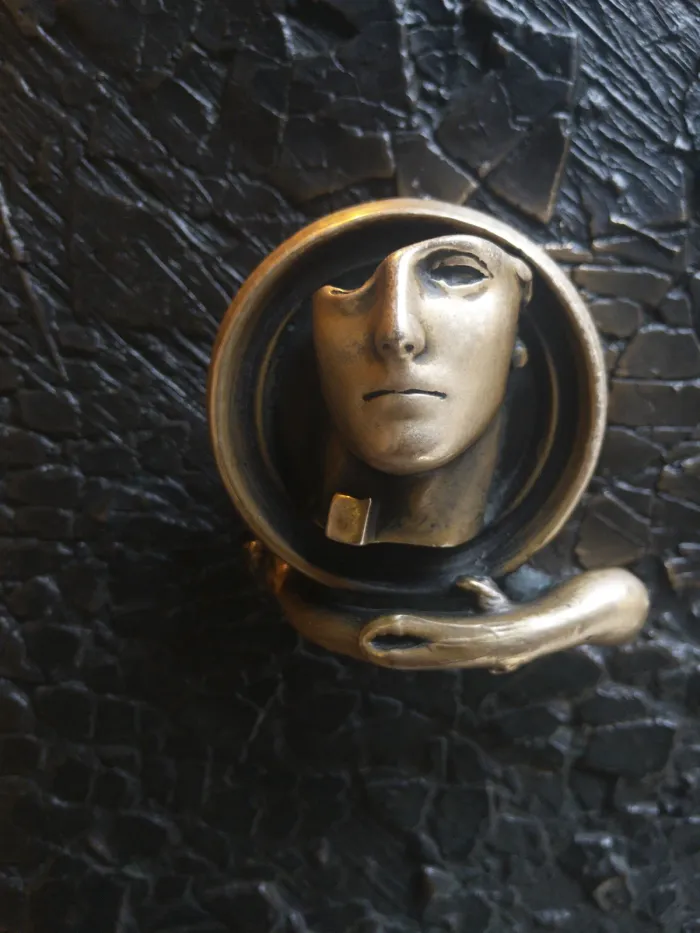
Anielskie Drzwi — Mitoraj self-portrait relief, embedded face, Warsaw Jesuit church
Mitoraj Self-Portrait — InsetArtist self-portrait · embedded relief
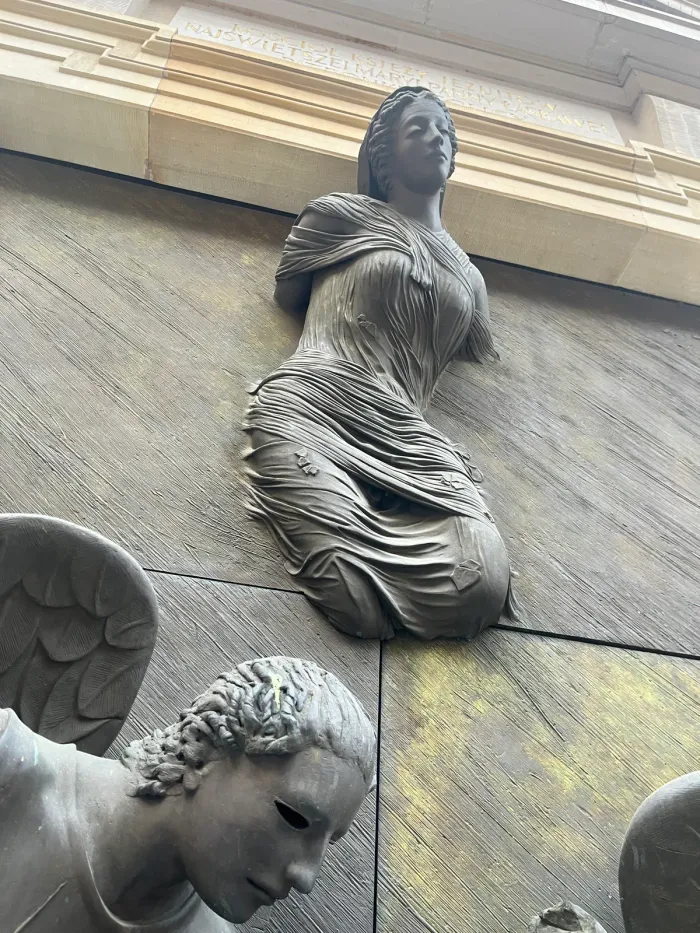
Anielskie Drzwi — Mary and angel figures, upper composition, Mitoraj Warsaw 2009
Mary and Angel — Upper DoorAnnunciation composition · upper relief
Anielskie Drzwi — flying angel in bronze, Mitoraj door detail, Warsaw Jesuit church
Flying Angel — Alternative ViewAngel in flight · different angle
Anielskie Drzwi — interior view from vestibule, Mitoraj bronze doors Warsaw
Interior View — VestibuleDoor in architectural context · from inside
Anielskie Drzwi — Mitoraj self-portrait face close-up, rectangular recess, Warsaw Jesuit church
Mitoraj Self-Portrait — Face Close-upRectangular recess · face detail

Sacred Architecture and the Mitoraj Vocabulary

The Anielskie Drzwi belong to a small group of permanent architectural commissions in Mitoraj's career — works in which his sculptural language was applied not to free-standing bronzes for galleries and public spaces, but to the functional and symbolic thresholds of sacred buildings. The other major examples are the Bamberg Cathedral Triptych (2003–2008) and the Santa Maria degli Angeli doors in Rome. Each commission required Mitoraj to synthesise his characteristic vocabulary — the fragmentary classical body, the bound and wrapped figure, the tension between concealment and revelation — with the specific theological programme of the commissioning church.

At Warsaw, the synthesis takes the form of the Annunciation: the moment in Christian theology when the divine intersects with the human, when an angel brings news that transforms ordinary life into sacred history. For Mitoraj — who worked throughout his life with the vocabulary of Greek and Roman mythology while maintaining a deep engagement with Catholicism — the Annunciation was a commission that united his personal and artistic concerns in a single composition.

Anielskie Drzwi — Technical Details

Subject: Annunciation of the Virgin Mary · Medium: Bronze · Location: Kościół Jezuitów, Warsaw

Date: 2009 · consecrated 12 September 2009
Dimensions: approx. 3–4 metres height · over 3 tonnes
Elements: fixed upper transom + two opening door wings
Iconography: Virgin Mary (upper field) · two angels (door wings) · Annunciation
Commission: 400th anniversary of the Jesuit sanctuary · commissioned by Father Andrzej Kiełbowski
Precedent: related to the Santa Maria degli Angeli e dei Martiri doors, Rome (2006)
Location: Sanktuarium Matki Bożej Łaskawej, ul. Świętojańska 10, 00-288 Warsaw

Connection to Rome

The relationship between the Warsaw doors and the Rome commission at Santa Maria degli Angeli is more than biographical coincidence. Santa Maria degli Angeli e dei Martiri is itself a building of layered sacred and classical history: Michelangelo converted the frigidarium of the Diocletian Baths into a church in 1563, creating one of the most celebrated examples of Renaissance sacred architecture. Mitoraj's doors for this church — unveiled in 2006 — were already a meditation on the continuity between classical antiquity and Christian civilisation. The Warsaw commission extended that meditation northward into Poland, connecting the Latin church tradition of Warsaw's Old Town to the ancient world of Rome that Mitoraj had inhabited for decades.

Visiting

The Anielskie Drzwi are visible from the street at ul. Świętojańska 10 in Warsaw's Old Town (Stare Miasto), a short walk from the Old Town Market Square (Rynek Starego Miasta). The sanctuary is open during regular church hours. The doors are best appreciated close up, where the relief detail and the quality of the bronze casting become fully apparent. There is no admission charge to view the exterior.

The church is a short distance from Warsaw's Old Town UNESCO World Heritage Site and can be combined with visits to the Royal Castle, the Cathedral of St John, and the Old Town Square — all within five minutes' walk.

Interested in Mitoraj Works?

I am a private collector in Warsaw actively buying Igor Mitoraj bronzes, medals, and works on paper. If you have a work available, please get in touch.

Contact Me Directly