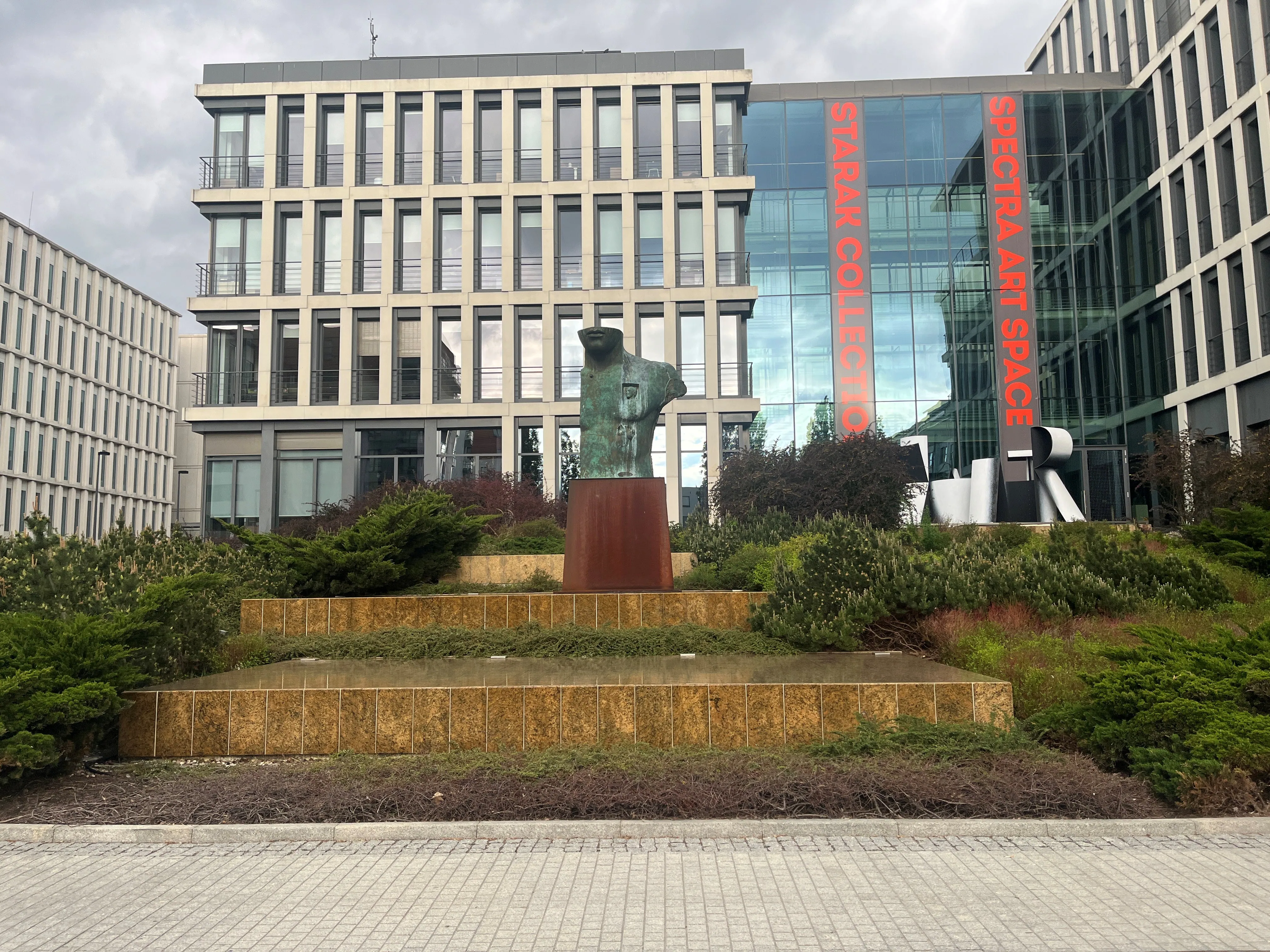
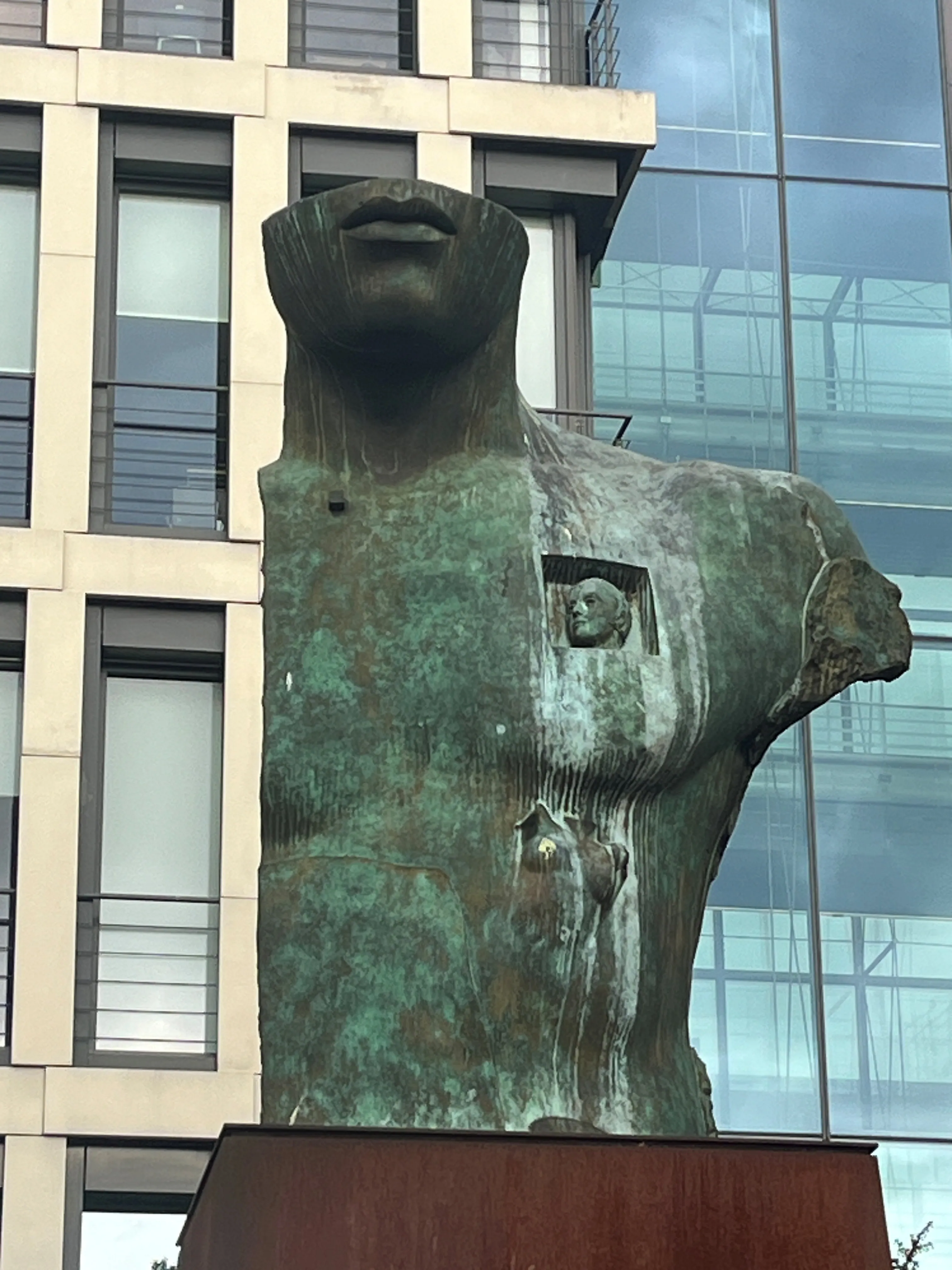
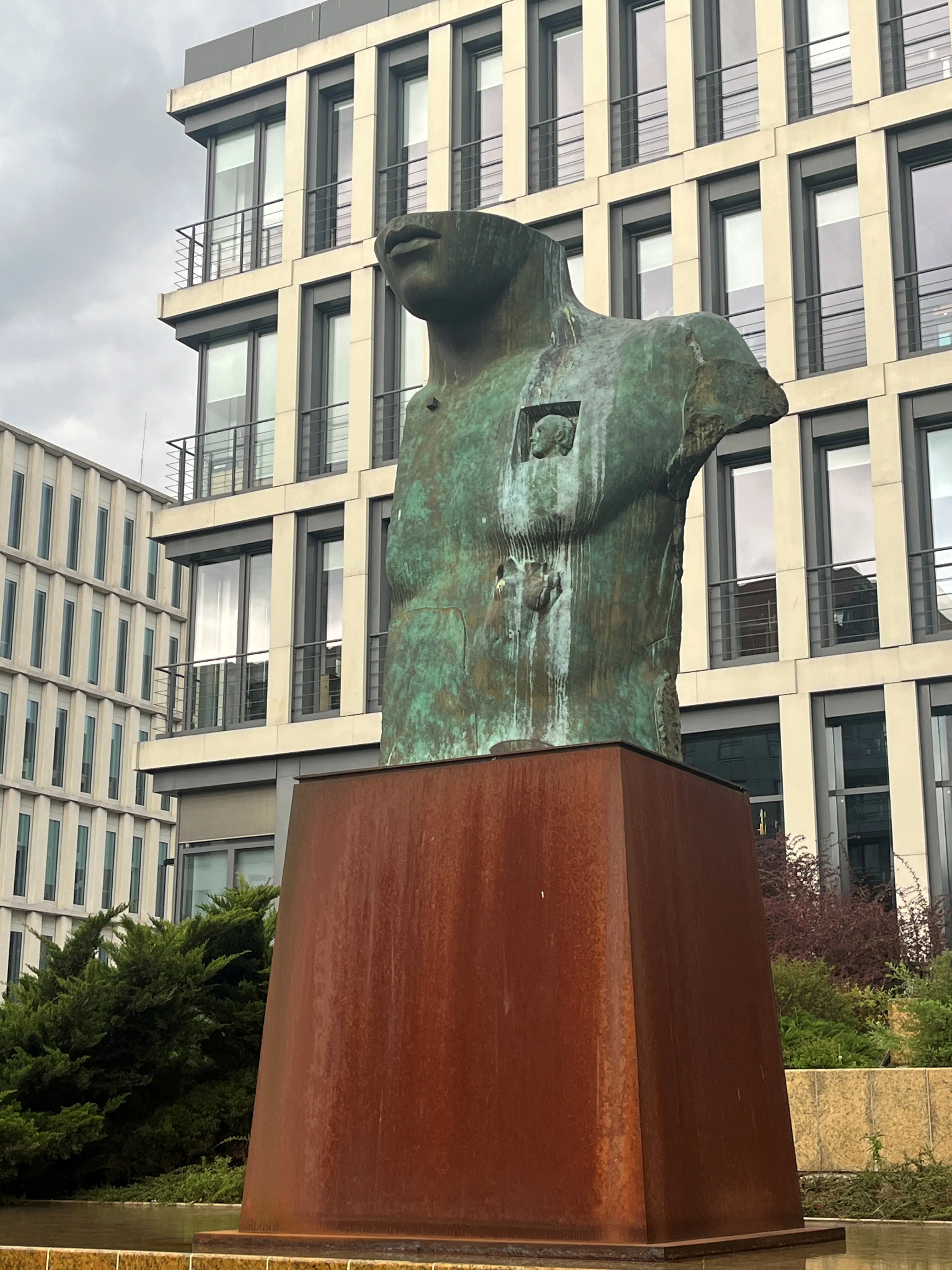
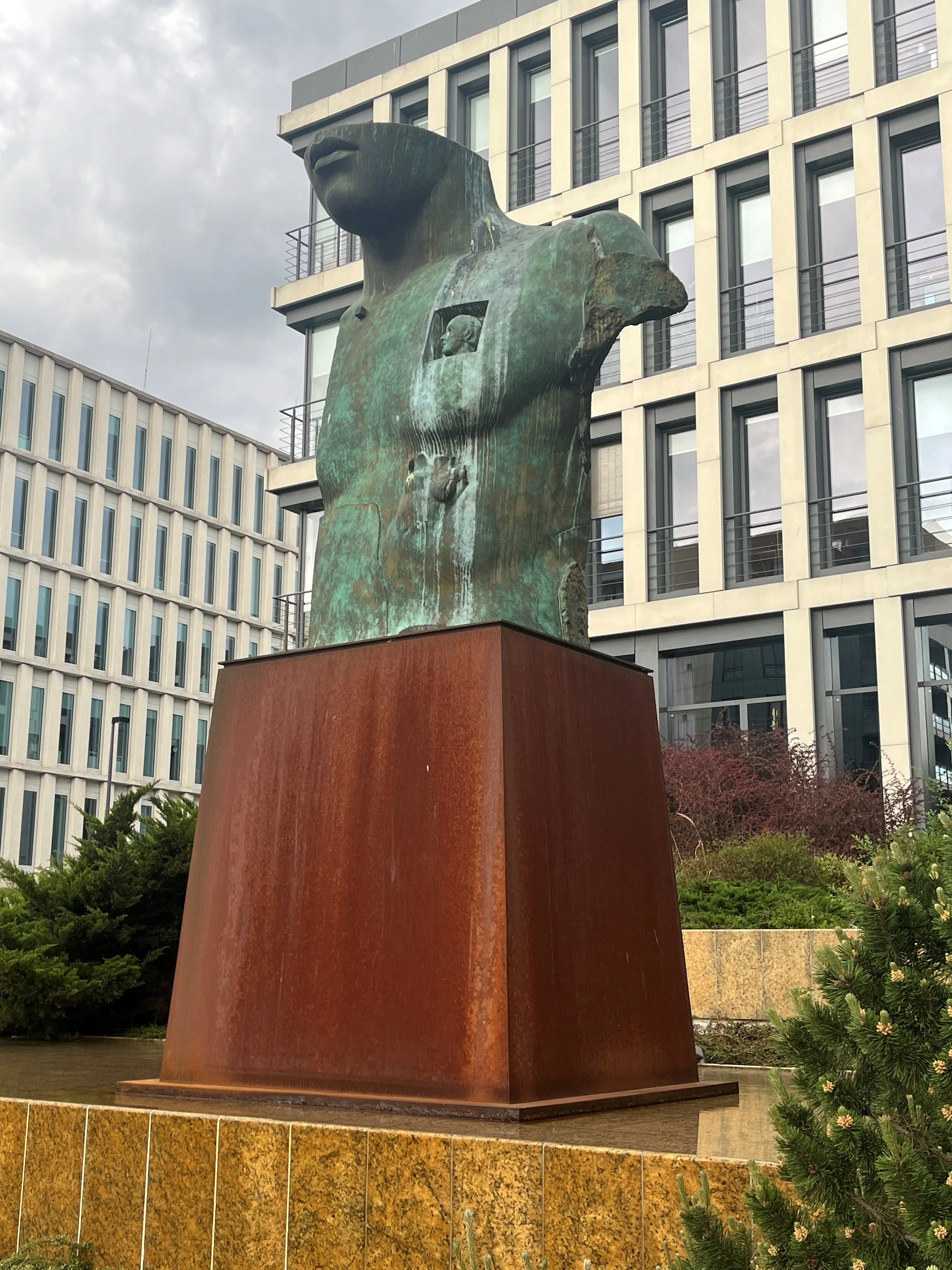
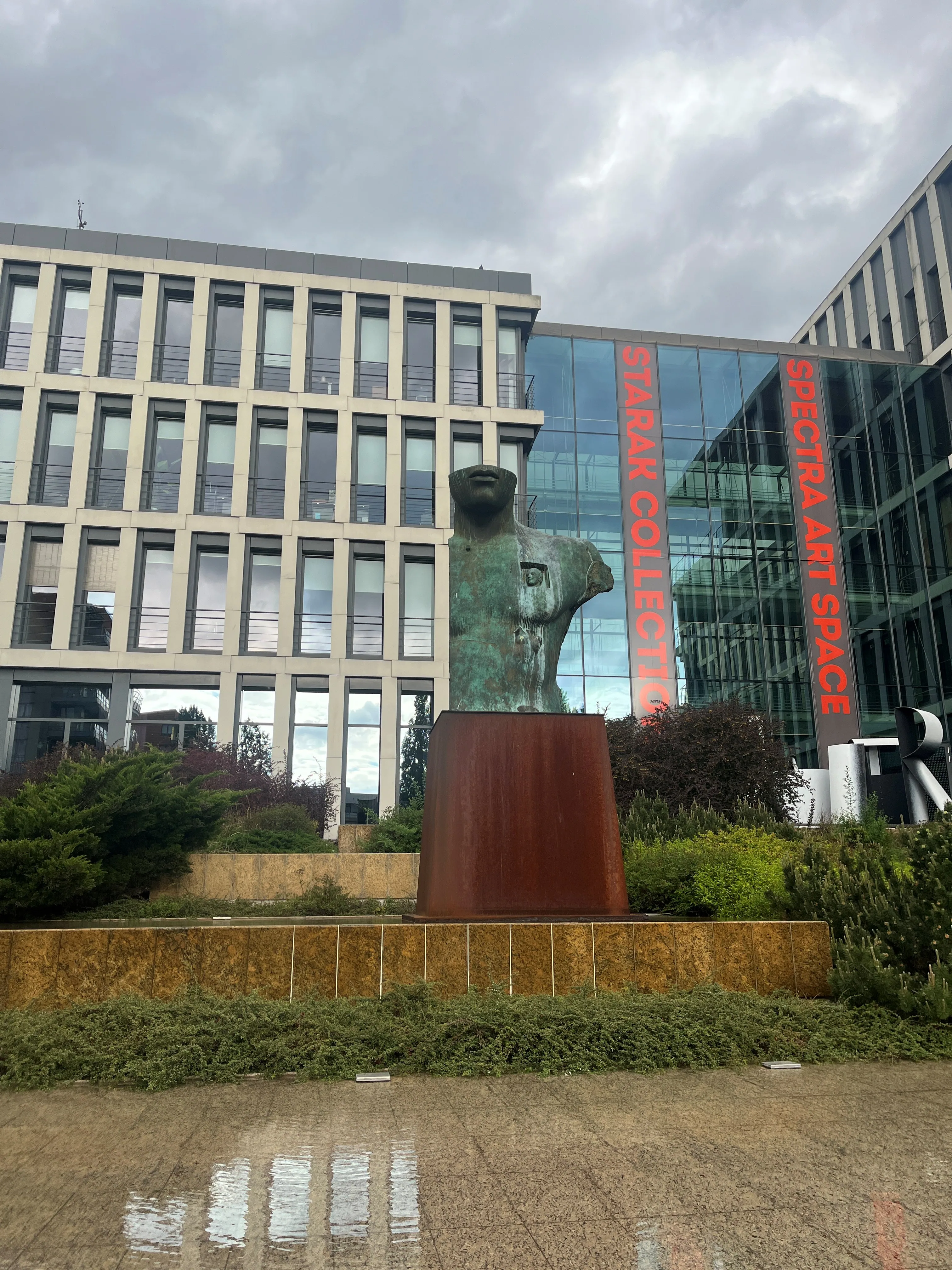
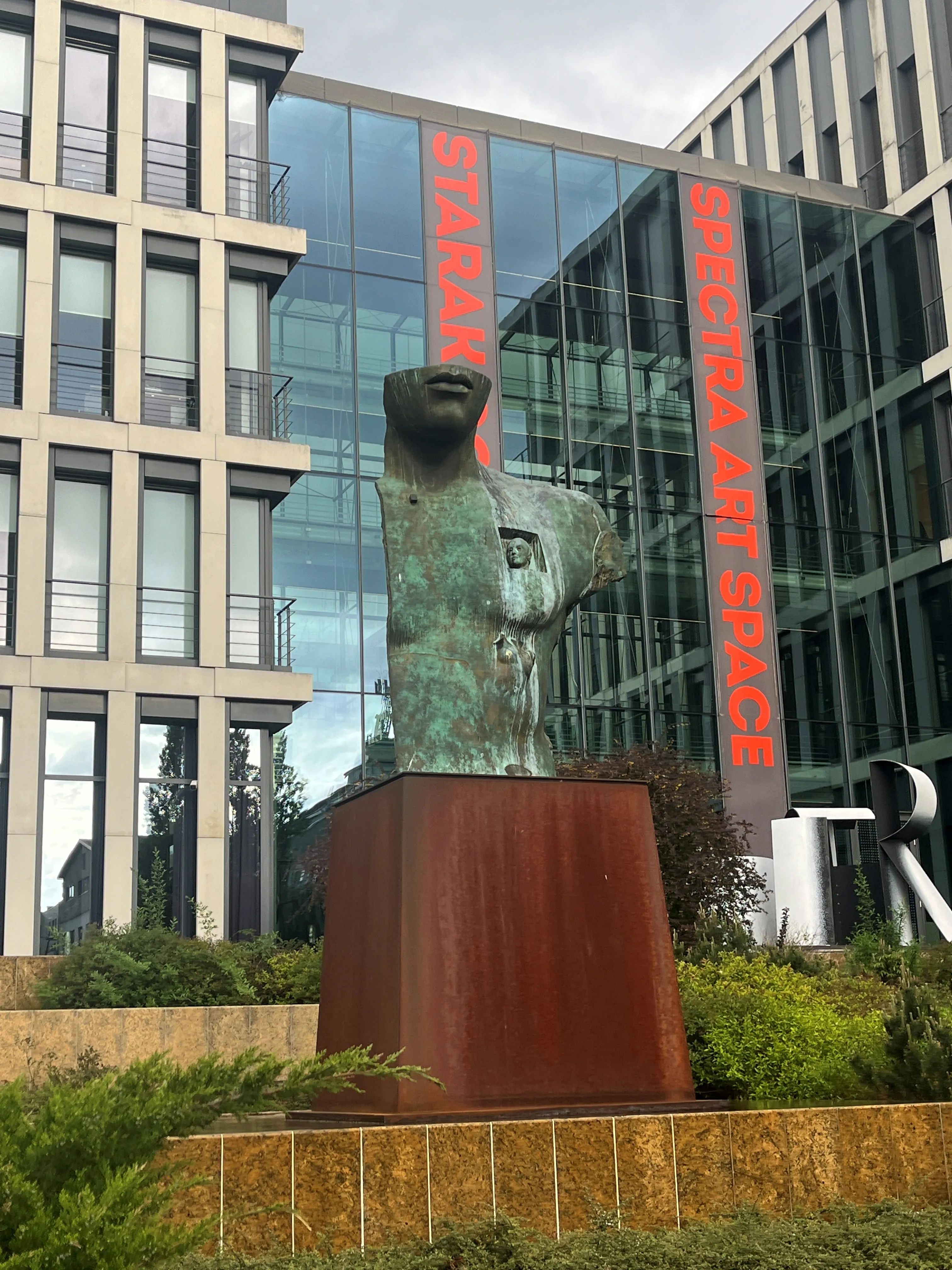
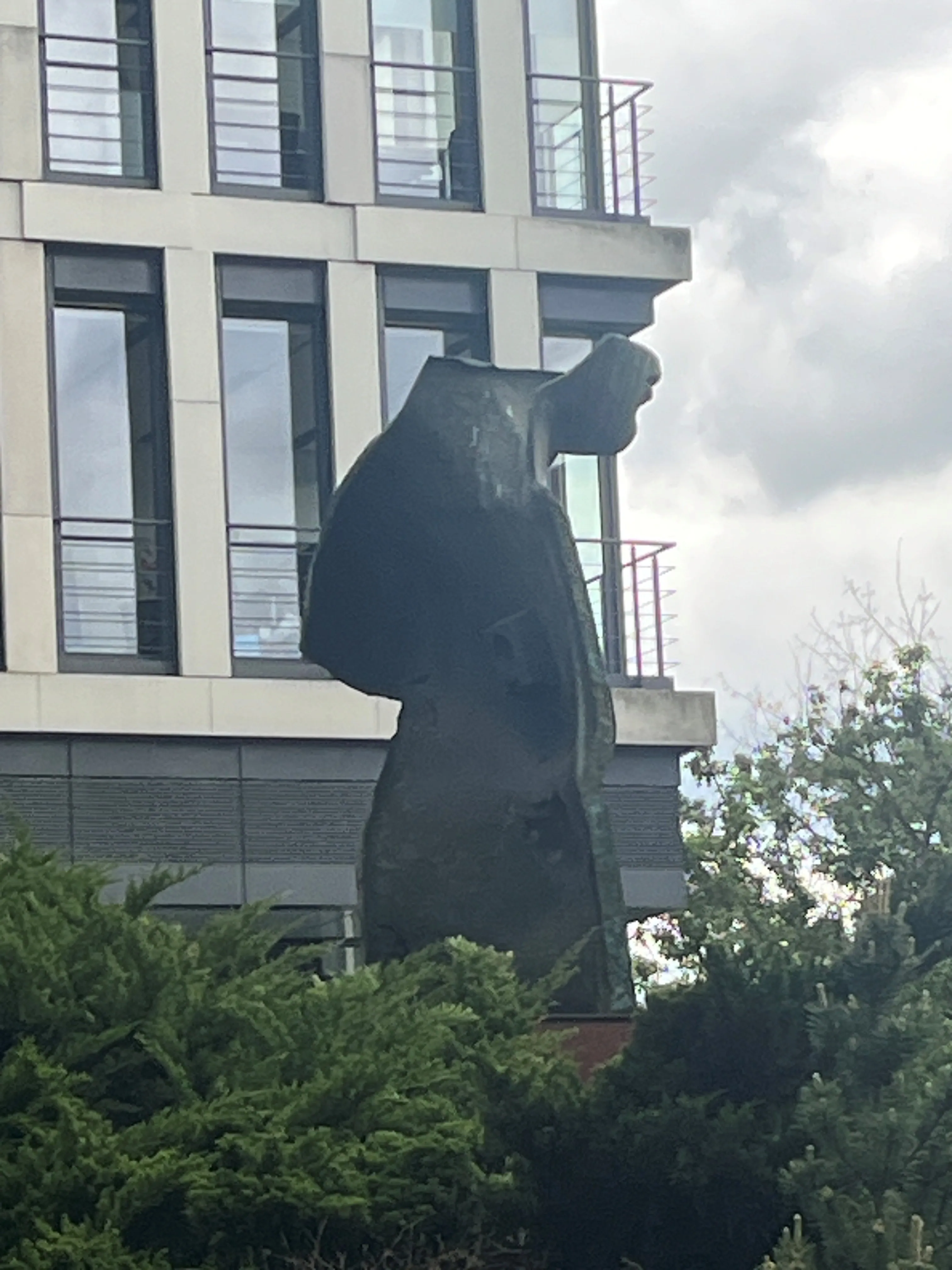
At ul. Bobrowiecka 6 in Warsaw's Mokotów district, in front of the Spectra building, stands one of the most significant Mitoraj bronzes in Poland: Grande Toscano, a five-metre male torso cast in bronze and installed on 10 September 2009. Mitoraj was present in person for the unveiling.
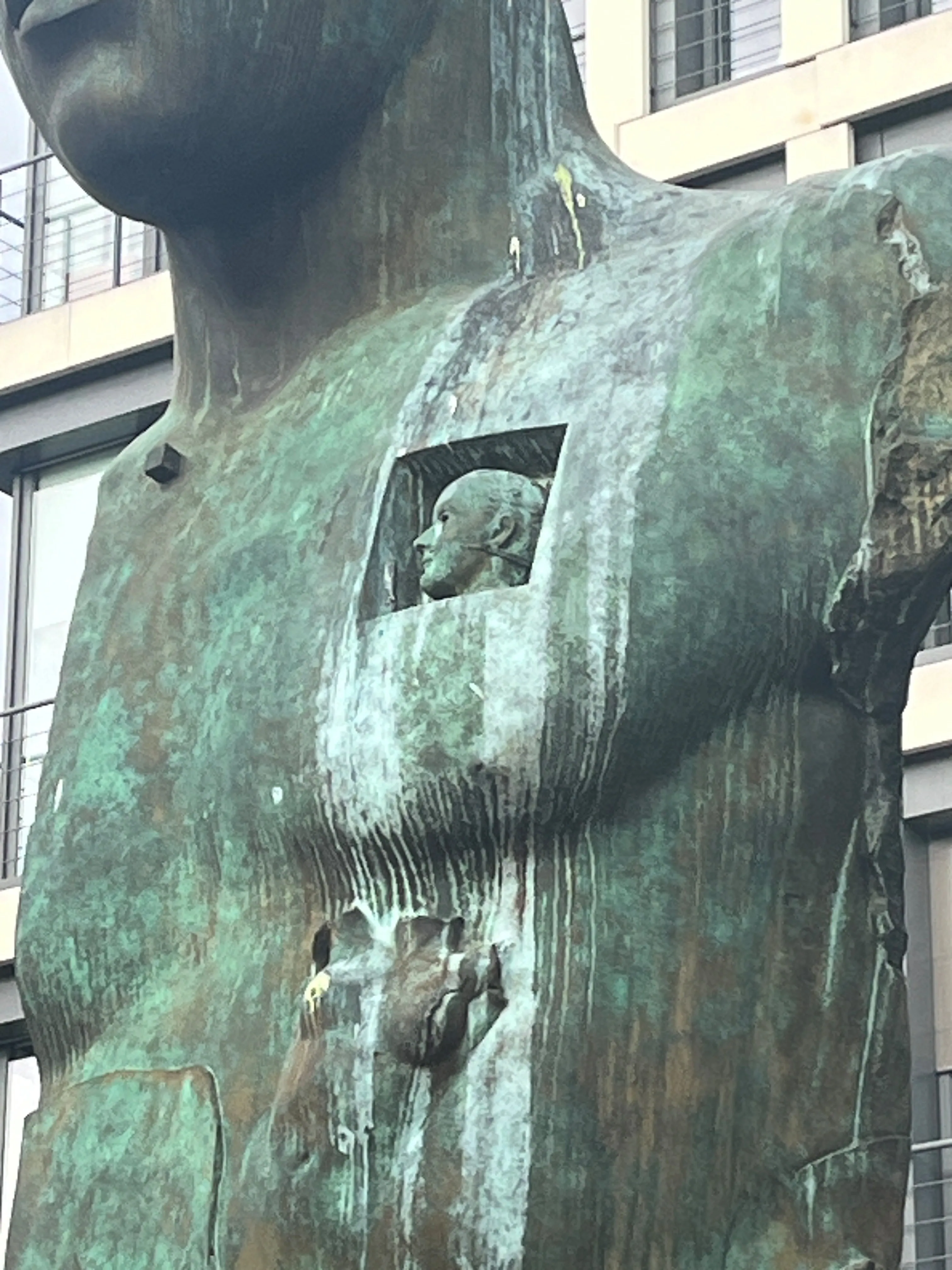
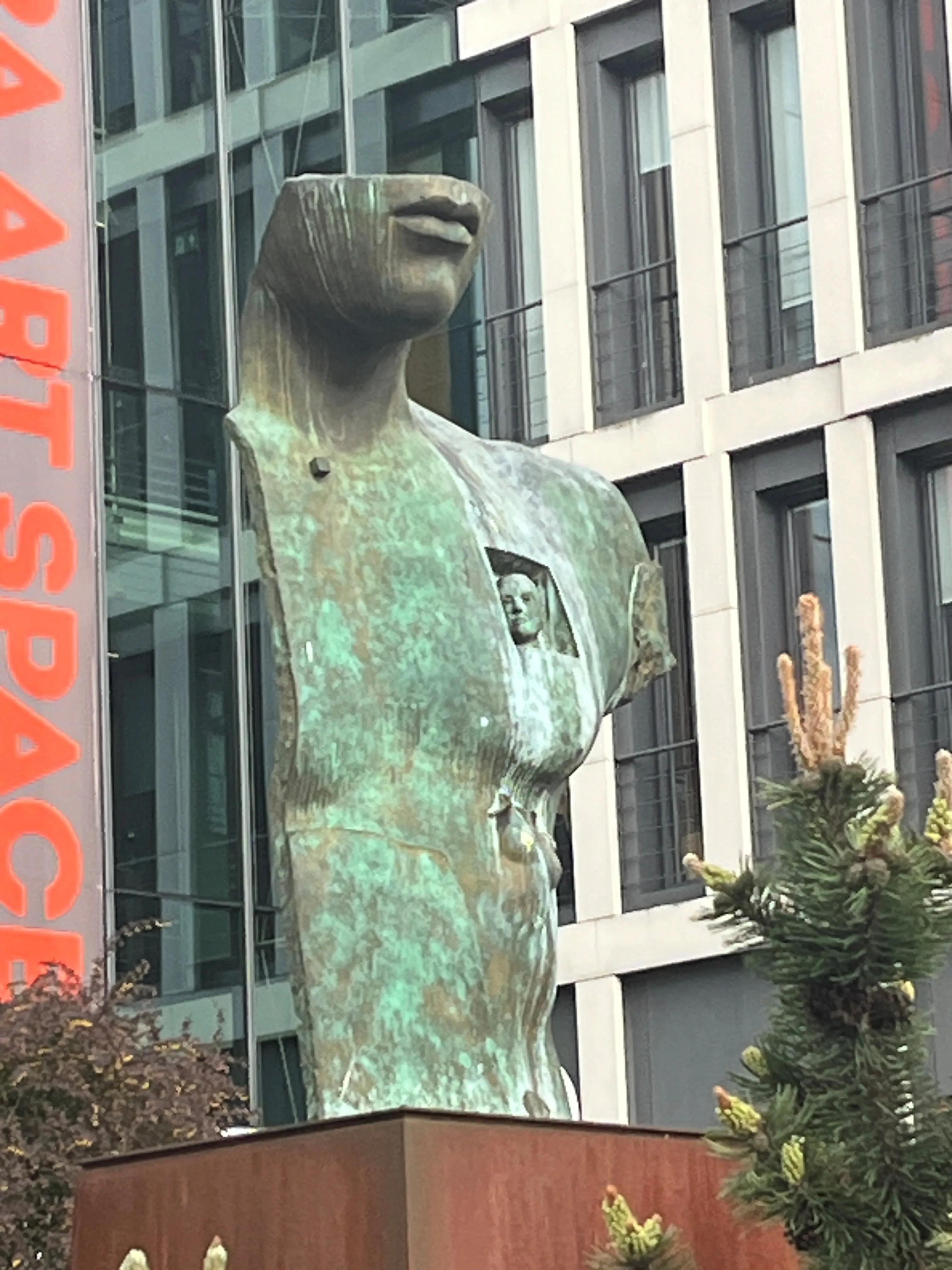
Within the torso's chest, a woman's face — named Aleksandra, who had been an inspiration to the artist for many years — is revealed, embedded in the bronze as if glimpsed through the body of the figure itself. The title pays homage to Donatello and to Tuscany, the Italian region where Mitoraj lived and worked for much of his life.
This is the third and final cast of Grande Toscano. The first two stand in Paris (La Défense) and Milan. The Warsaw cast was commissioned and funded through the cultural patronage programme of Polpharma, one of Poland's largest pharmaceutical companies. According to the original documentation, Mitoraj cast the first Grande Toscano using his first earned income — a detail that speaks to the personal significance he attached to the work from the very beginning.
Grande Toscano
Bronze · 5 metres · 2009 · 3rd and final cast · Polpharma, Warsaw
A monumental male torso in bronze — five metres tall — whose chest conceals the face of a woman named Aleksandra, who inspired Mitoraj for many years. The title is an act of homage: to Donatello, the Florentine master who cast the first great bronze nudes of the Renaissance, and to Tuscany, the landscape that shaped Mitoraj's mature work.
Only three casts of Grande Toscano exist in the world. The Warsaw example is the last. Its presence in front of the Spectra building on Bobrowiecka — a Warsaw corporate address — gives the work an unusual framing: the heroic, naked torso of classical antiquity rises against the glass and steel of the modern business district, carrying within it a private face, a woman remembered.
ul. Bobrowiecka 6 02-517 Warsaw, Poland Mokotów district
Patron
Polpharma Cultural patronage programme → Google Maps
Access
Publicly visible from the street No admission required · Open 24 hours 52.2132, 21.0022
Sculpture
Grande Toscano · Bronze 5 metres · Installed 10 September 2009 3rd & final cast worldwide
Front view — five-metre torso, Mokotów, Warsaw
Full scale — the torso against the Spectra building facade
Detail — the face of Aleksandra embedded within the torso
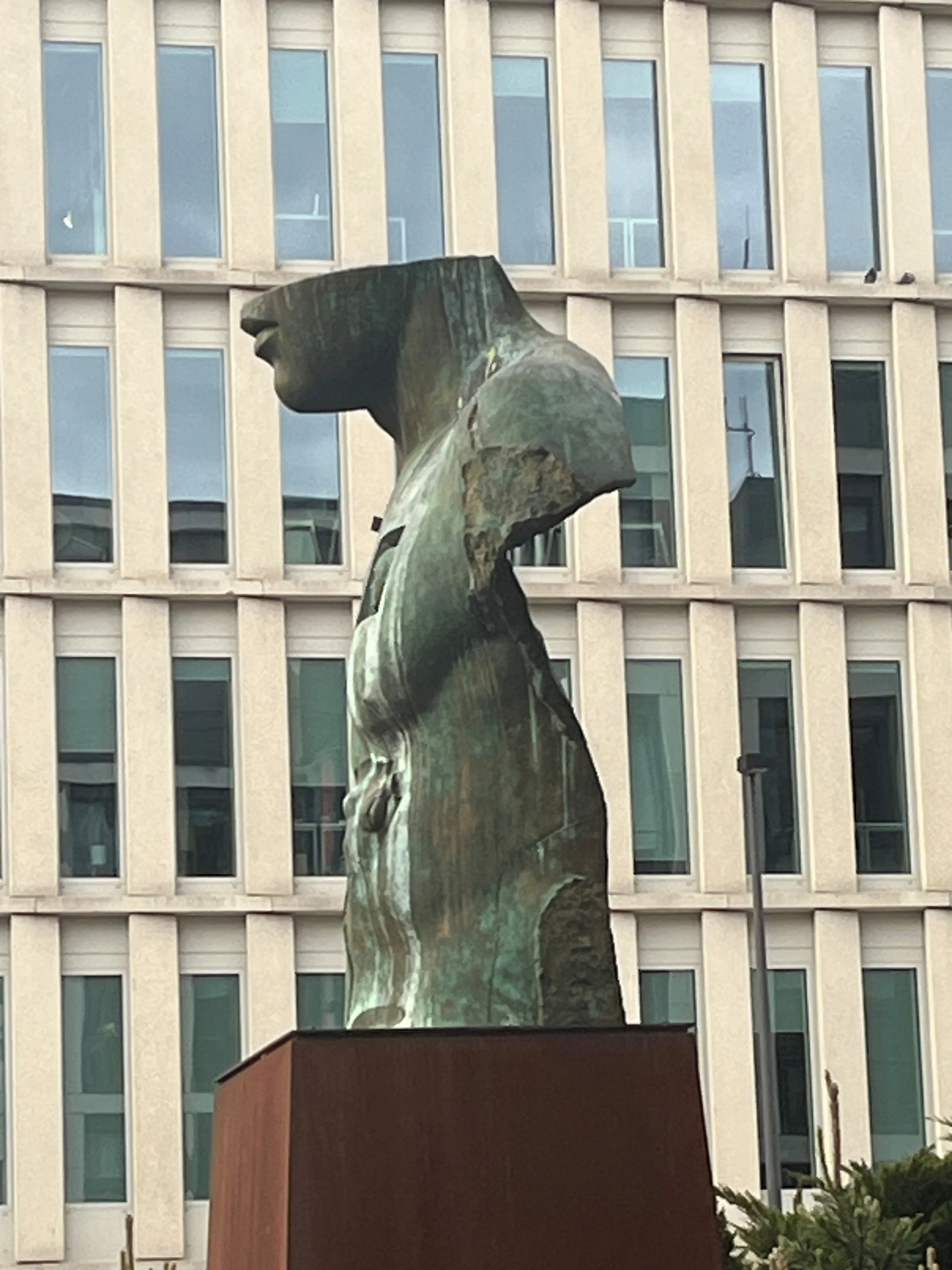
Side view — bronze surface and patina
Context — sculpture in front of Spectra building
View from above — the sculptural mass and setting
Additional Angles
Rear surface — bronze with natural weathering
Plaque and inscription — Polpharma cultural patronage
Looking up at the torso — the scale against the Warsaw sky
Three Casts Worldwide
Grande Toscano in Paris, Milan & Warsaw
Only three casts of Grande Toscano were made. The first stands in Paris at La Défense, the French capital's monumental business district; the second in Milan; the third — and last — here in Warsaw on Bobrowiecka, installed in September 2009.
That Mitoraj chose Warsaw for the final cast, and unveiled it personally, reflects the depth of his connection to Poland — the country of his birth, and one where his public presence grew significantly in the final decade of his life. The work joins the Ikaro Alato at the Olympic Centre on Żoliborz as one of two major Mitoraj bronzes commissioned for Warsaw through Polpharma's cultural patronage programme.