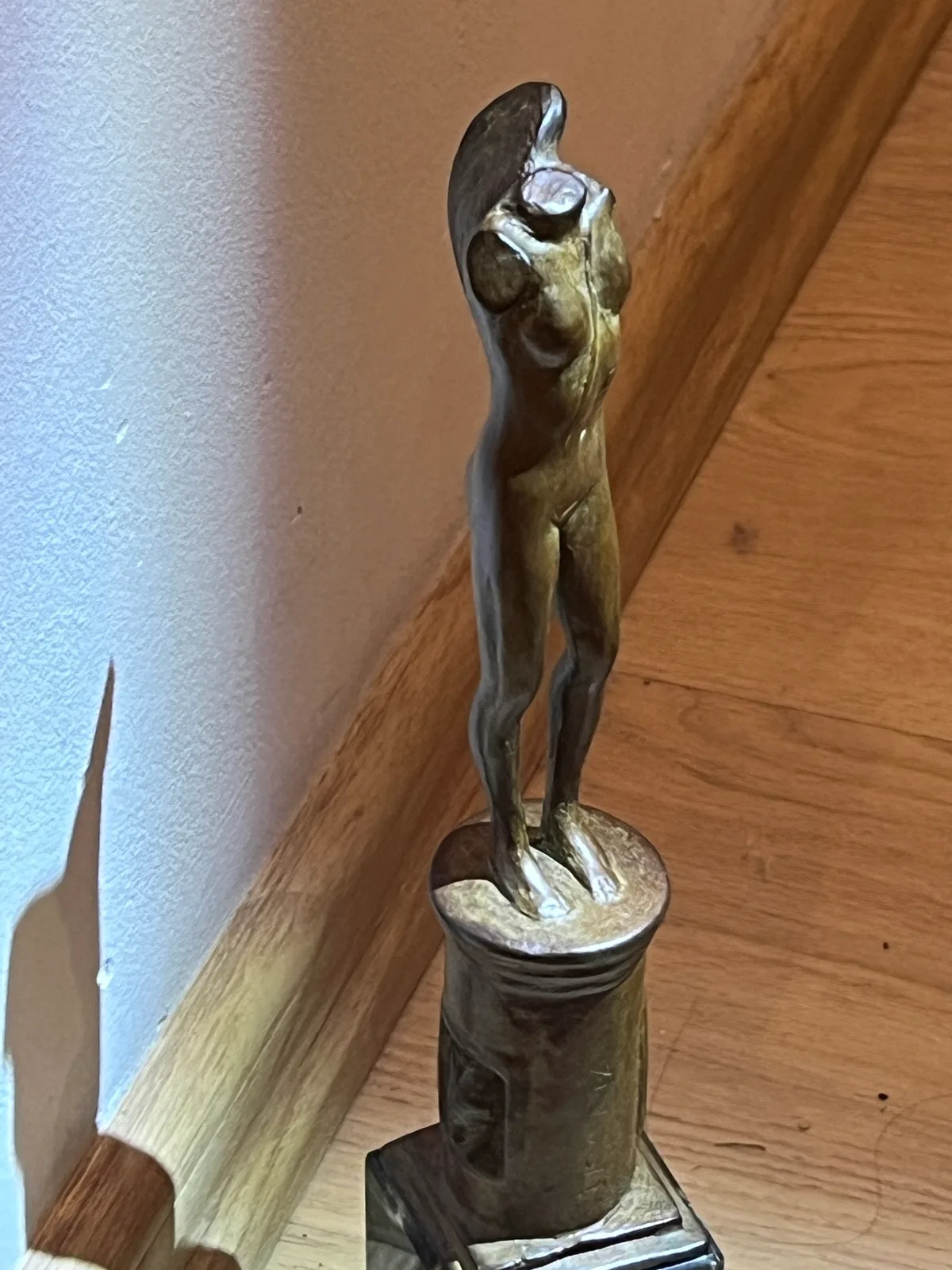
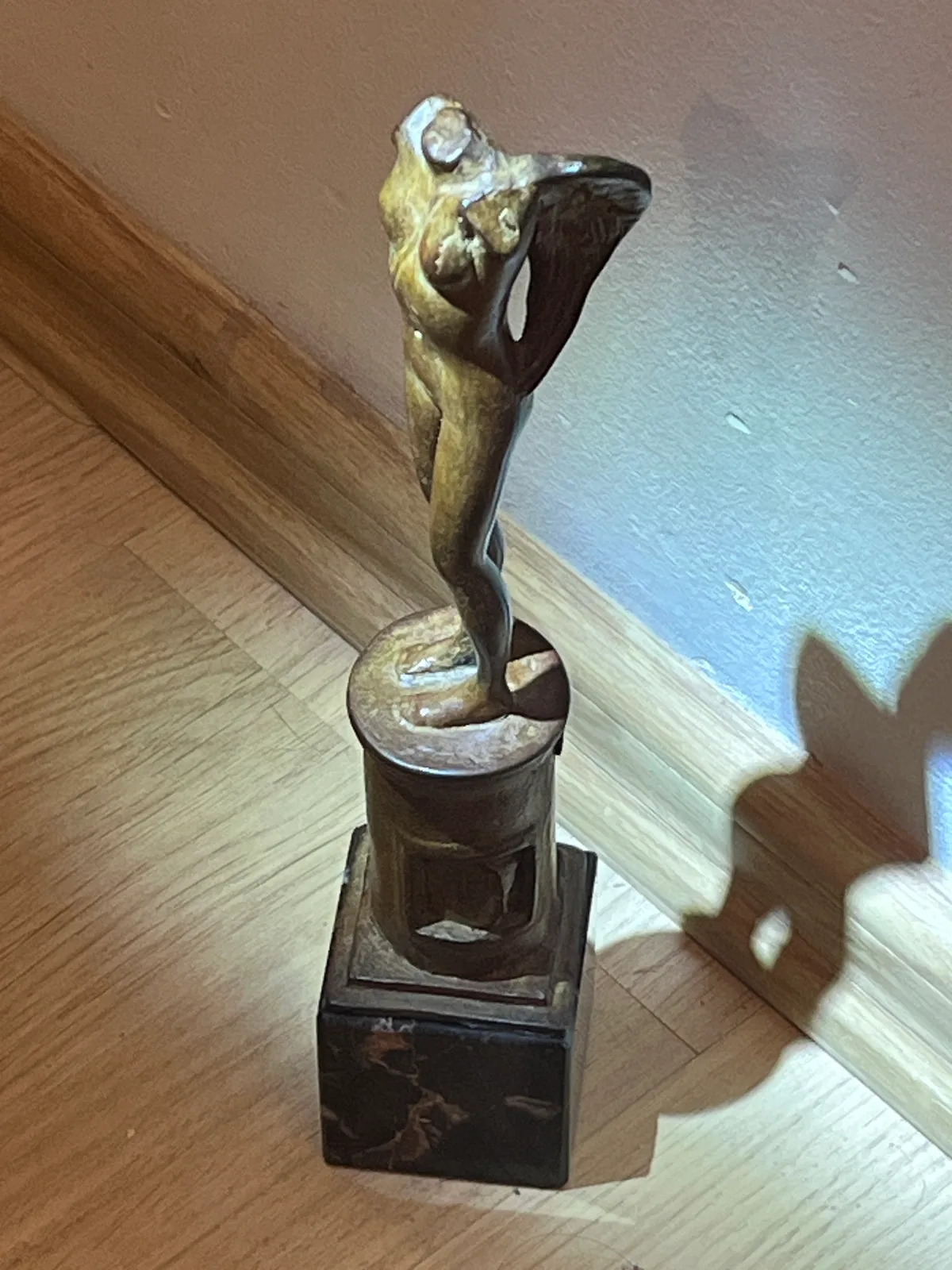
Igor Mitoraj
작품을
찾습니다
컬렉터가 Mitoraj 작품을 찾고 있습니다
상태 무관, 크기 무관 —
직접 구매, 간단하고 편리하게.
컬렉터가 Mitoraj 작품을 찾고 있습니다
상태 무관, 크기 무관 —
직접 구매, 간단하고 편리하게.
경매 하우스는 낙찰가의 10–18% 수수료를 부과합니다 — 위탁 처리에 4–12주, 판매 후 대금 지급에 또 한 달이 걸립니다. 전체 과정이 수개월이 걸리며 수수료가 공제됩니다. 직접 판매는 당일 제안을 받고 며칠 안에 대금을 수령하며, 수수료가 없습니다.
현재 경매 시장 수준에 기반하여 제안합니다. 저는 싼 물건을 찾는 게 아니라 진지한 컬렉션에 추가할 작품을 찾고 있으며, 그에 맞게 지불합니다. 모든 문의는 완전한 비밀로 처리됩니다.
모든 작품을 검토합니다: 청동, 대리석, 석판화, 드로잉, 고유한 오브제. 모든 상태 가능. 소유한 작품의 진위 여부가 불확실하다면, 판매 의무 없이 무료로 솔직한 평가를 드립니다.
저는 바르샤바에 거주하는 컬렉터로 Mitoraj의 작품을 사랑하며 개인 컬렉션을 늘리고 싶습니다. 상속받았거나 오래전에 구입했거나 이제 다른 곳으로 보낼 때가 된 것 같다면 — 개인에게 직접 구매합니다.
너무 작은 작품은 없습니다 — 소형 석판화도 대형 청동만큼 관심이 있습니다. 부담 없이 언제든지 연락하세요.
모든 에디션과 크기. Asclépios, Perseus, Tindaro, Eros — 모두 고려.
오리지널 조각 작품. Pietrasanta 작품 특히 환영.
드로잉, 스케치, 석판화, 판화 및 서명 에디션.
램프, 세라믹 및 기타 독특한 작품.
제가 찾고 있고 획득한 작품들의 예시 — 청동, 메달, 크리스탈, 두상과 토르소, 모두 Mitoraj 특유의 스타일.
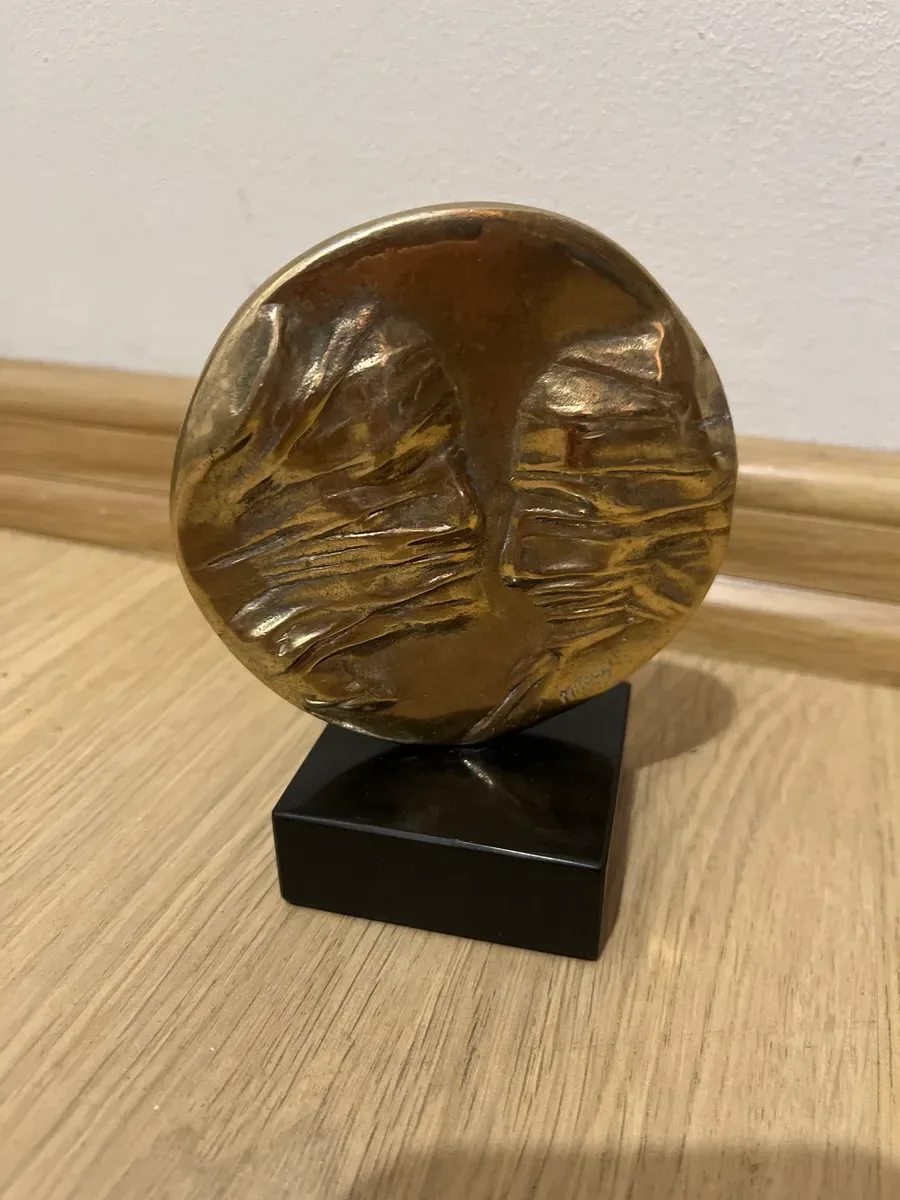
Gold-tone cast bronze medal with a standing figure amid stars and crescent moons — signed Mitoraj on the reverse. ~12 cm diameter
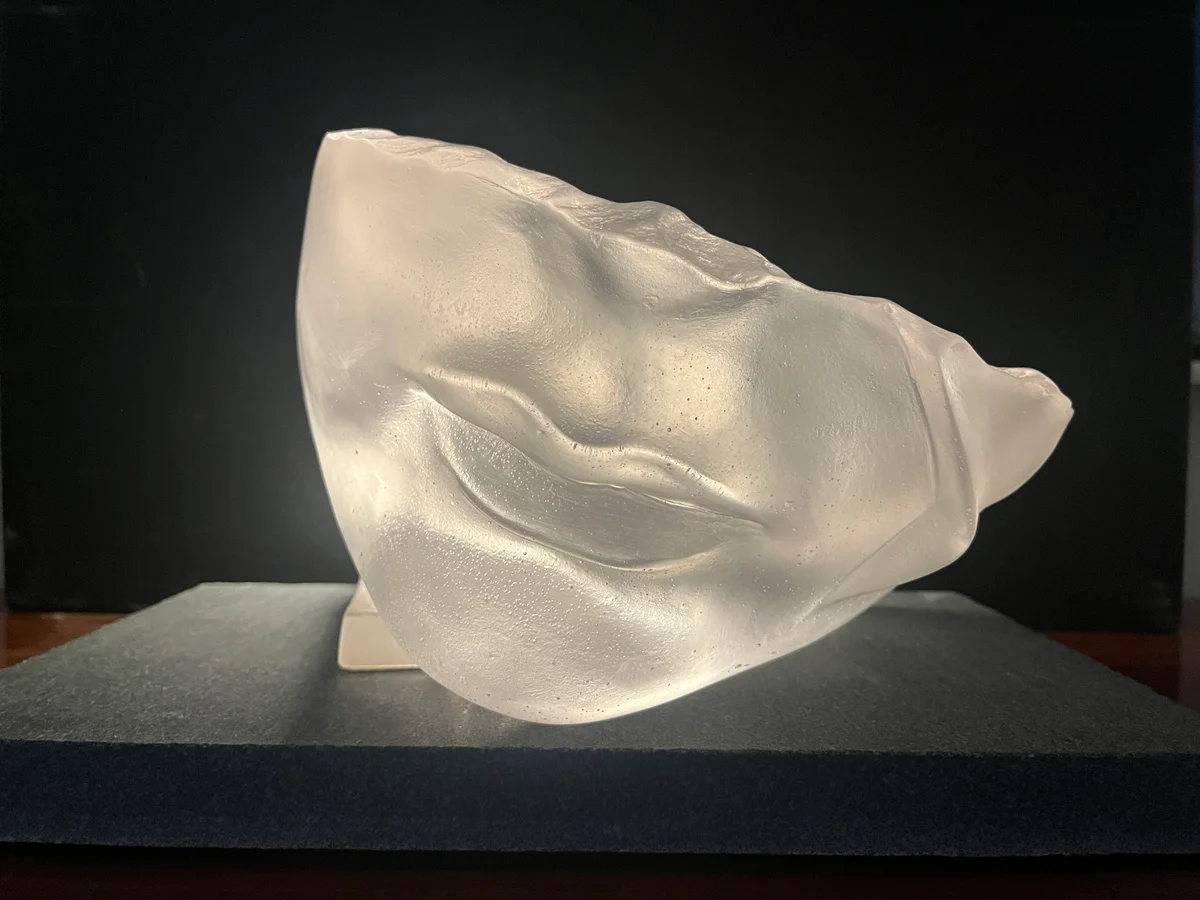
A rare pâte de verre crystal sculpture commissioned by the legendary French glassmaker Daum (founded 1877). Depicting a fragmented head in Mitoraj's signature style, this numbered piece bridges his classical themes with the luxury craft tradition of Nancy. 7.5 × 8 × 4.5 cm
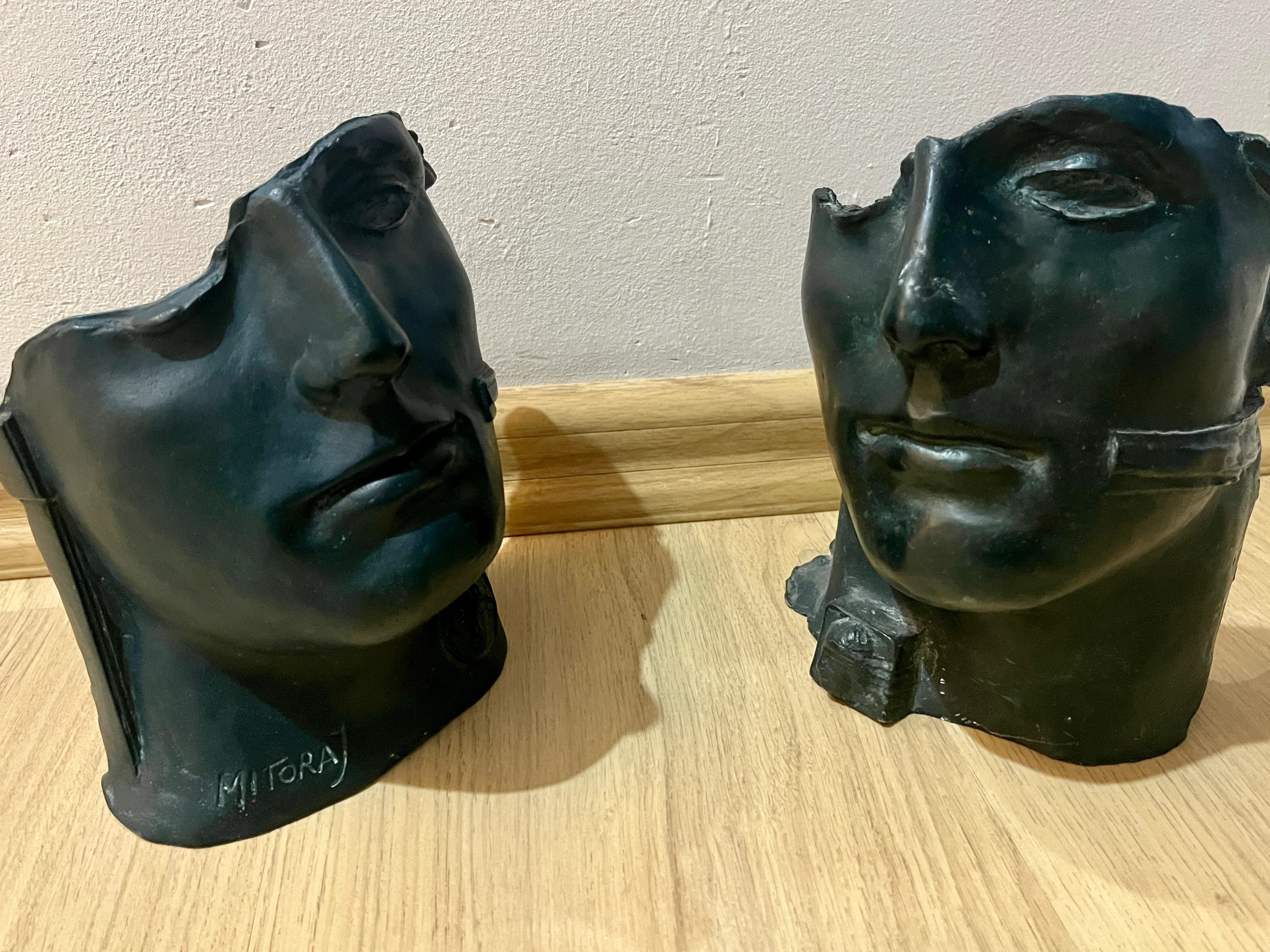
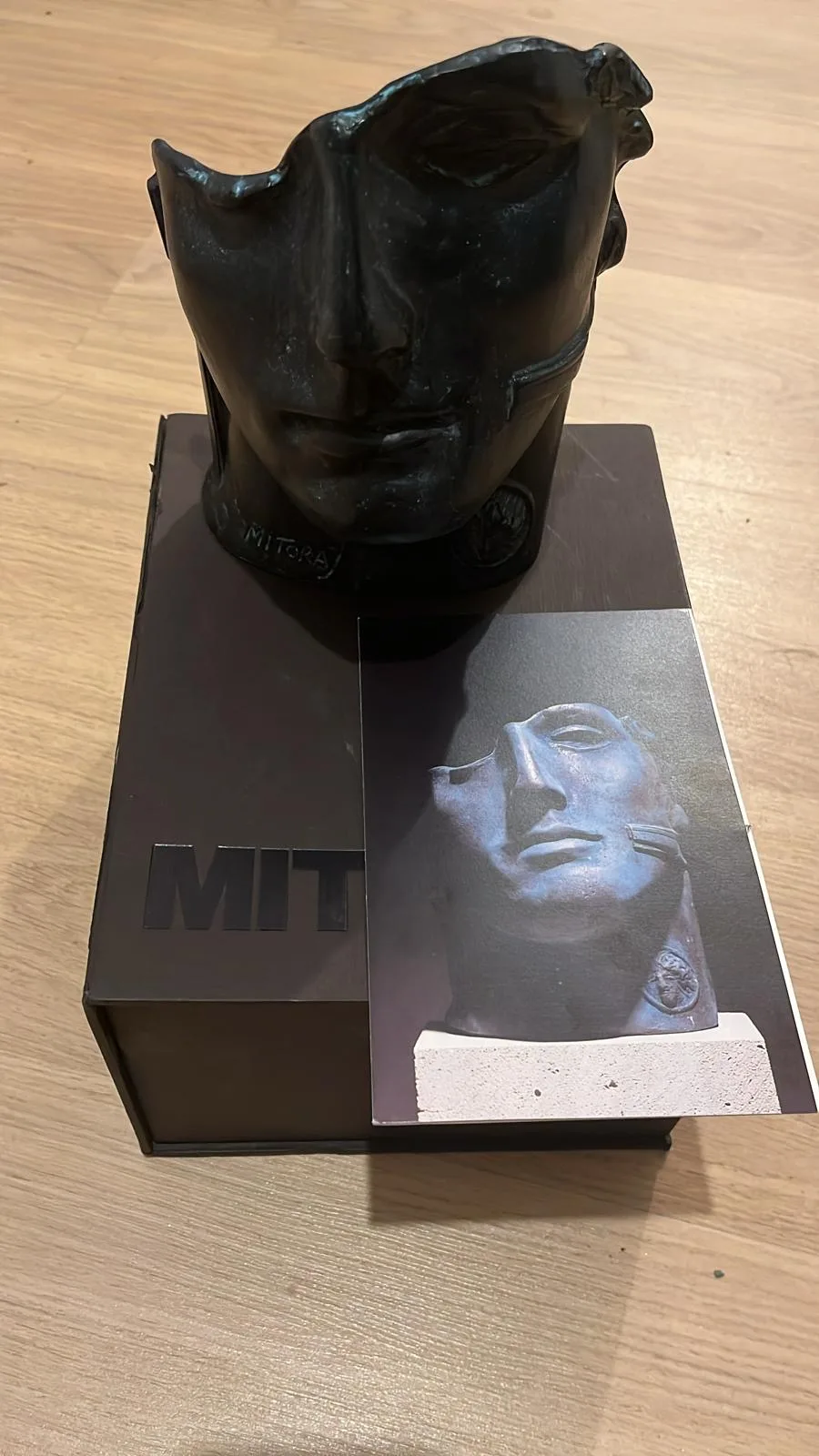
Two dark-patinated bronze head fragments — Centurione I (1987, ed. 250) and Centurione II (1986, ed. 1500) — from Mitoraj's celebrated Centurion series. Each piece depicts a partial face evoking the damaged grandeur of ancient Roman statuary, signed and from limited editions of 1500. I: ed. 250 · II: ed. 1500 · each approx. 19 cm height
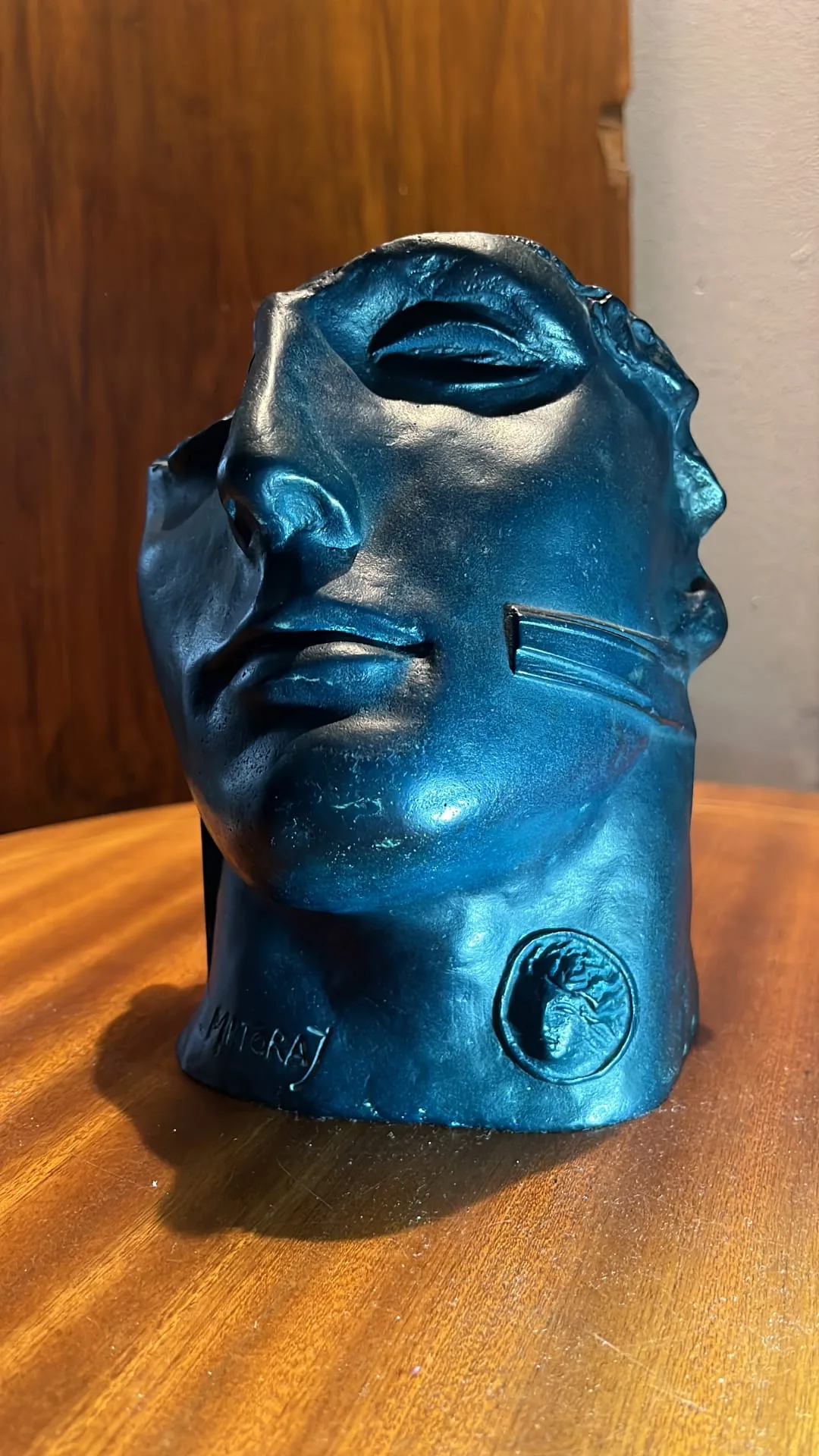
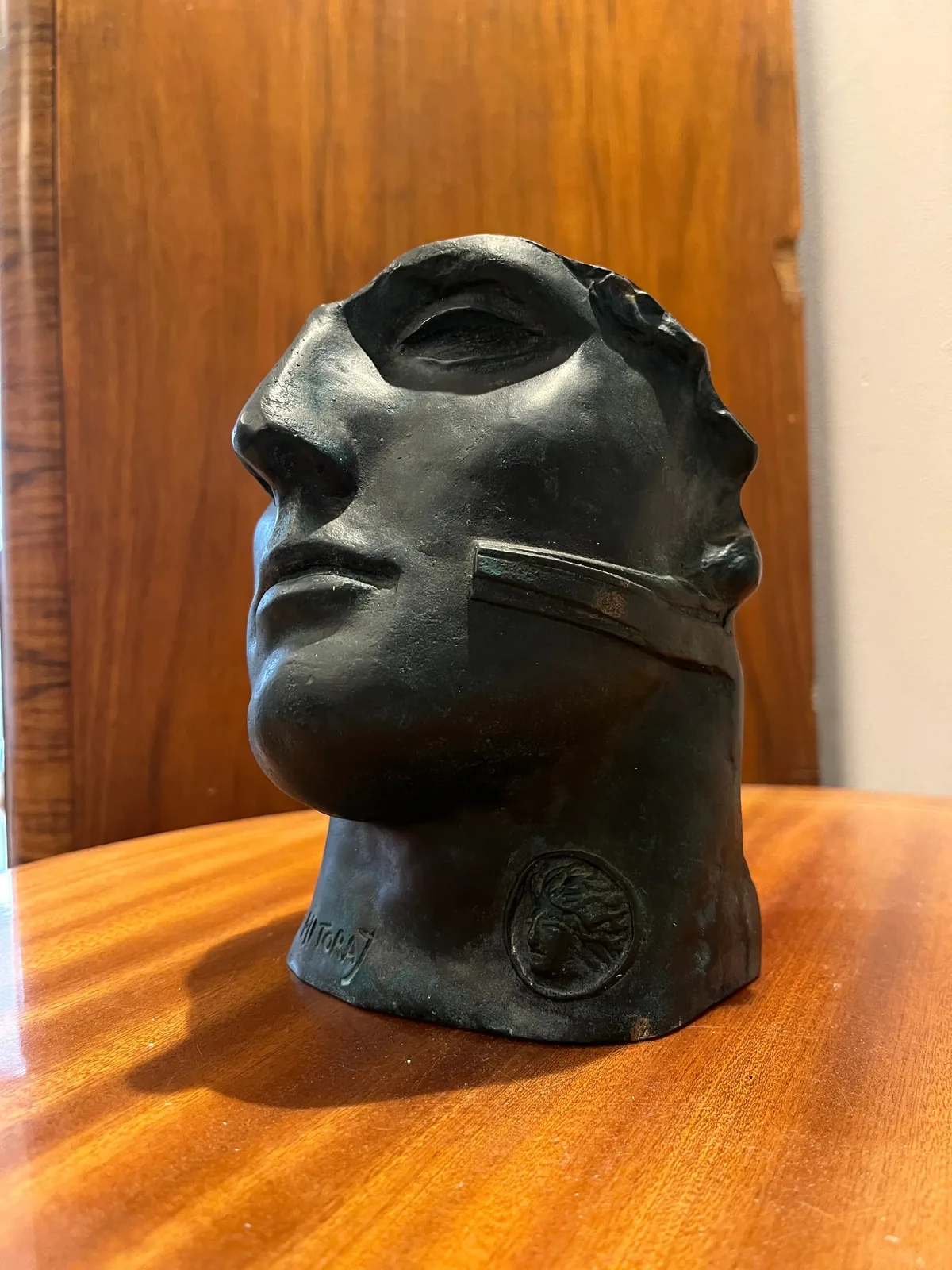
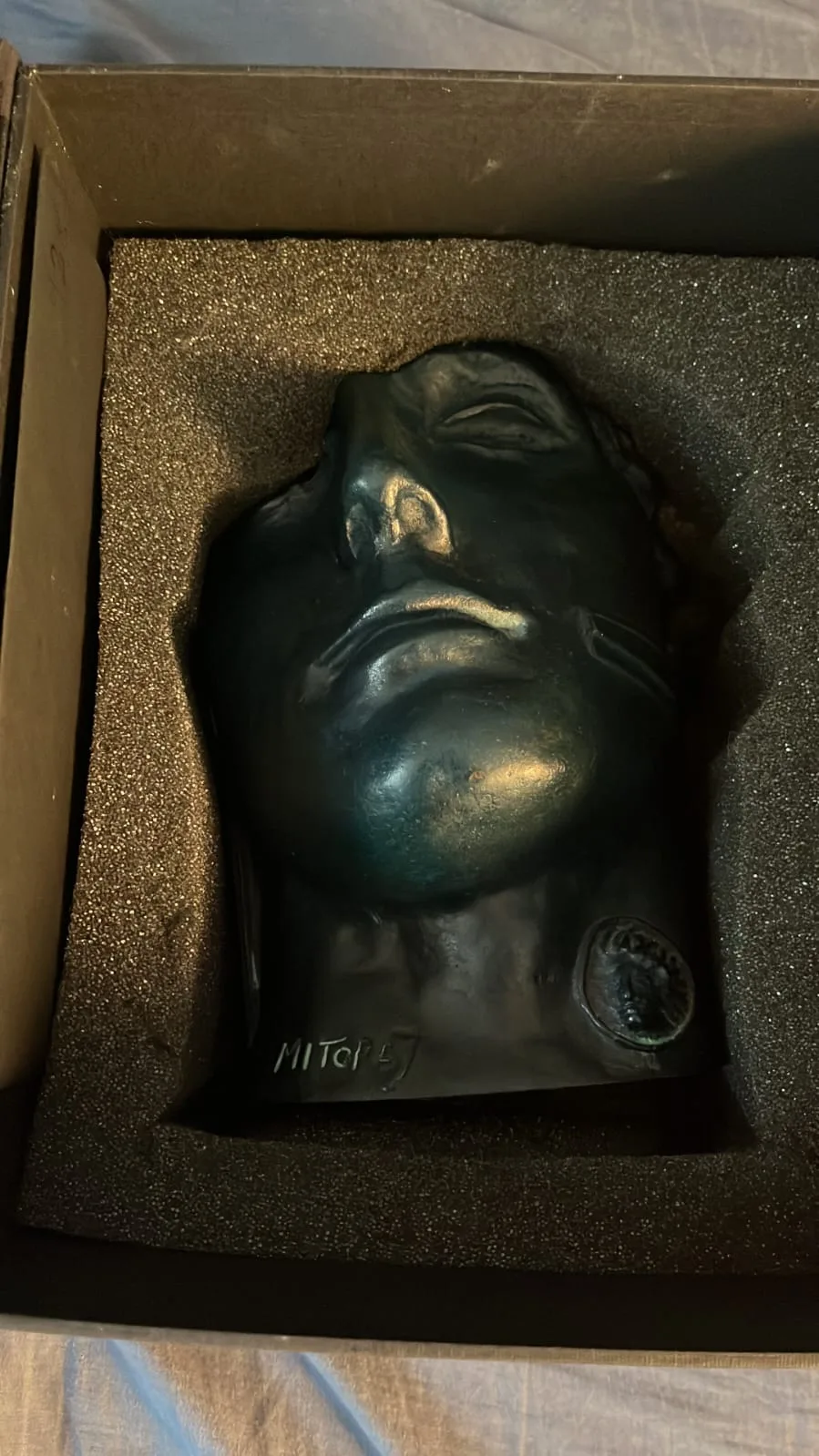
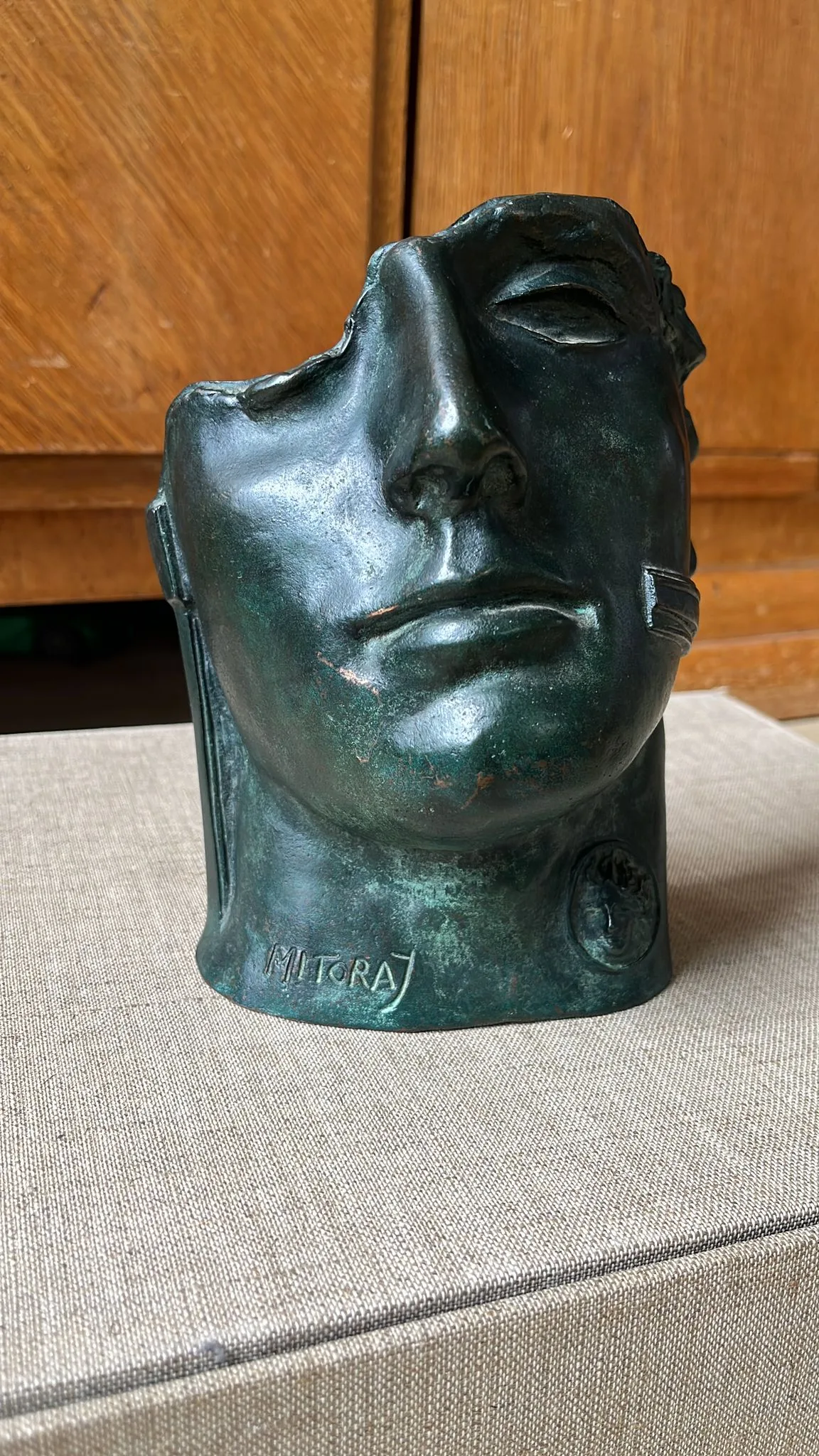
A single dark bronze head from the Centurione II series (1986), green-patinated and signed Mitoraj at the neck, numbered from an edition of 1500. The horizontal band across the face — a recurring Mitoraj motif — alludes to blindness, mystery, and the passage of time. 18.5 × 14 × 6 cm
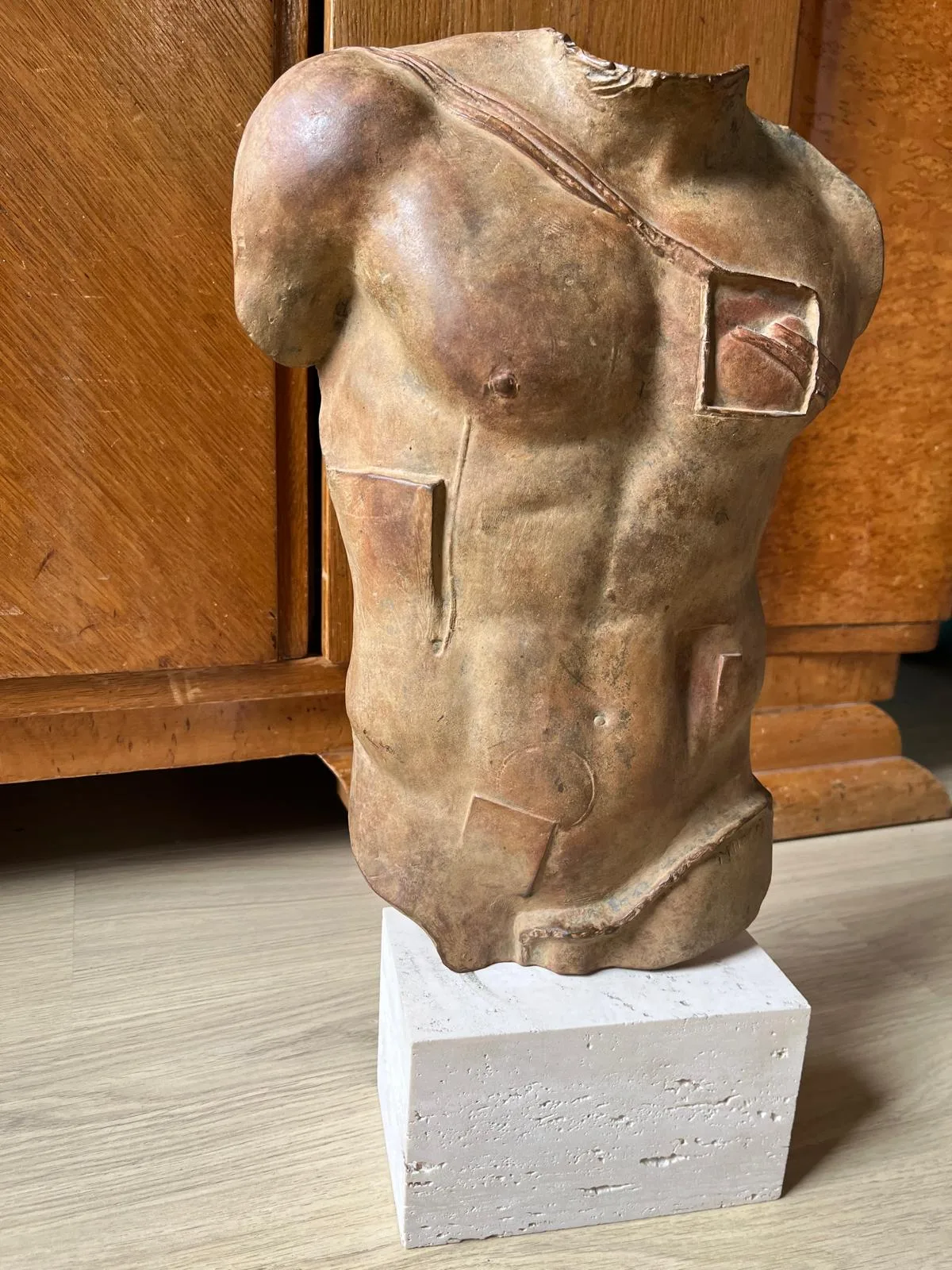
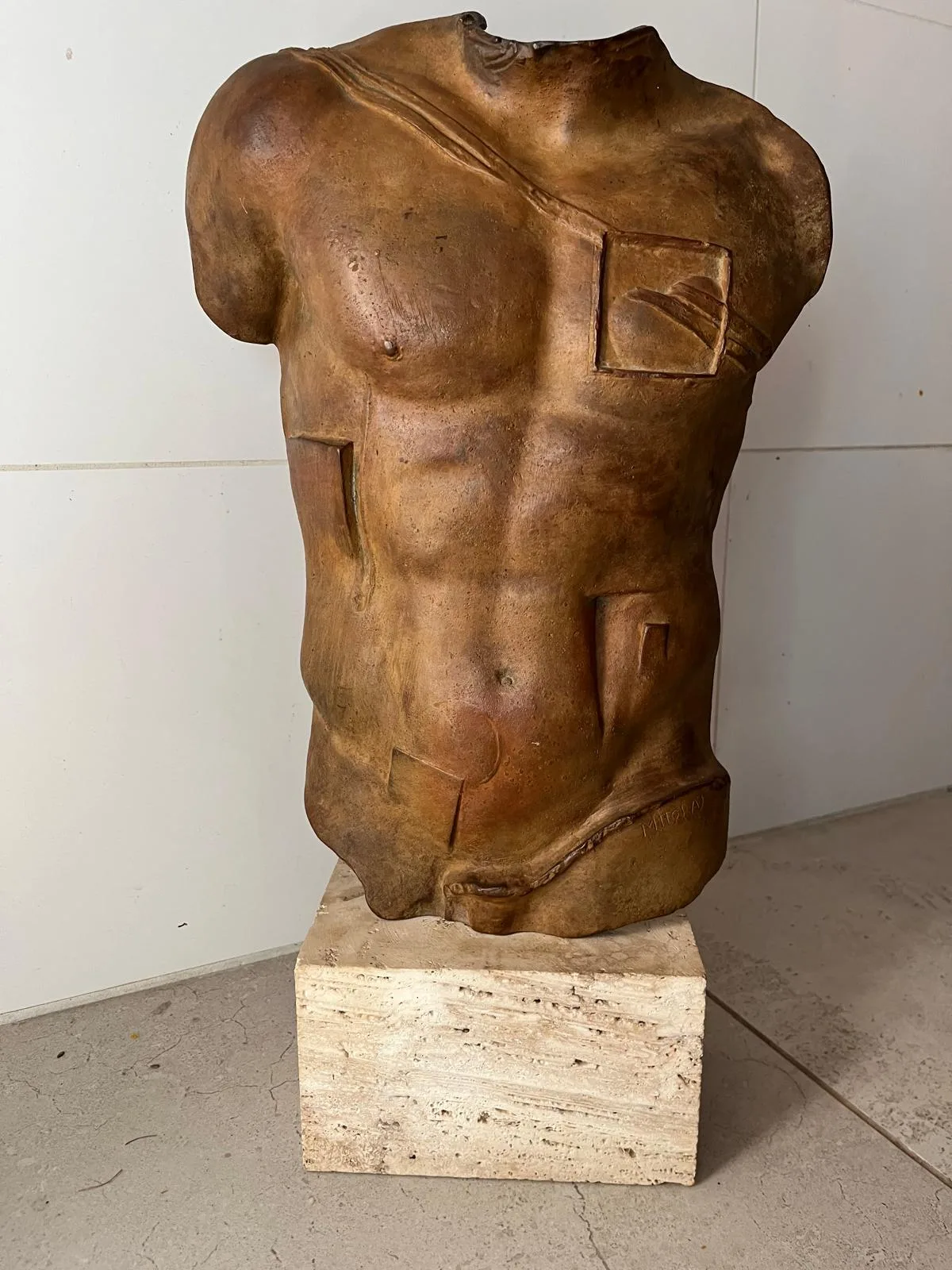
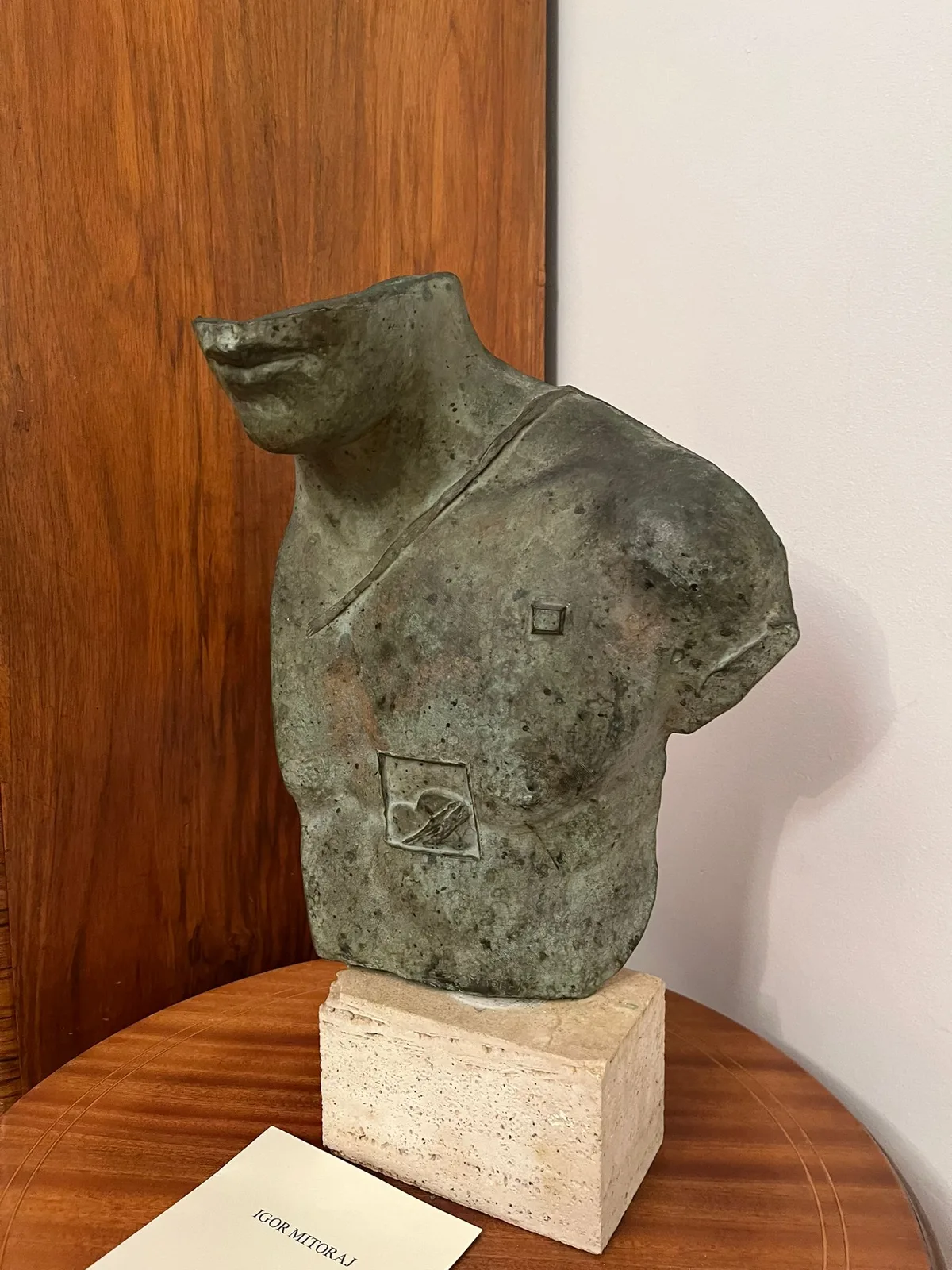
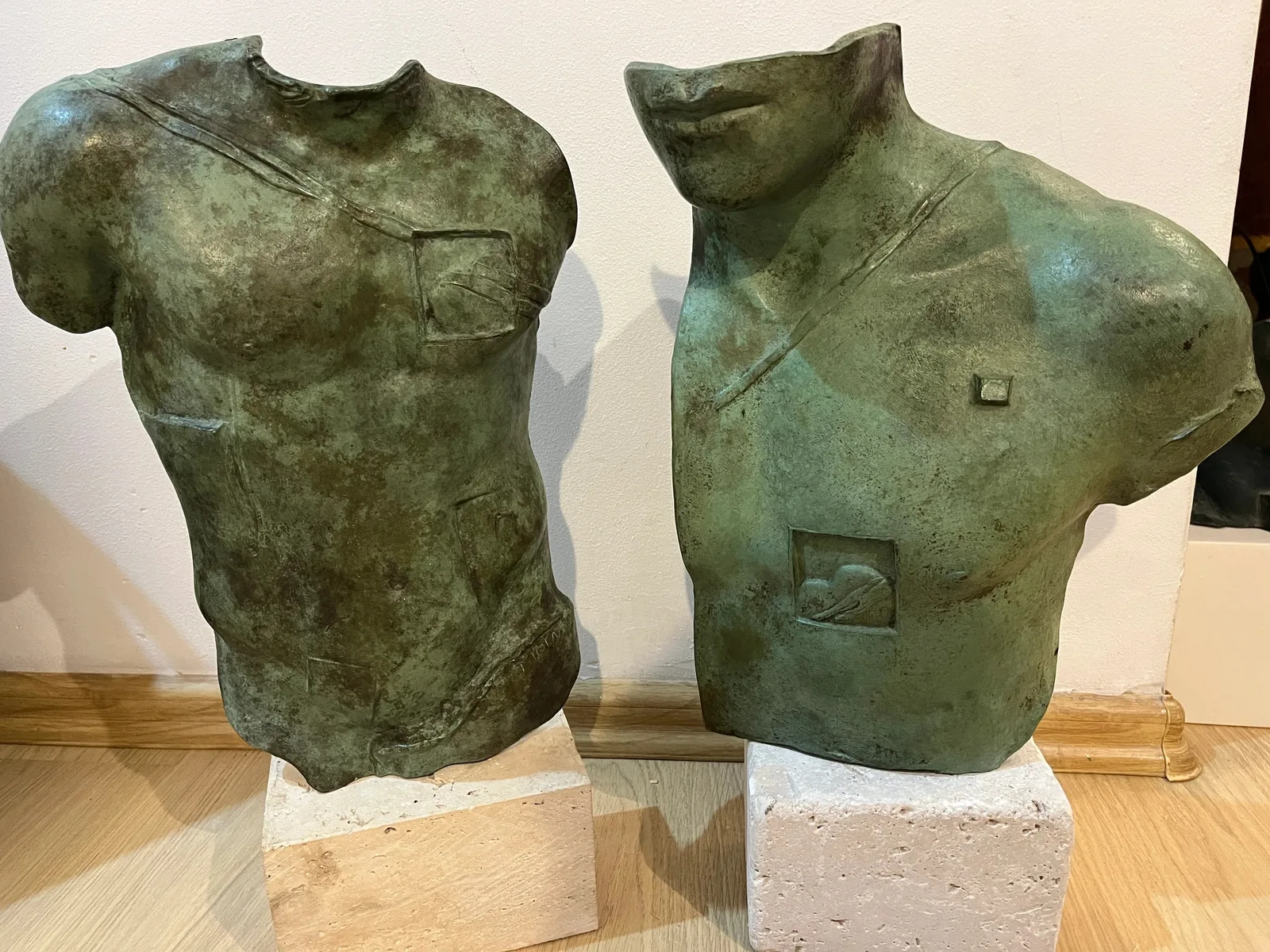
Two iconic bronze torsos from 1988 — Persée (Perseus) and Asclépios — each on a travertine base, signed and from numbered editions of 1000. The square apertures piercing chest and collarbone are Mitoraj's hallmark: windows into the mythological soul, merging classical beauty with postmodern fragmentation. 38 cm (without base) · 48 cm total
One of Mitoraj's most intimate early works (1978). A polished golden-patina bronze head entirely enveloped in bandages — the ultimate expression of concealment and interiority. Signed and numbered from an edition of 250, published by Artcurial, Paris. On its original black marble base. 12 cm (without base) · 20 cm total
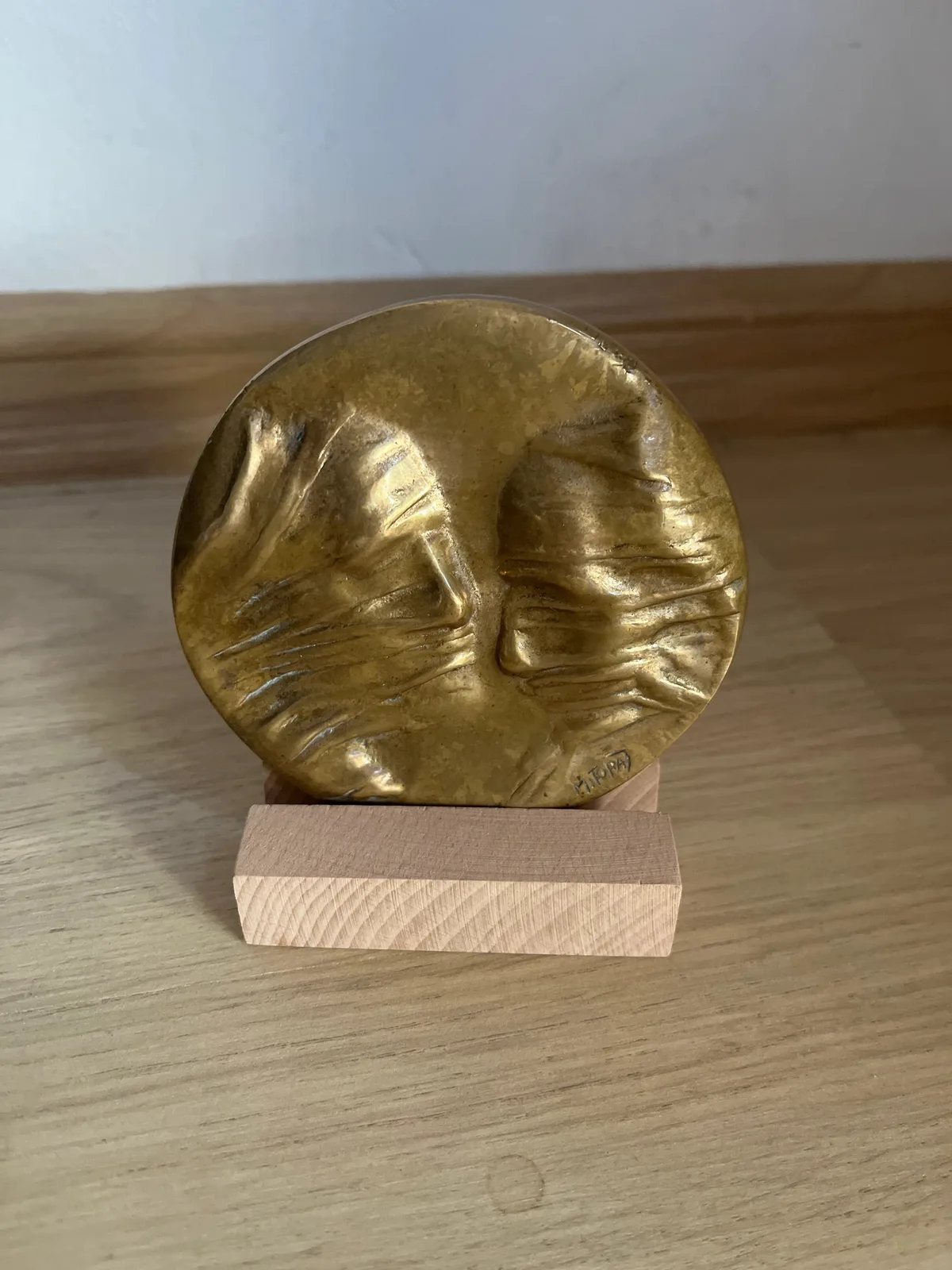
A small circular gold-patinated bronze relief (c. 1980s), signed Mitoraj, set on a wooden base. Two faces emerge in subtle profile — noses and lips barely surfacing through the swathed surface — in a quiet dialogue across the disc. A rare and intimate multiple from a limited edition. ~9 cm diameter
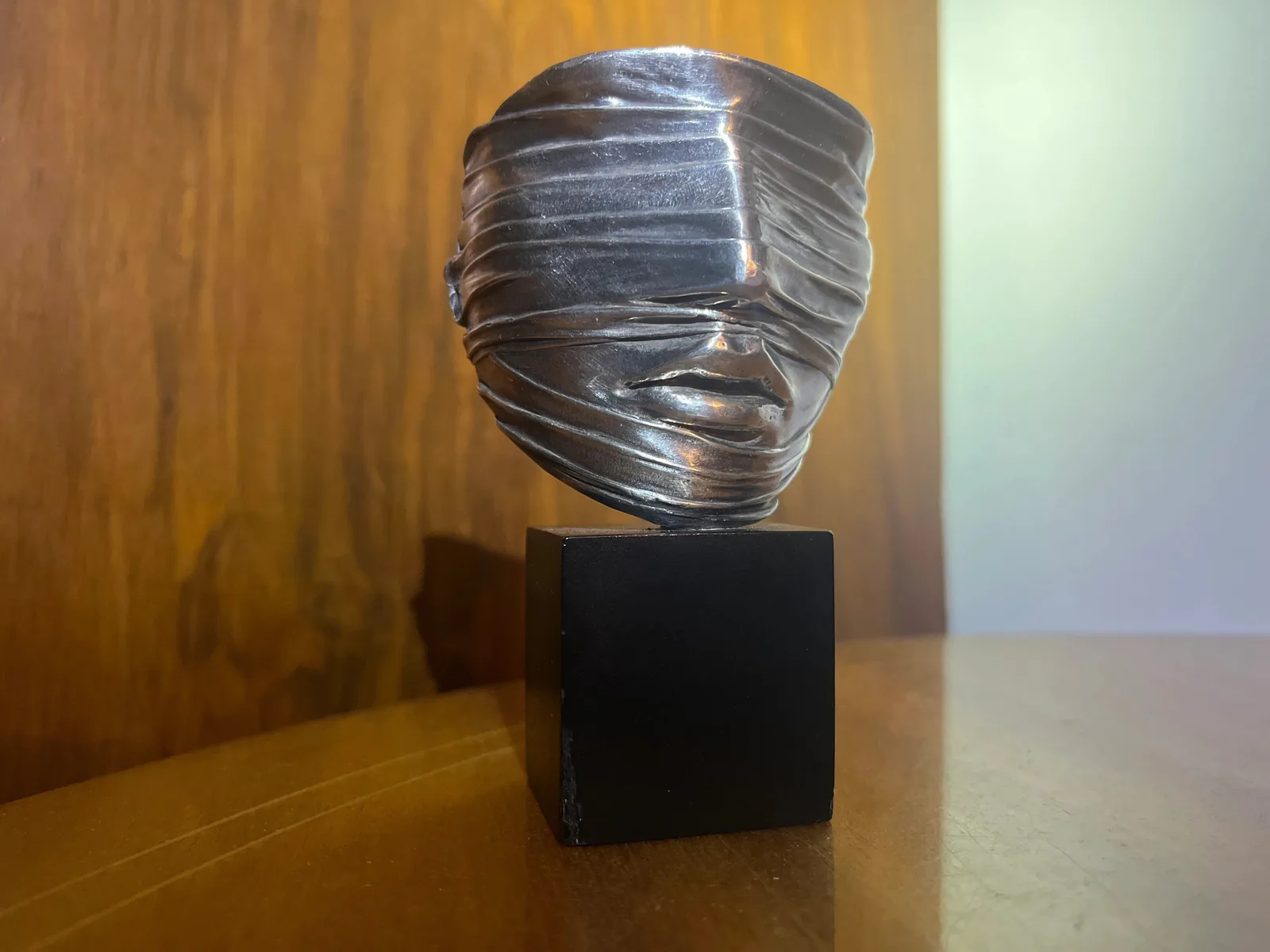
A silver-patinated bronze head entirely enveloped in tightly wound horizontal bands — one of Mitoraj's most powerful recurring motifs. Only the lips break through the wrapping, evoking silence, mystery, and concealed identity. Signed and from a limited edition of 250, published by Artcurial, Paris. On its original black cubic base. 11.5 × 11 × 7 cm (without base) · approx. 20 cm total
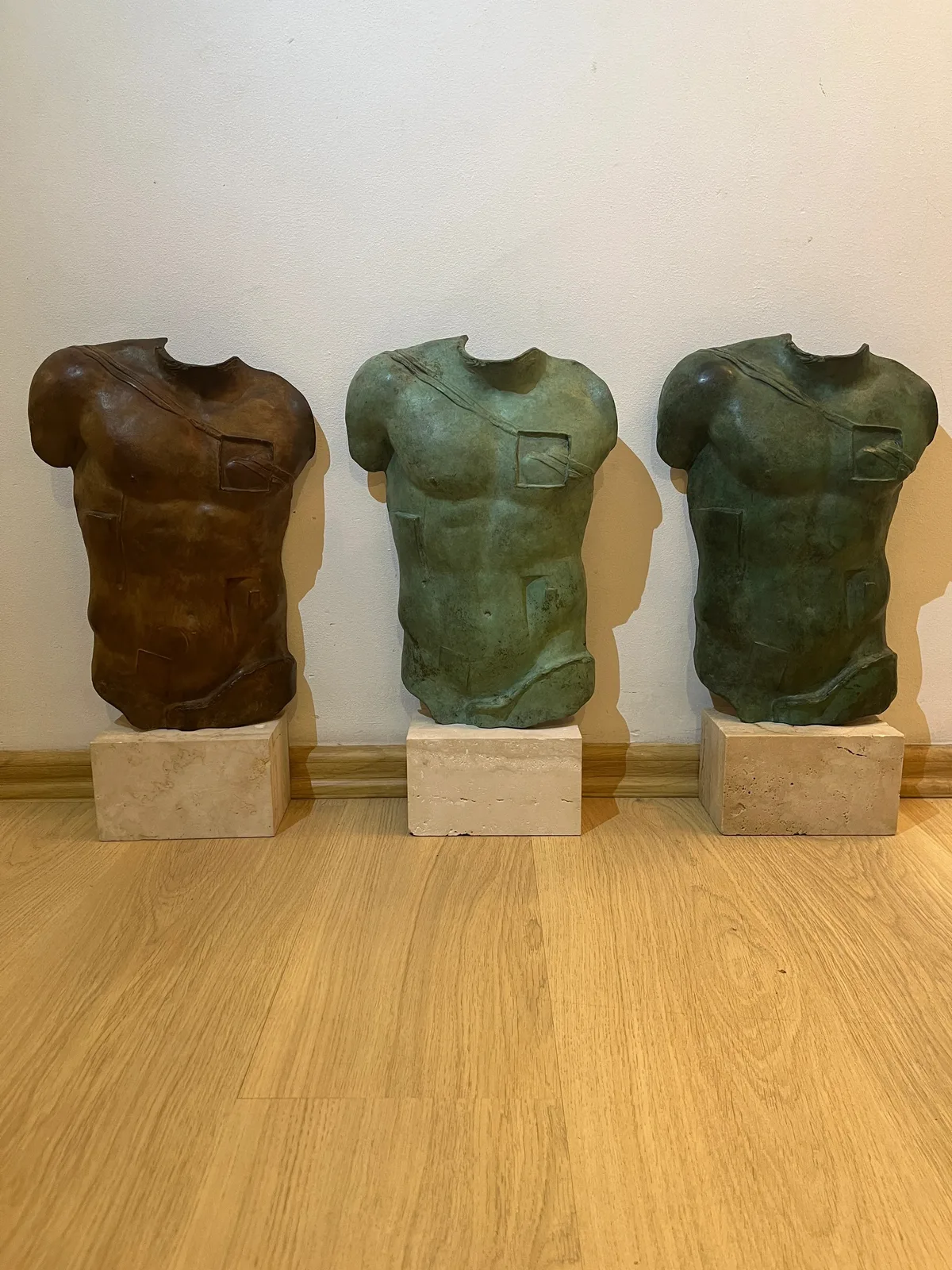
Three Persée bronzes side by side: left in warm brown patina, centre and right in green patina — all from the 1988 edition of 1000 + HC. Each shows the characteristic rectangular chest aperture at the upper left pectoral and sits on a travertine base. 38 cm without base · 48 cm total.
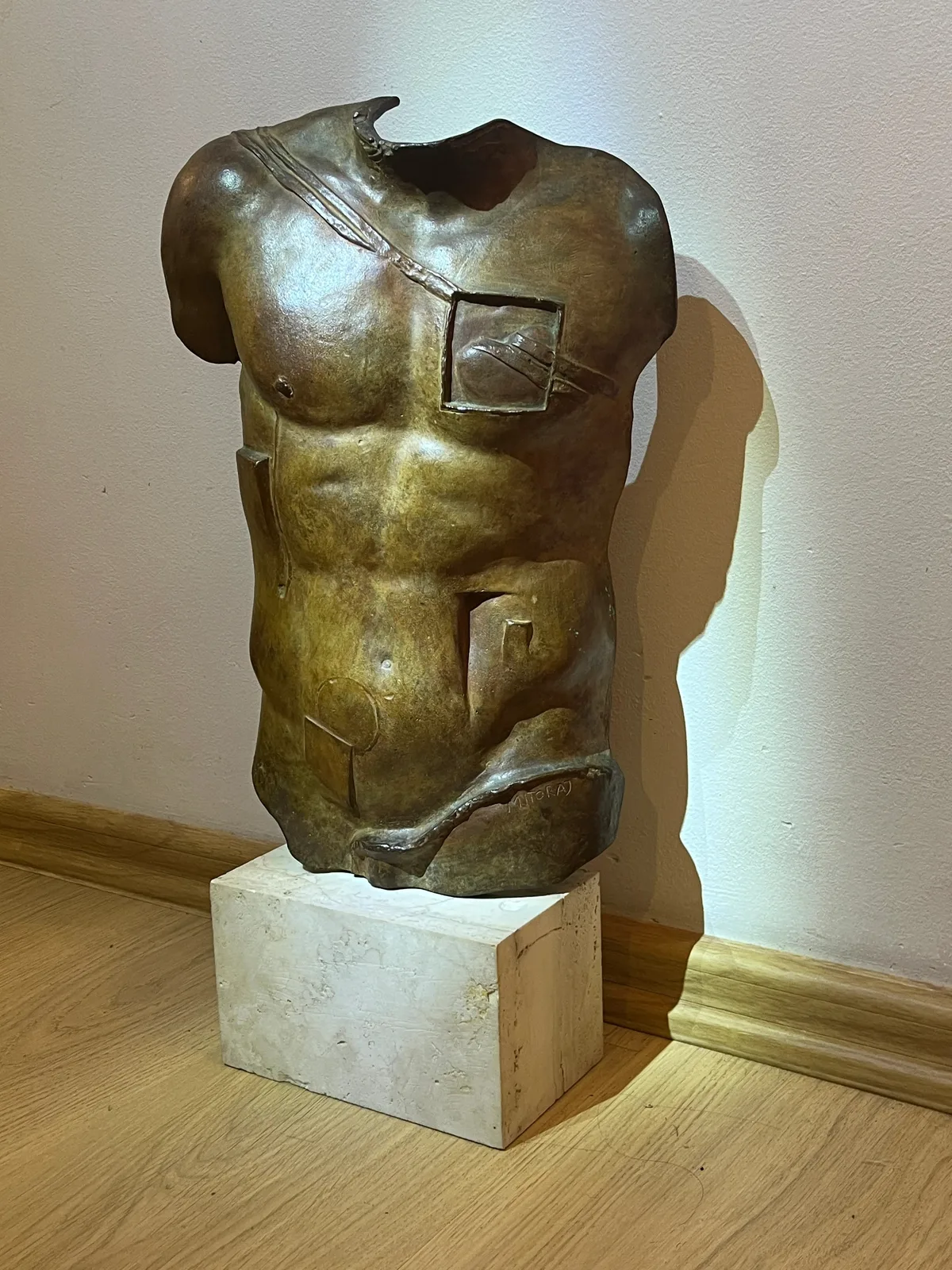
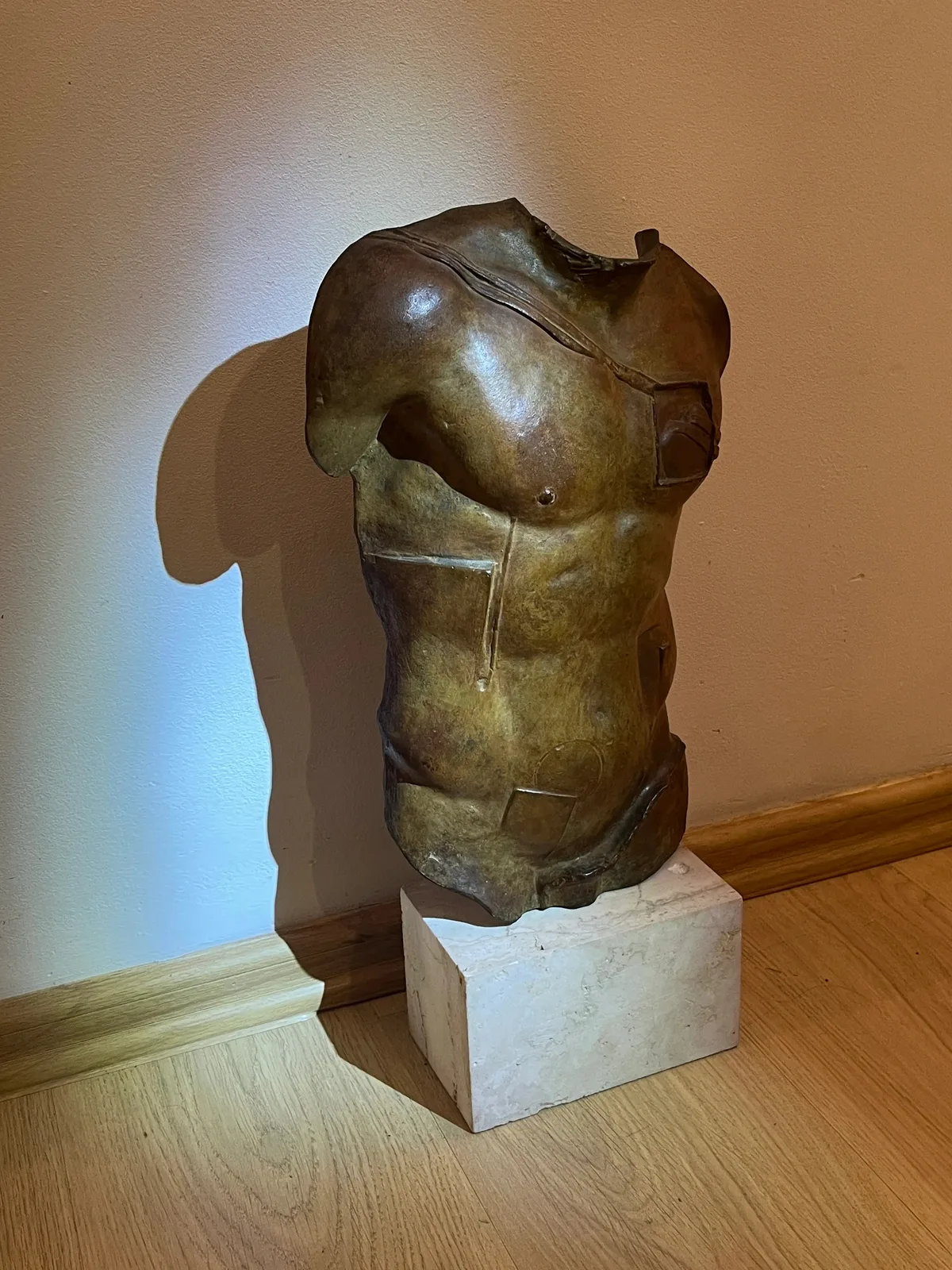
The warm brown-patina Persée from 1988 — upper-left chest aperture confirms the identification. Signed MITORAJ on travertine base, numbered from edition of 1000 + HC. 38 cm without base · 48 cm total.
A small, intensely observed bronze portrait head from 1984 — medal patina, signed at the base, from an edition of 1000. 14.5 × 7 × 5 cm. One of Mitoraj's rare non-mythological subjects. The rectangular aperture in the chest is characteristic of both Persée and Asclépios.
Second Persée bronze, 1988 — showing the sculpture from a different angle, emphasising the depth of the chest void and the quality of the green oxidised patina. Signed MITORAJ. 38 cm without base · 48 cm total.
The warm brown-patina variant of Asclépios 1988 — same edition (1000 + HC) as the standard green. The central chest aperture — symbol of the god of medicine — is clearly visible. Signed MITORAJ, numbered on reverse. 38 × 28 × 14 cm without base · 48 cm total.
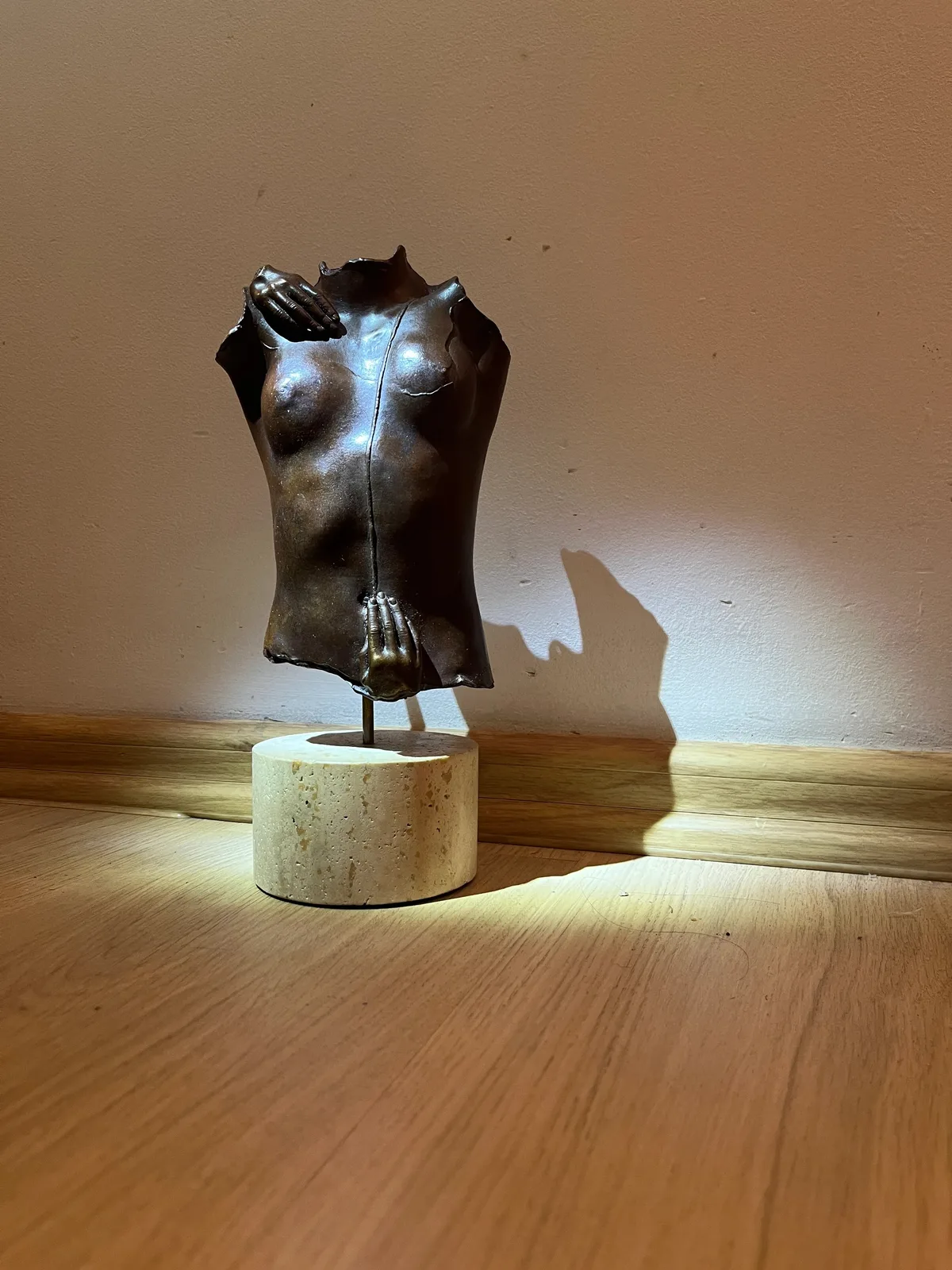
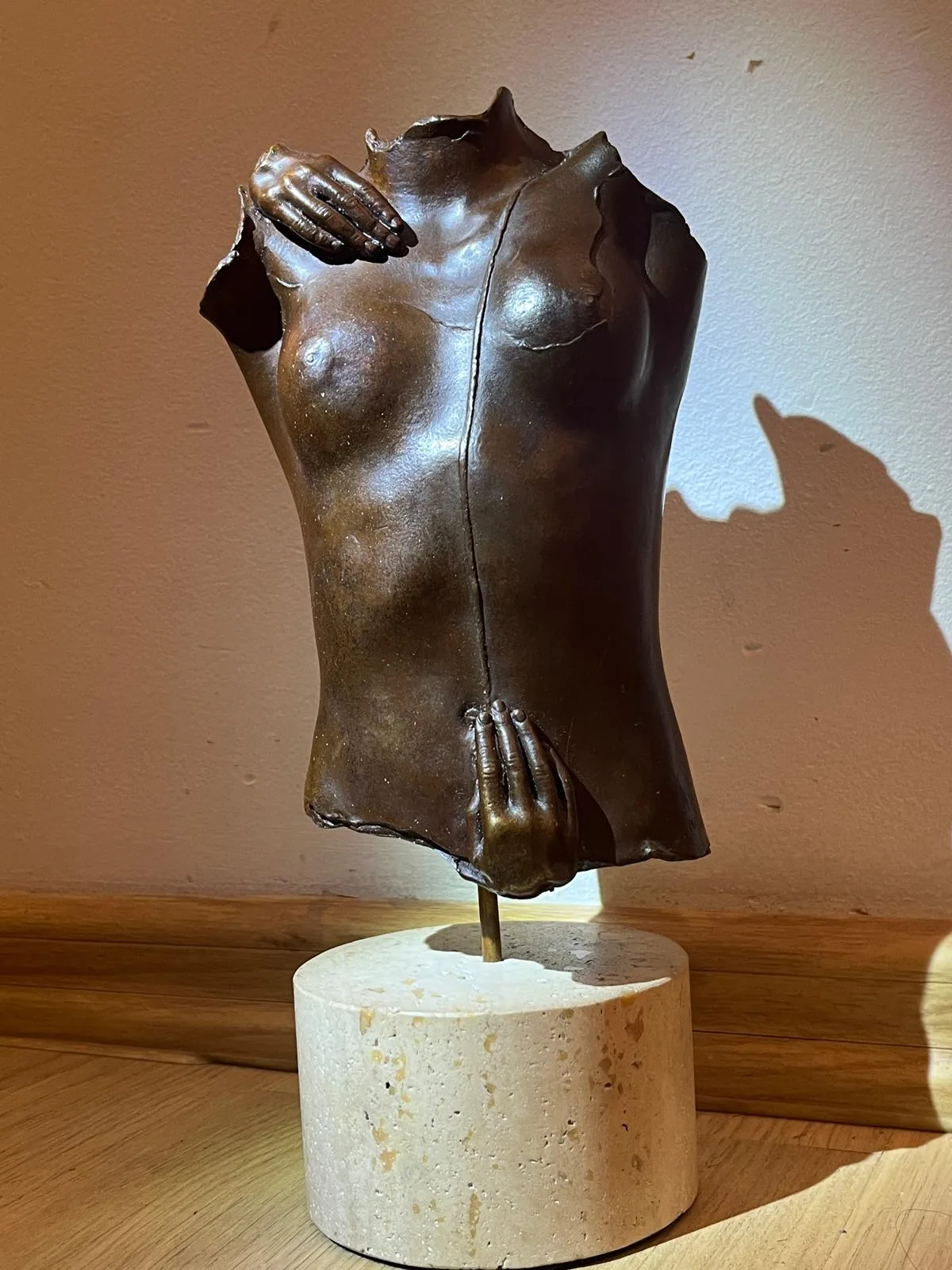
A female torso in dark copper-brown bronze — two delicate hands emerge from the fragmentary body, one cupping the chest, one at the waist, in an intimate gesture of self-embrace. Artcurial edition, 1979. Signed and numbered from an edition of 250, on an original round travertine base. 20 × 14 × 7 cm (sculpture) · 28.5 × 14 × 10 cm overall
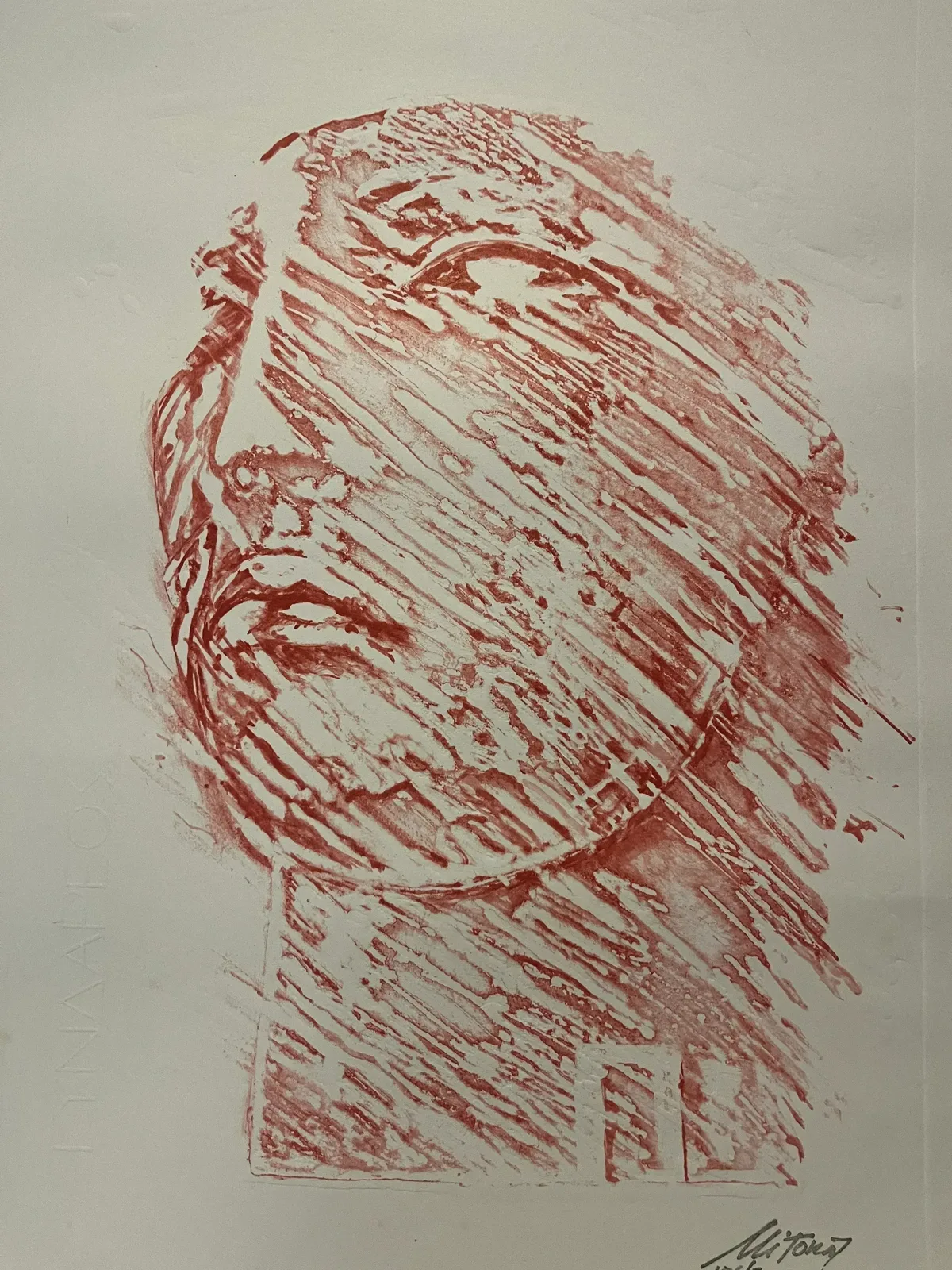
A striking sanguine (red chalk) lithograph depicting Tindareos — the mythological King of Sparta and father of Helen of Troy, rendered as a bandaged and fragmented head in fluid, gestural sanguine strokes on white paper. Signed Mitoraj lower right in pencil. A rare original signed print — Mitoraj's graphic works on paper are considerably scarcer than his bronzes.
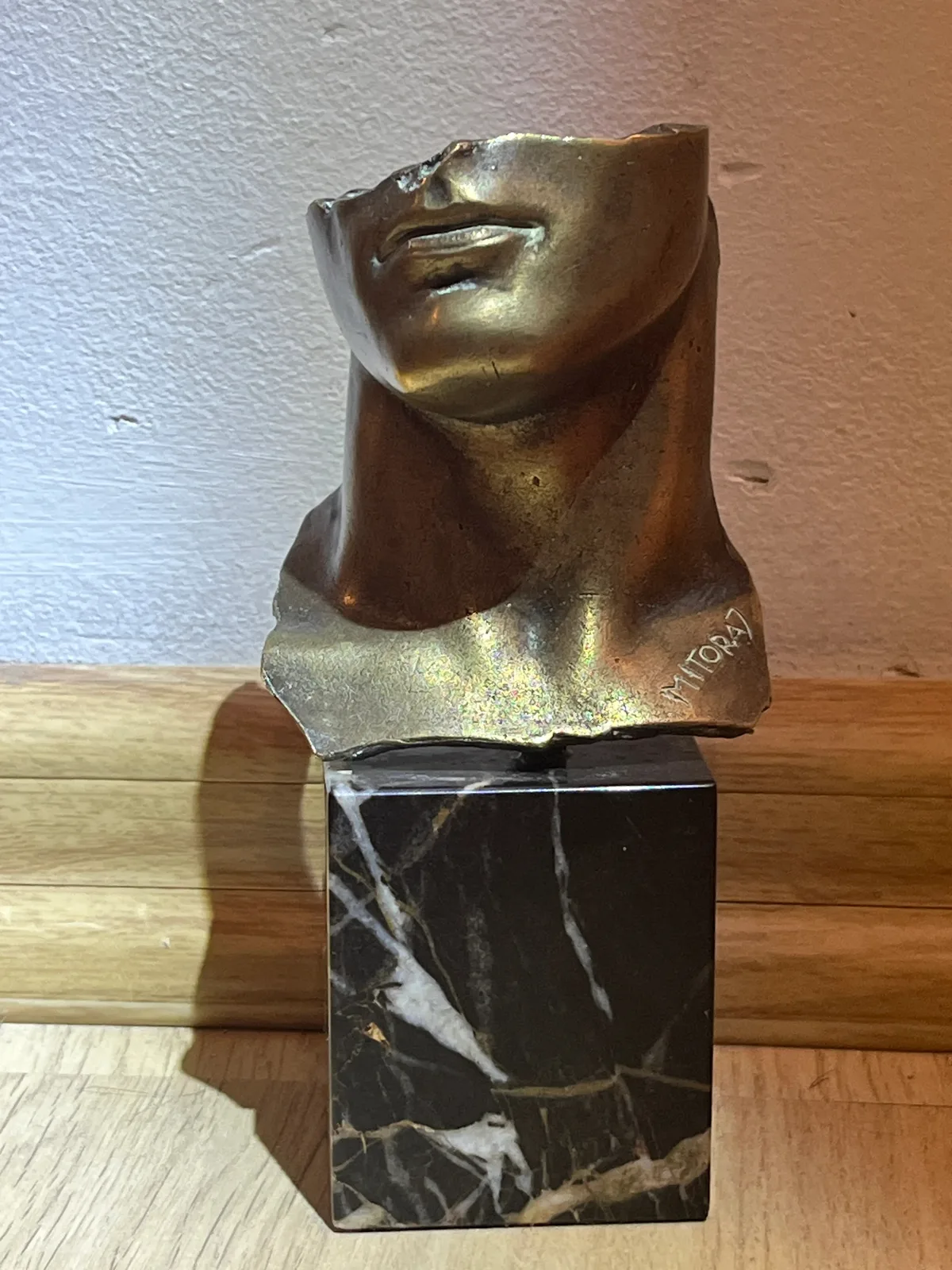
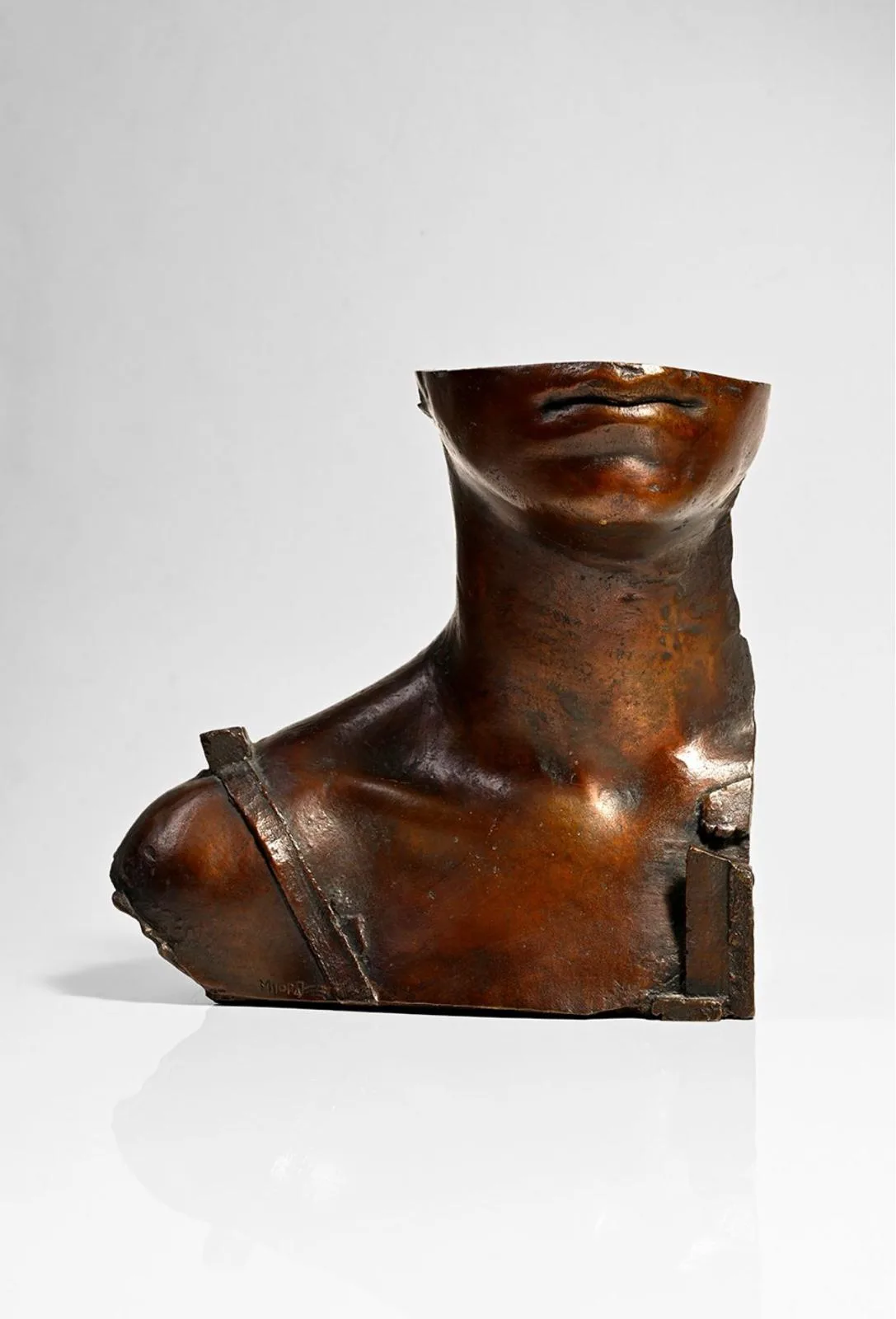
A fragment of a lower face — lips, chin, neck merging into an upper torso — in warm reddish-brown patina. Signed MITORAJ at the lower left edge of the base. A collector bronze meant to be encountered at close range: complete despite its incompleteness.
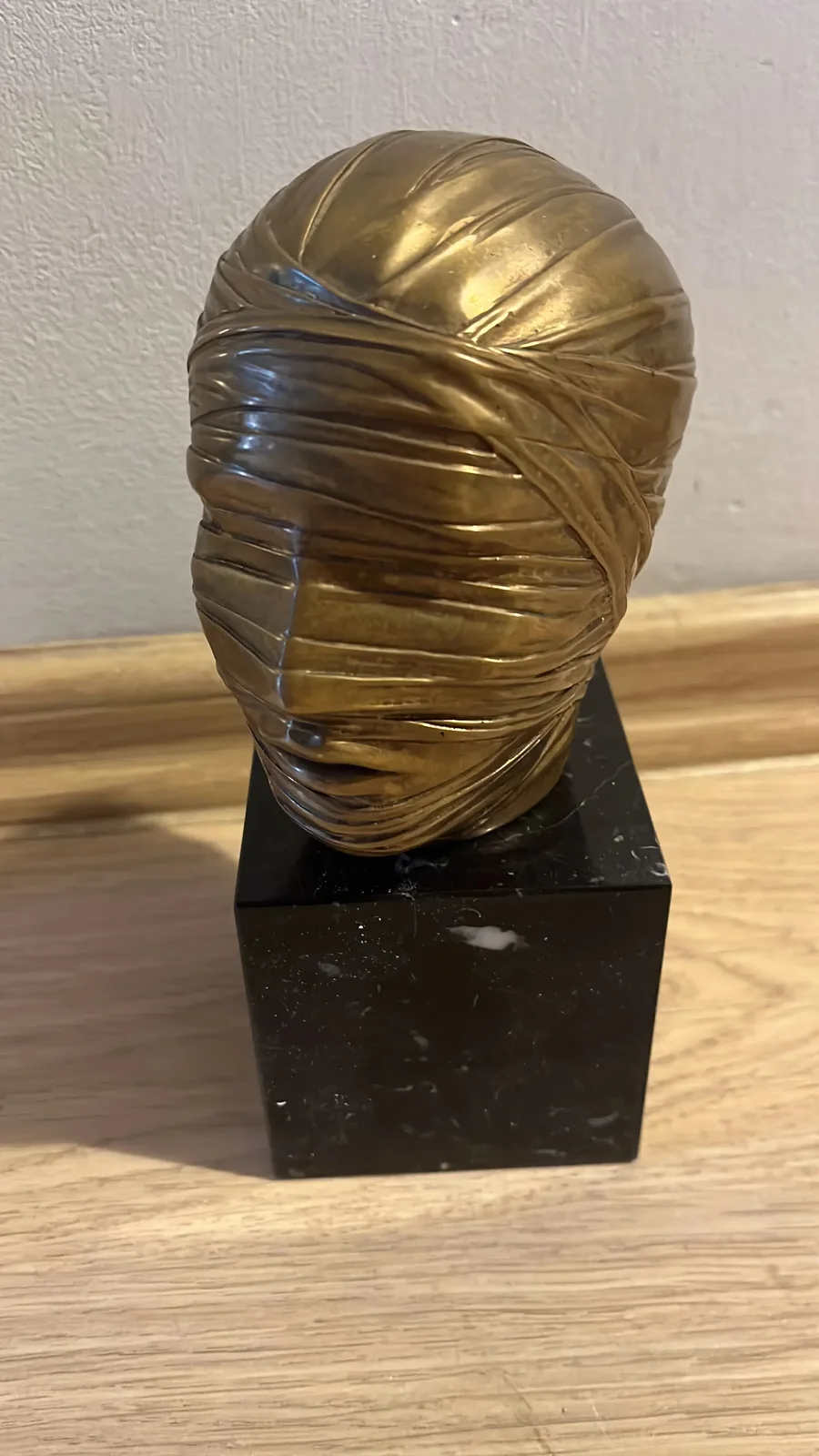
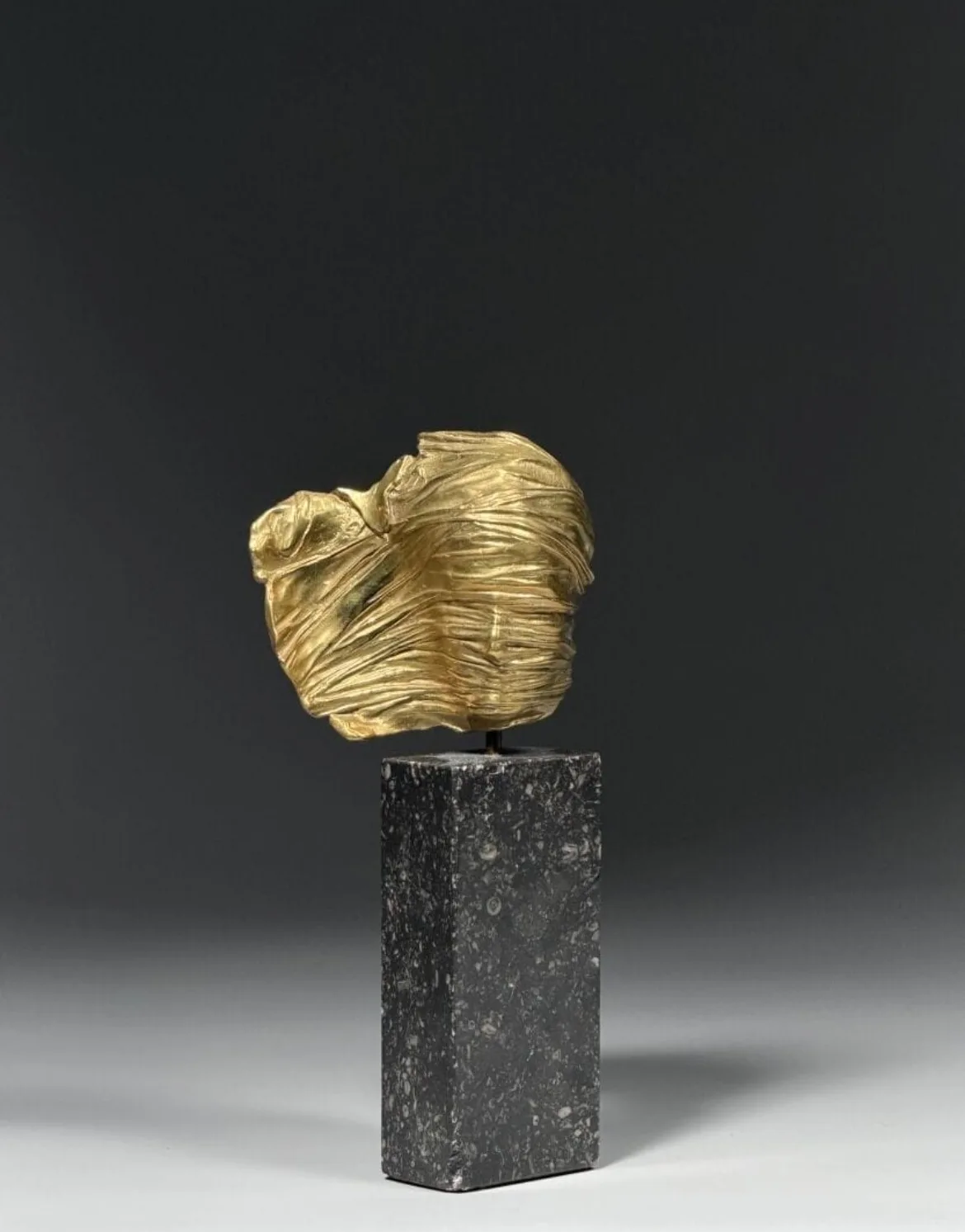
A gilded bronze head entirely enveloped in draped fabric, mounted on a dark veined marble base. The gold patina and abstract rounded form of fabric folds make this one of Mitoraj's most enigmatic works — concealment as its own revelation.
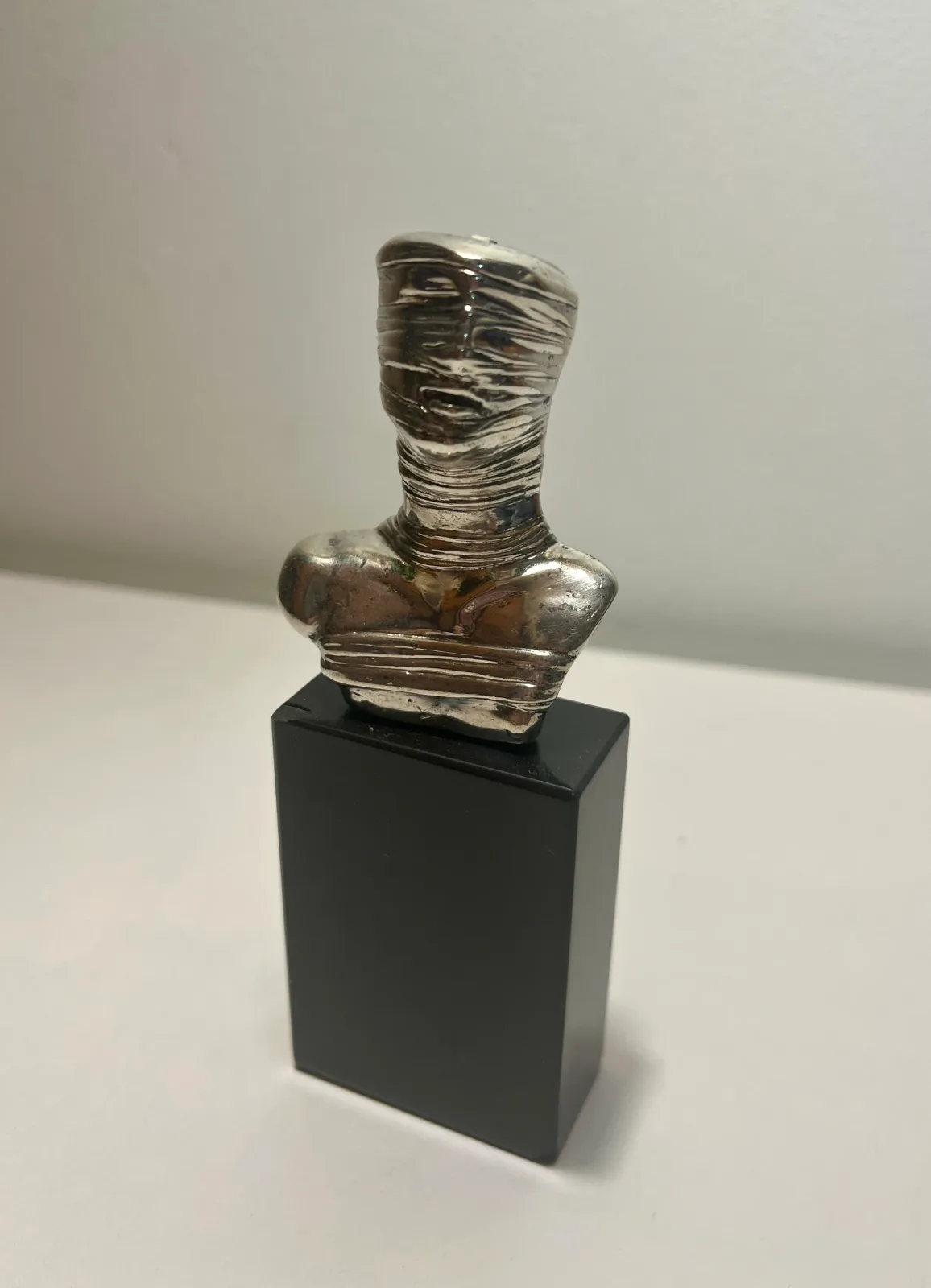
A small silver-plated bronze bust — wrapped head and bound torso on a black marble base. The high-mirror chrome patina is exceptional among Mitoraj editions; the binding motif here reads as both punishment and protection, faithful to the myth of Prometheus chained. Signed MITORAJ.
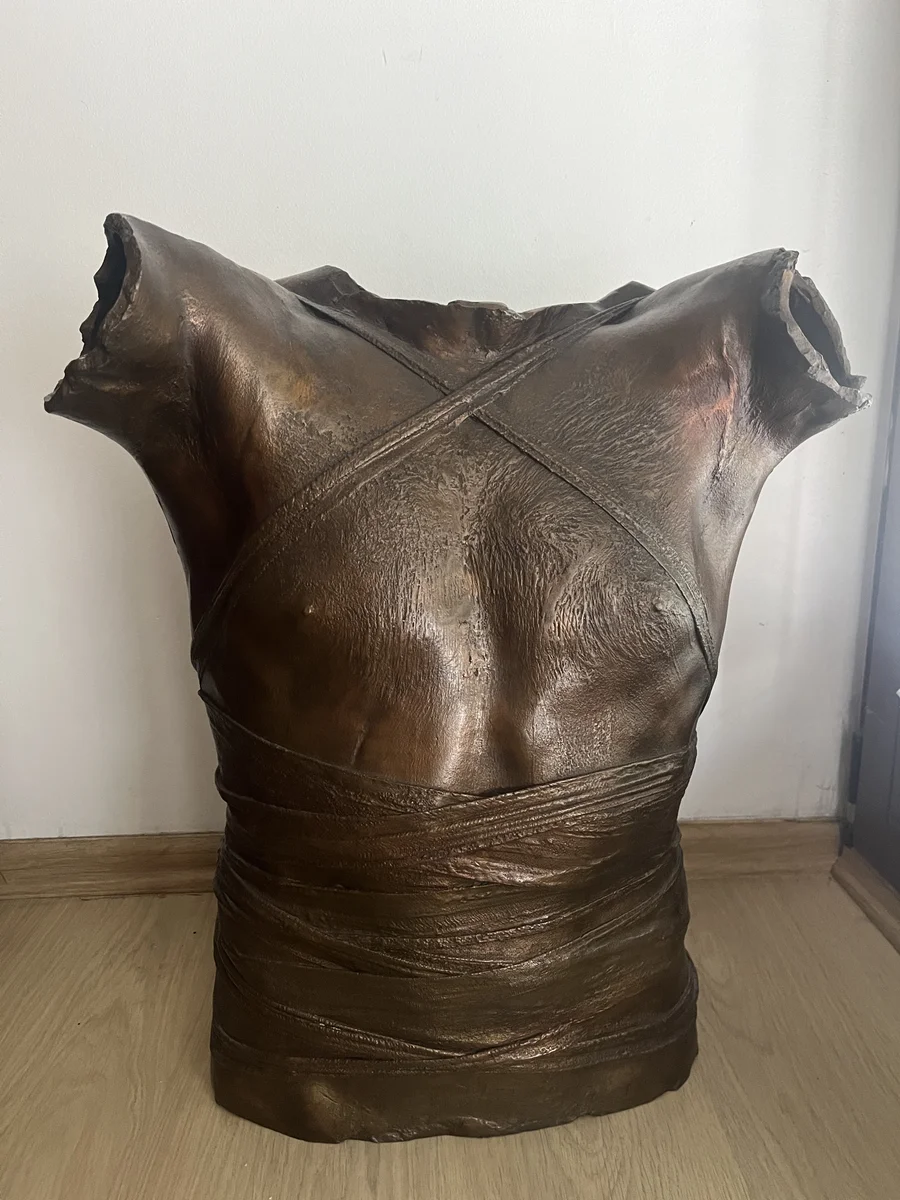
A bronze breastplate (corazza) from 1987 — one of only five cast. The Corazza belongs to Mitoraj's late-1980s series of armoured and bound forms, in which the body is simultaneously protected and constrained by the same gesture. Signed MITORAJ. Edition of 25. approx. 25 × 29 × 10.5 cm
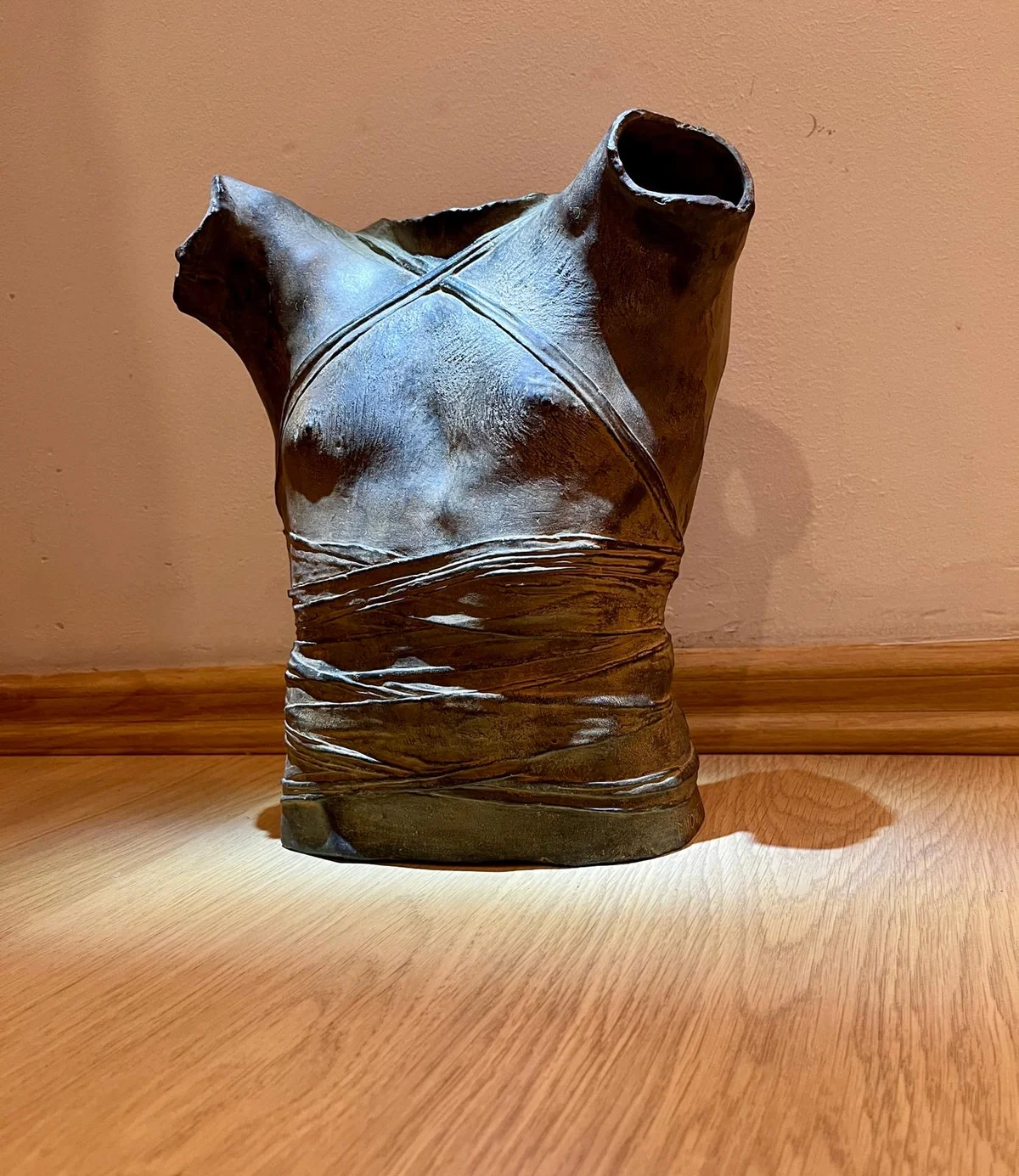
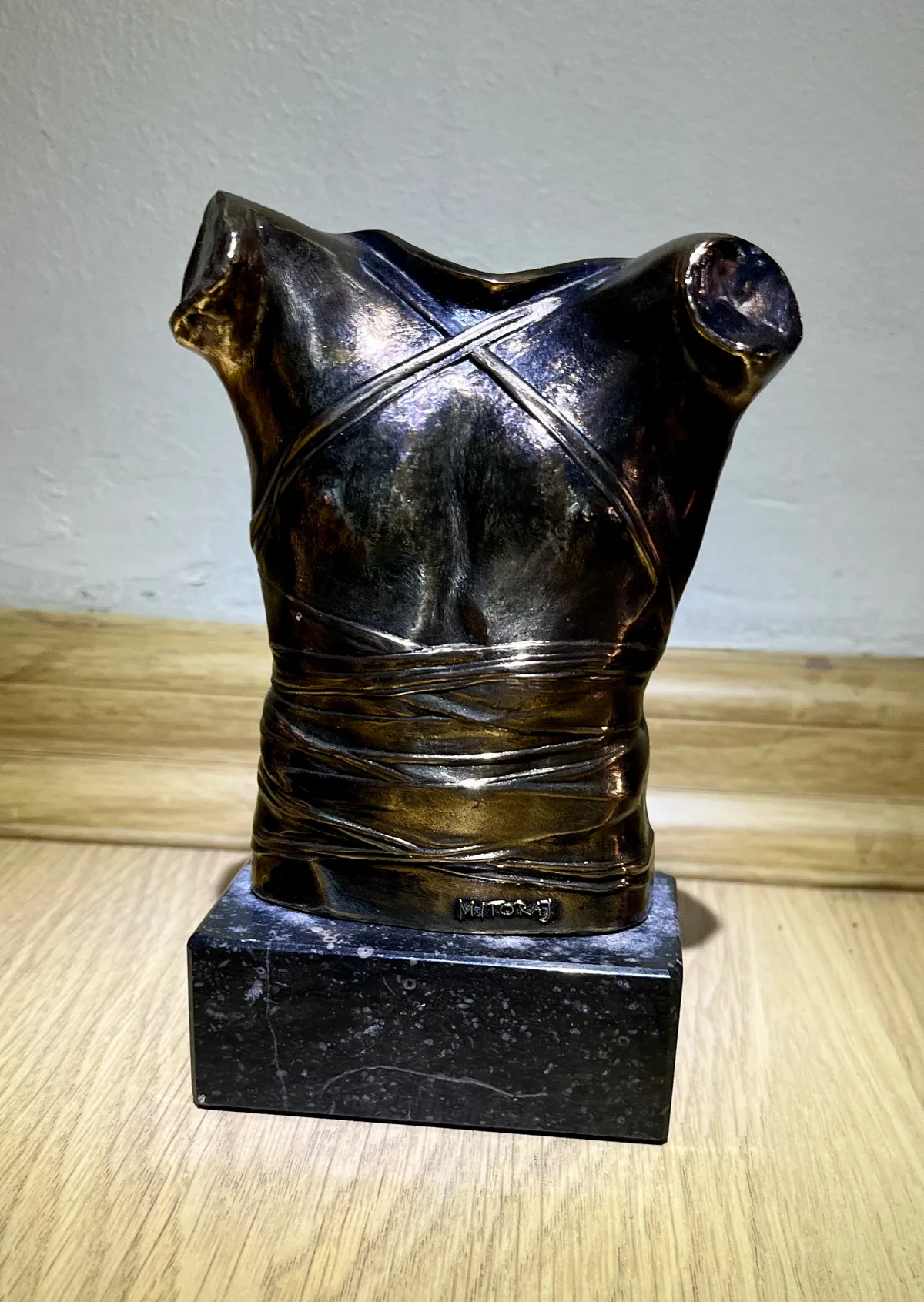
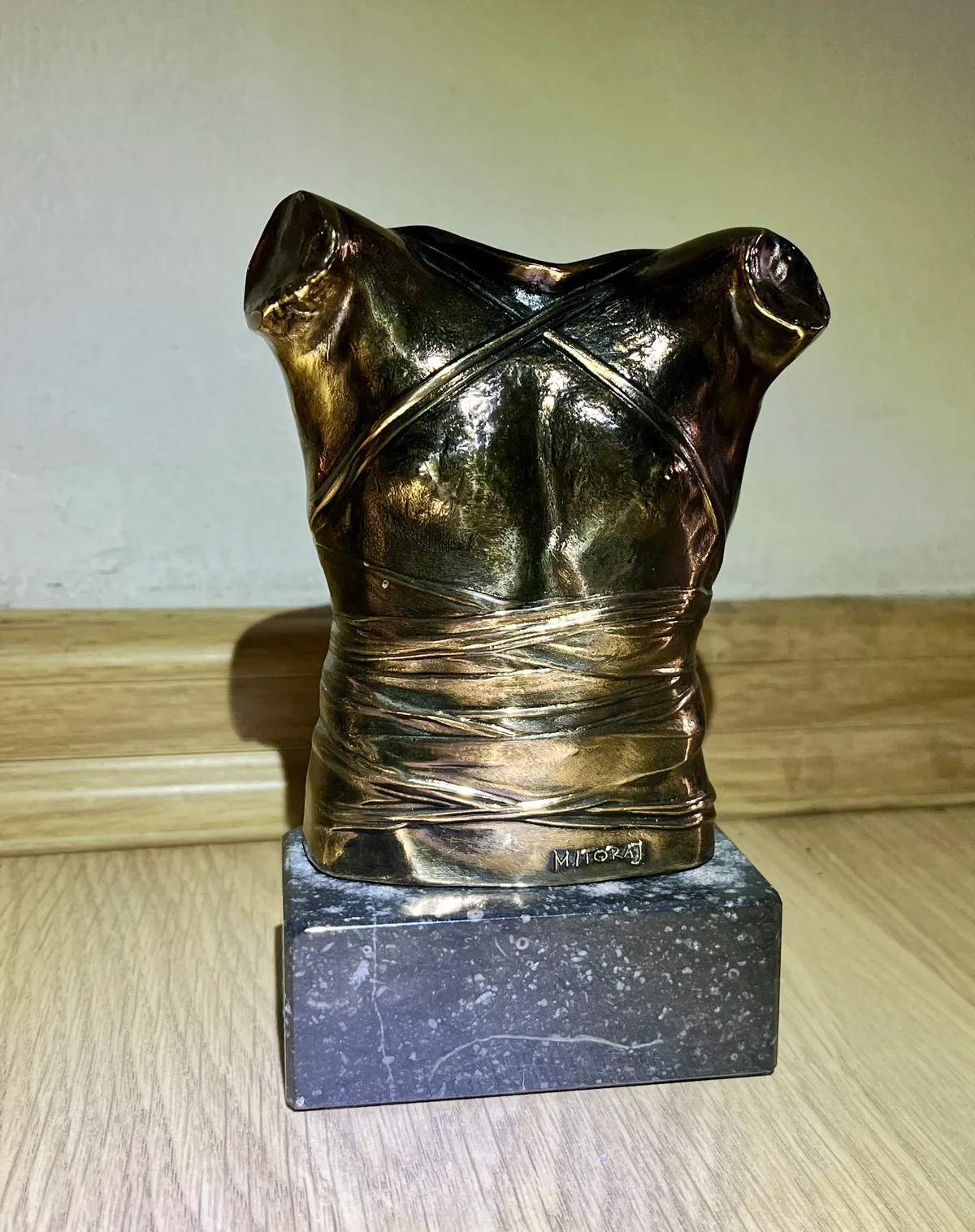
The wrapped bronze torso upright — the X-crossing of the binding straps across the chest clearly visible. Warm golden-brown patina. Signed MITORAJ. approx. 28–30 cm height
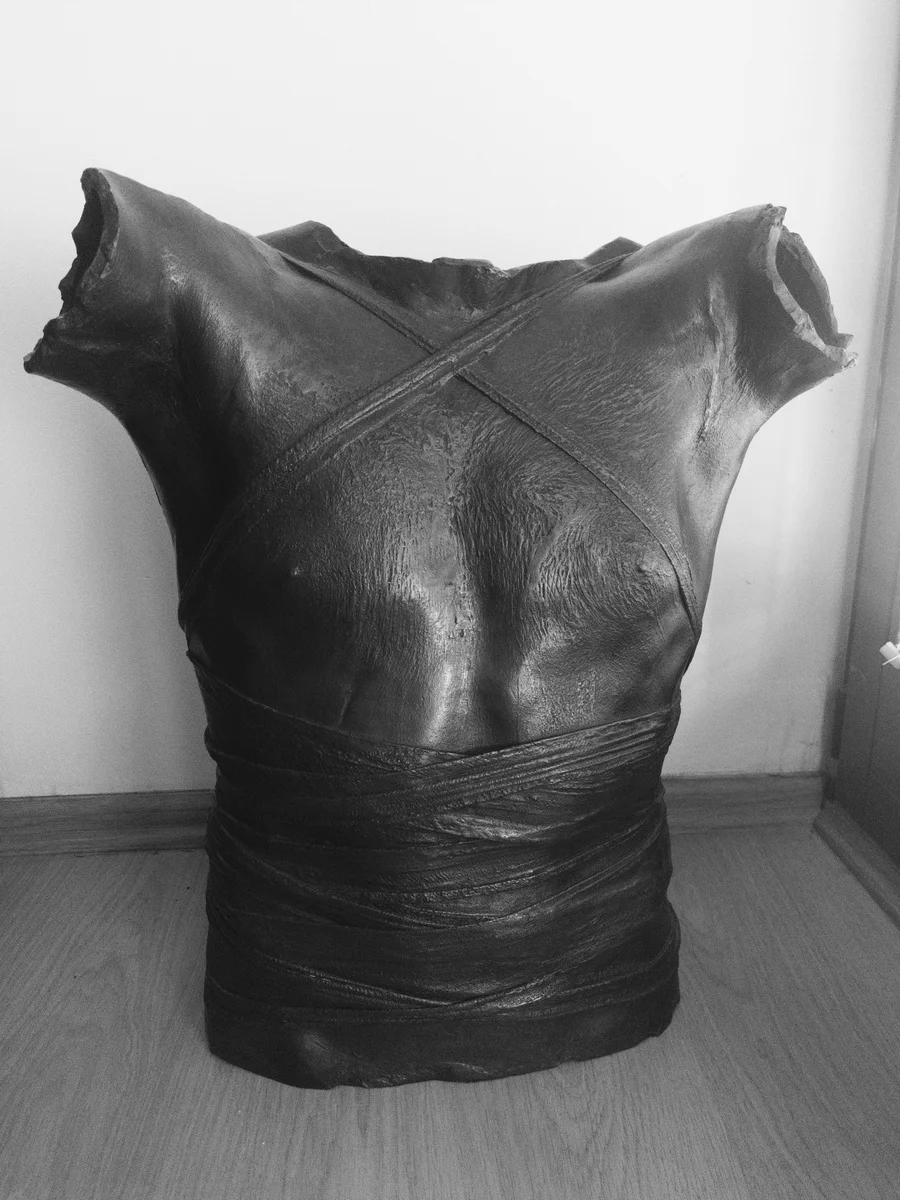
High-contrast monochrome of the wrapped torso — the diagonal X-crossing of the binding straps reads as pure geometry against the dark patina. The sculptural tension between concealment and form is most visible here.
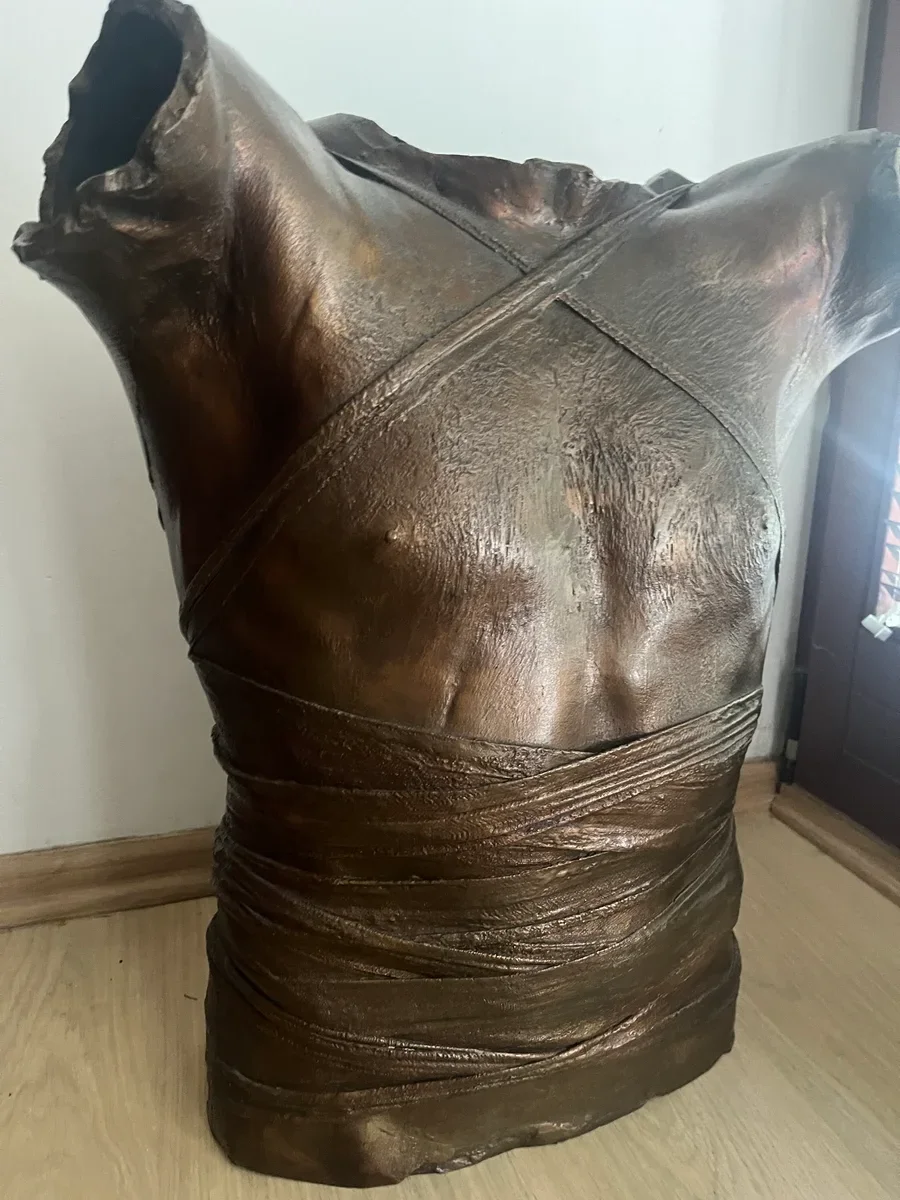
The torso from the side — the horizontal binding at the waist and the warm, polished bronze of the chest in full light. The deliberate fragmenting of neck and arms is particularly evident from this angle.
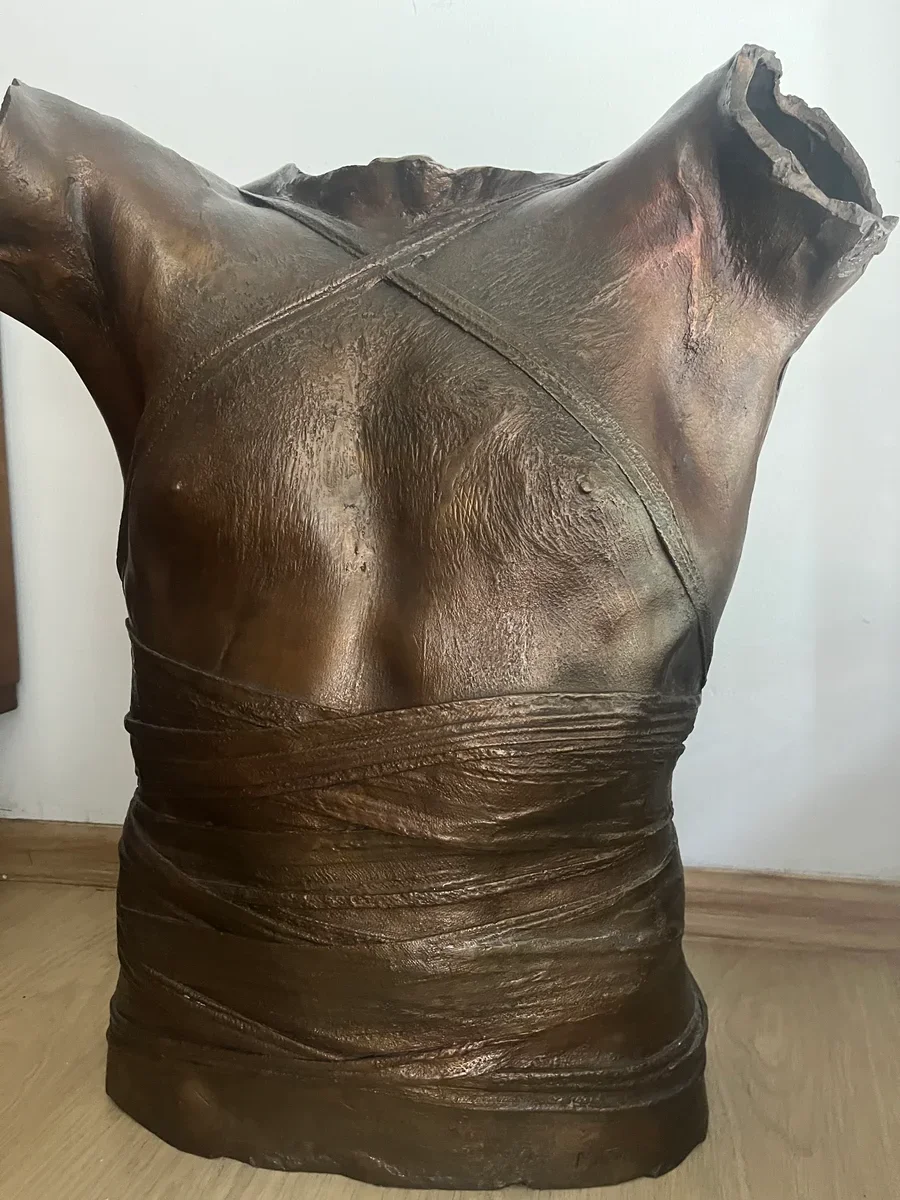
A second view of the torso lying on its side — the depth of the bronze casting and the layered wrapping at the lower body. The ragged, open neck and shoulder edges are characteristic of Mitoraj's broken-body aesthetic.
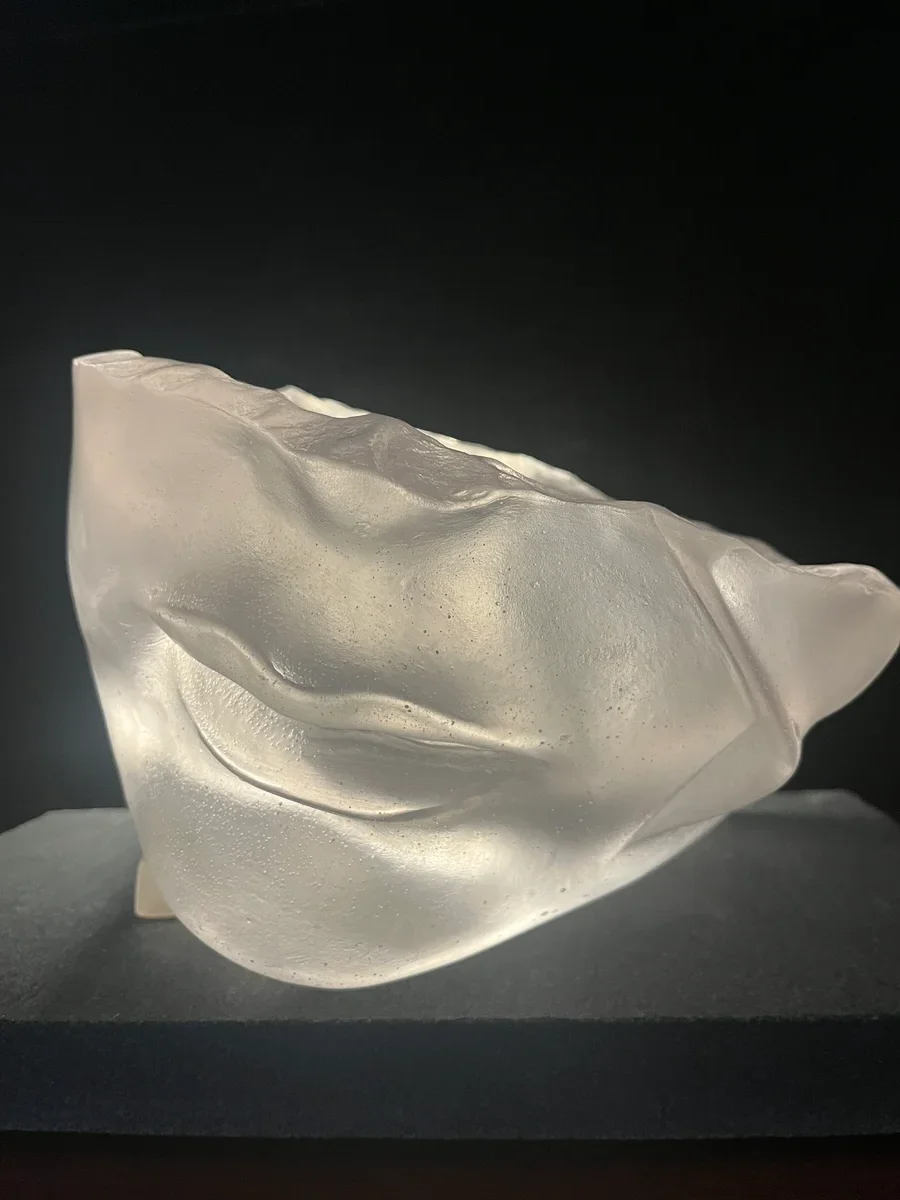
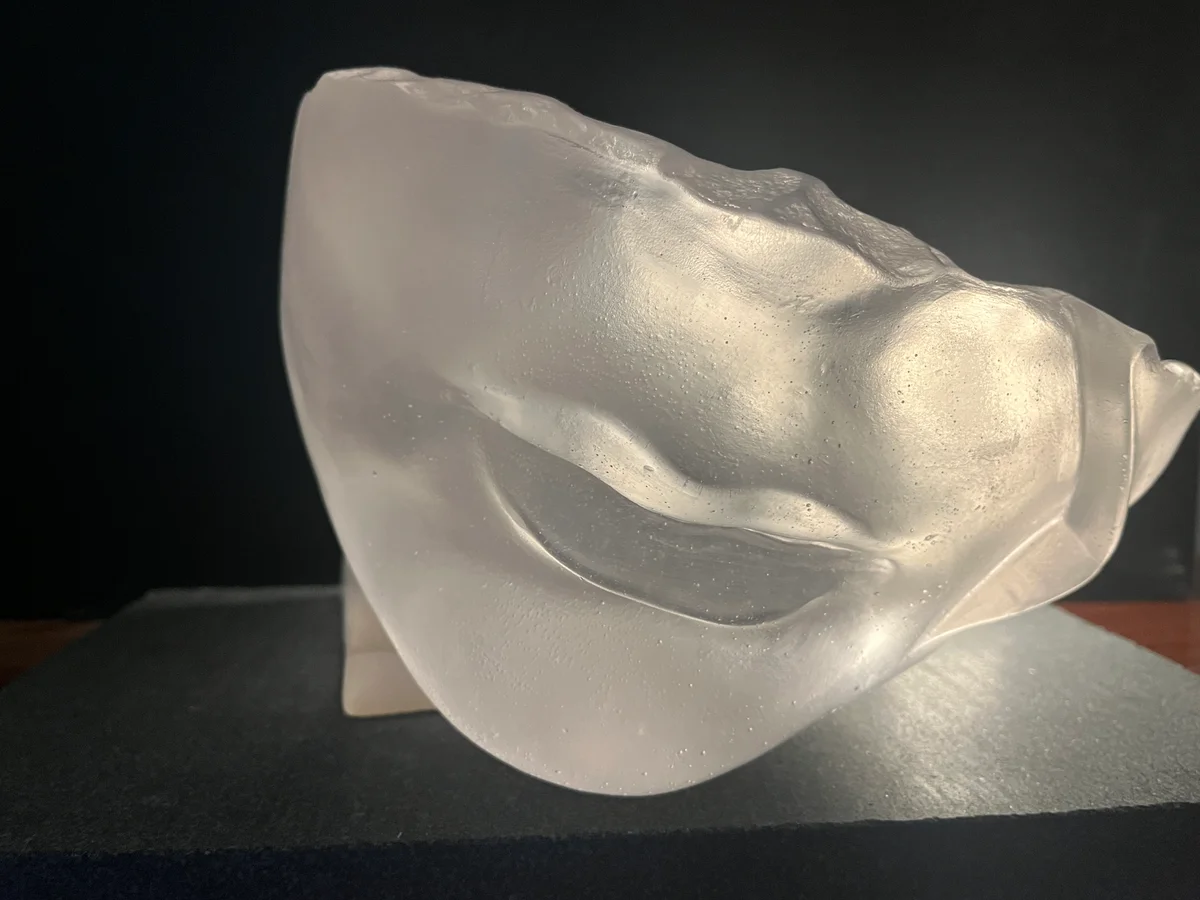
A large frosted crystal sculpture — lips, nose and cheekbone emerging from the translucent surface in characteristic Mitoraj profile. The matte glass gives the face an ethereal, luminous quality. On a dark display base.
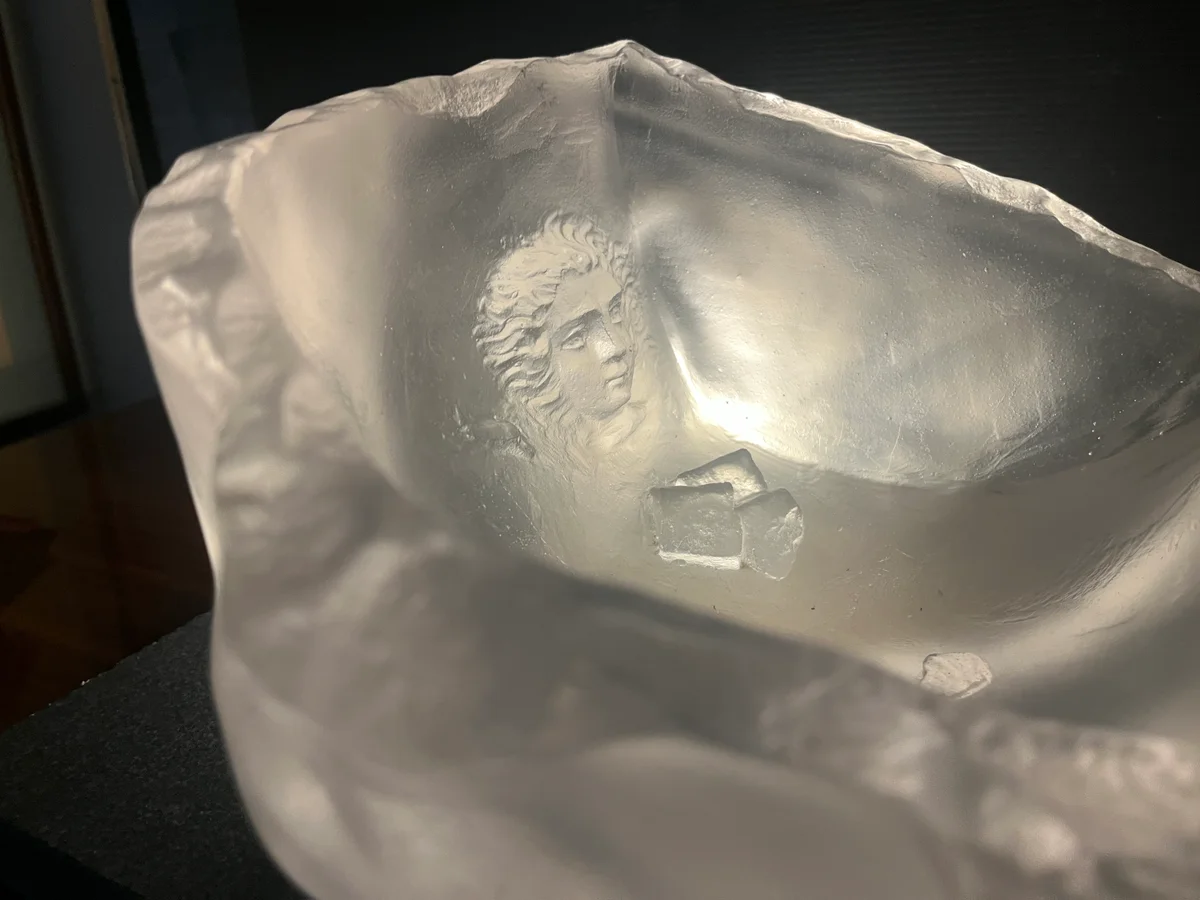
The most remarkable detail: a classical intaglio relief — a figure with flowing hair, looking upward — carved into the hollow interior of the crystal head. An interior world within the fragment.
The full form of Saturnia shown upright — the scale of the head fragment is clear. The ragged upper edge and the deep hollowing are the piece's defining features.
Light passing through the frosted crystal from behind — the translucent quality of the glass and the organic contours of the face lit from within. The sculpture transforms completely under backlighting.
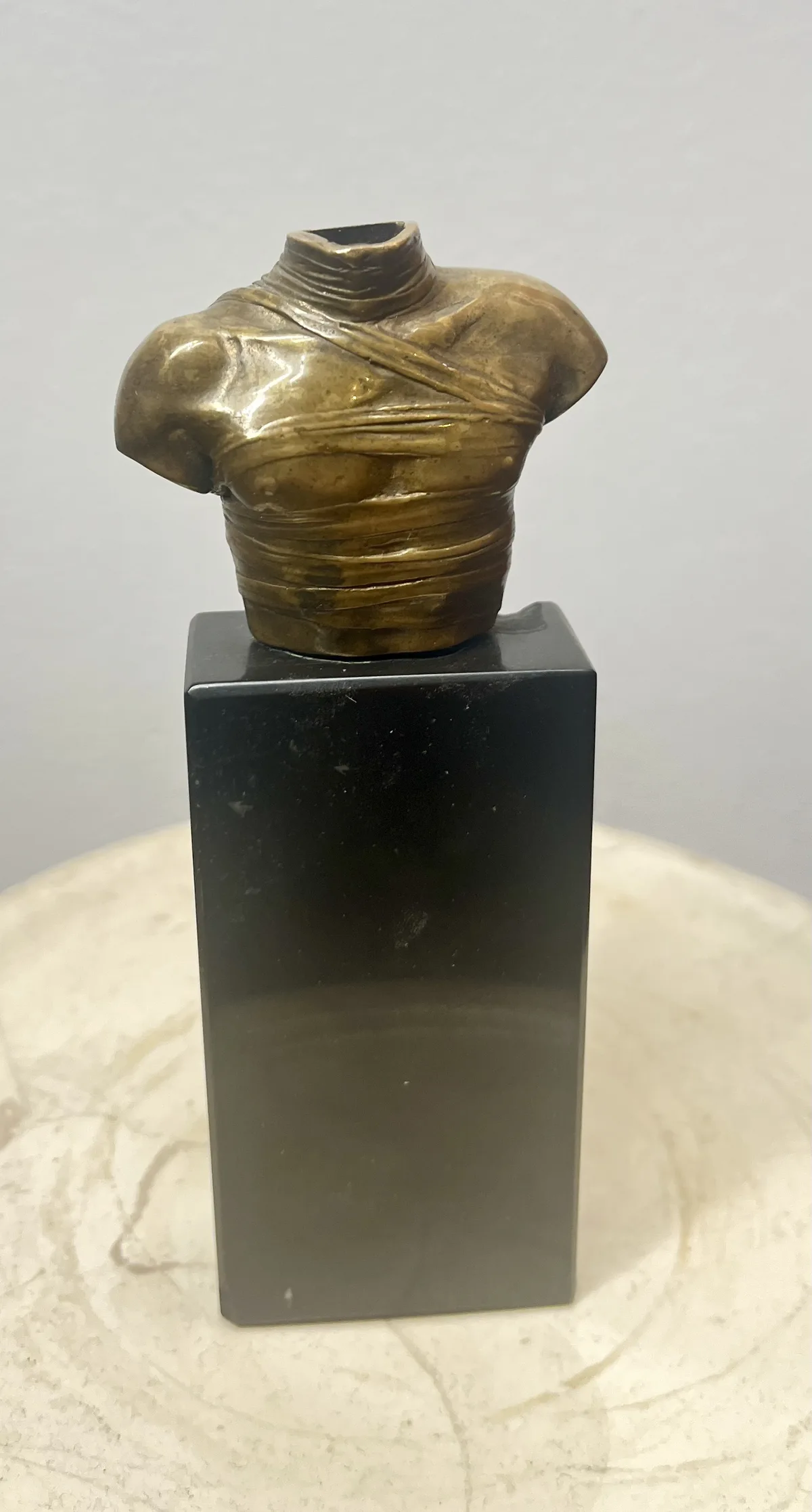
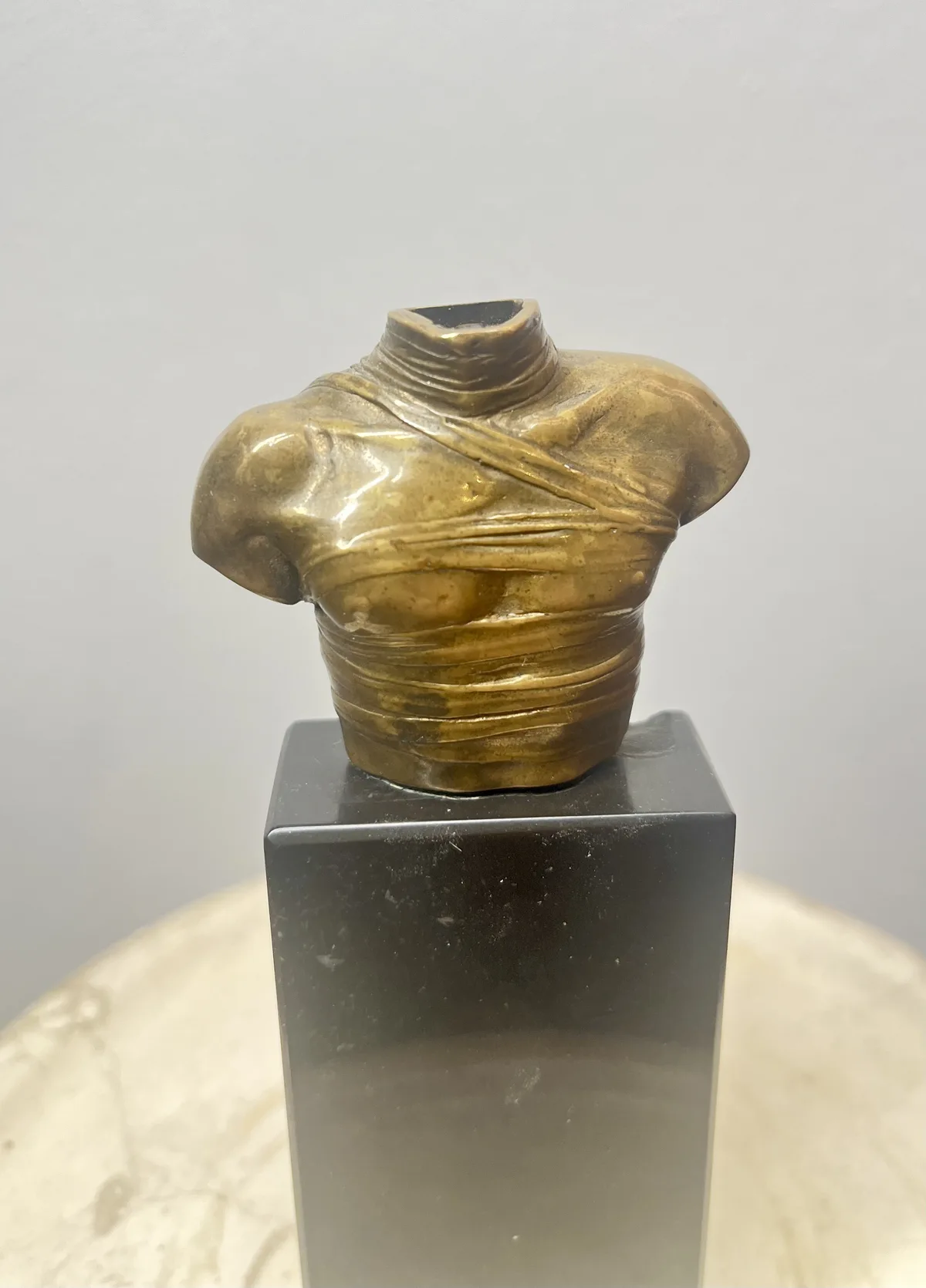
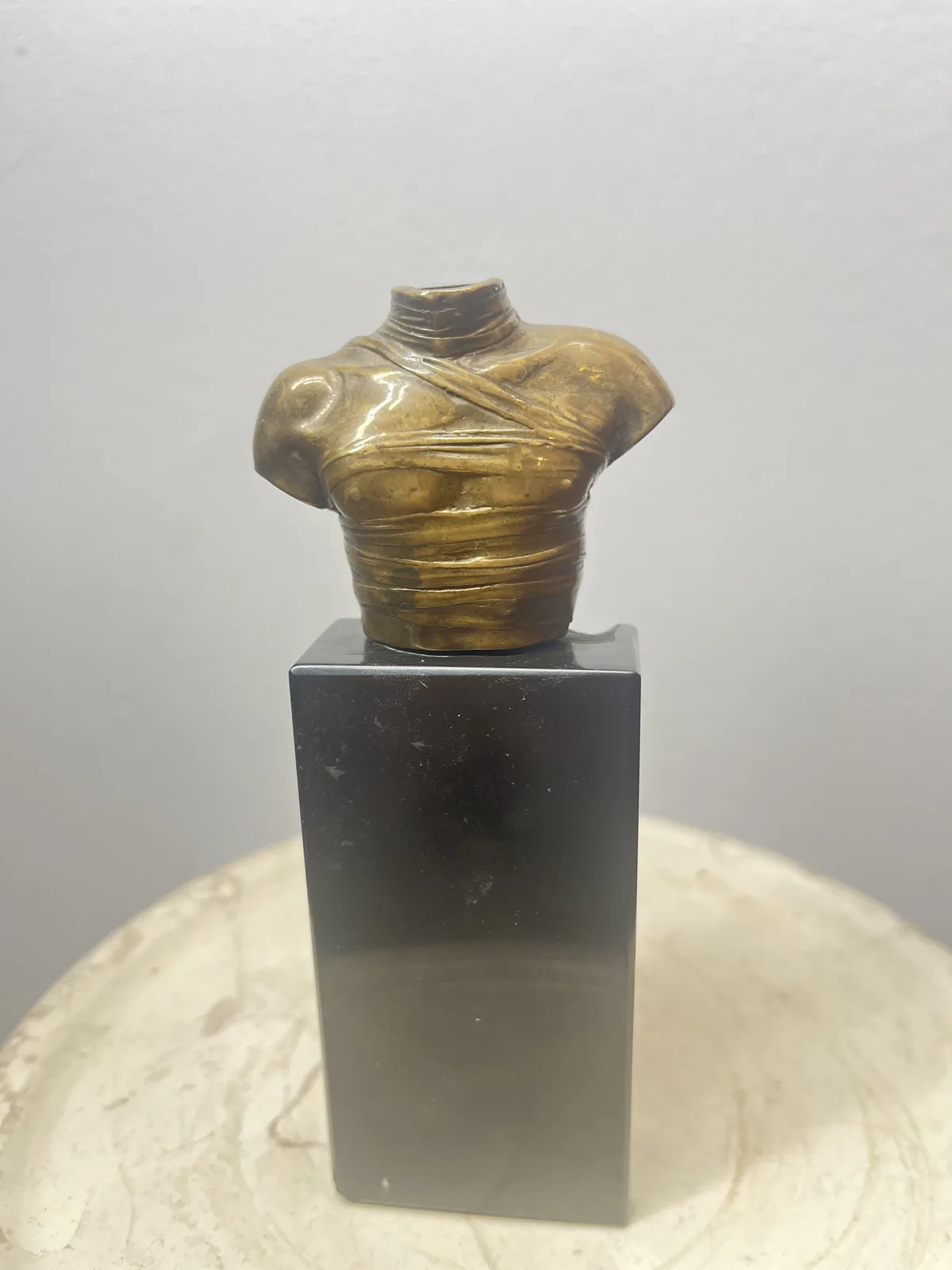
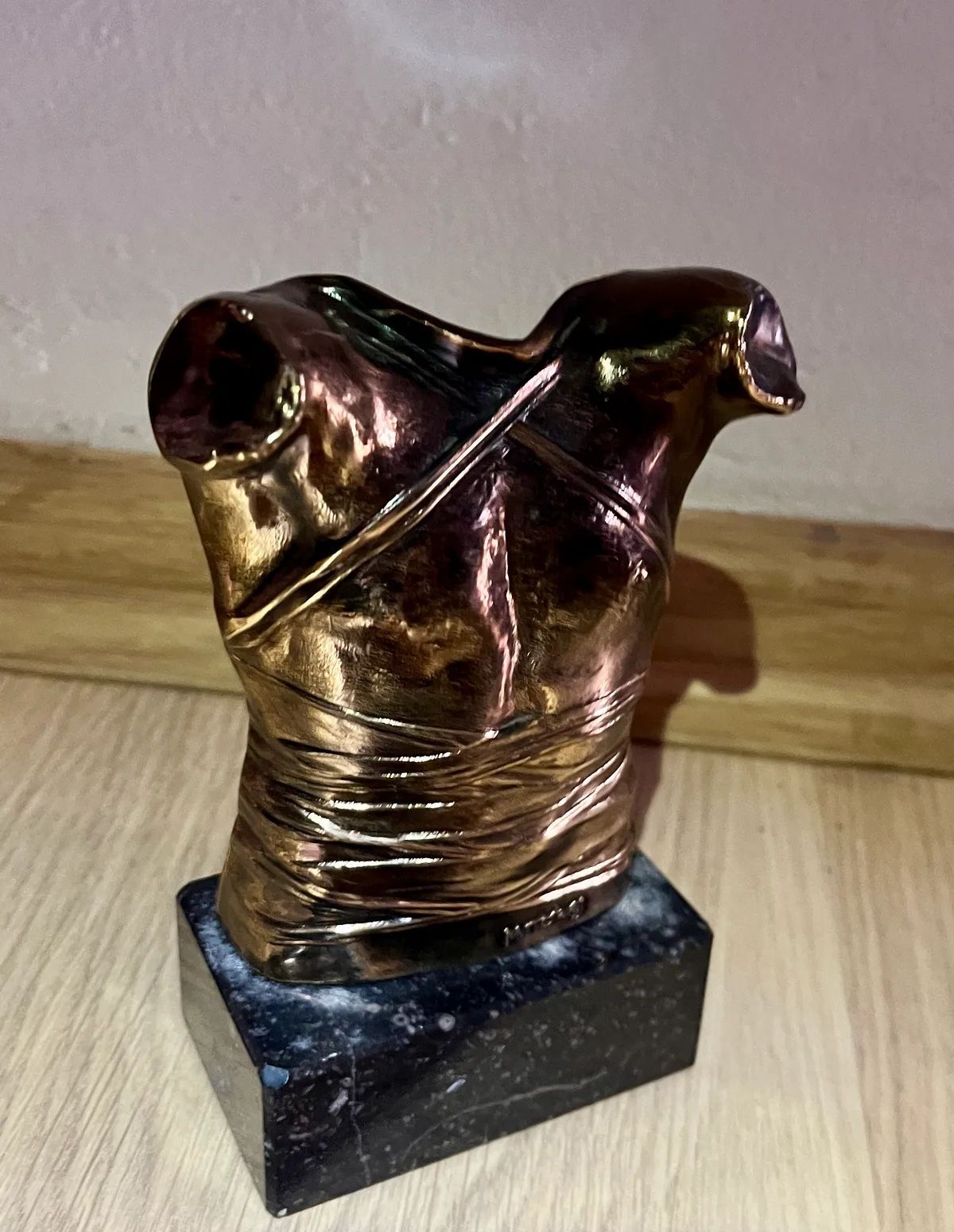
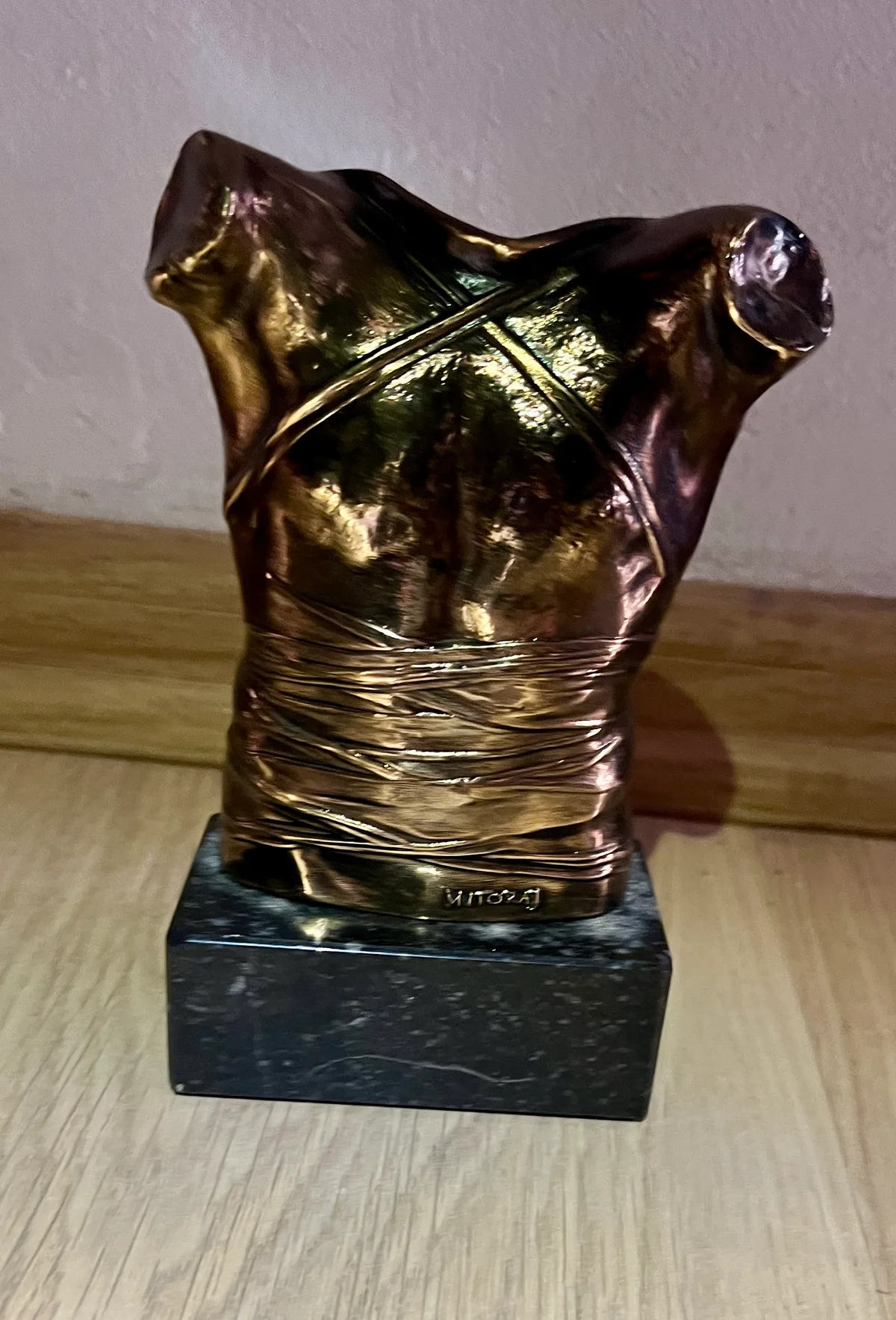
A small golden-patinated bronze torso tightly bound by horizontal wrapping straps, on a polished black marble base. The characteristic Mitoraj gesture: the body simultaneously armoured and constrained.
Close view of the diagonal strap crossing the chest and the intricate surface modelling of the bound torso.
Full view on its black marble pedestal, showing the proportions of the sculpture and the clean geometric base that grounds the fragmentary figure.
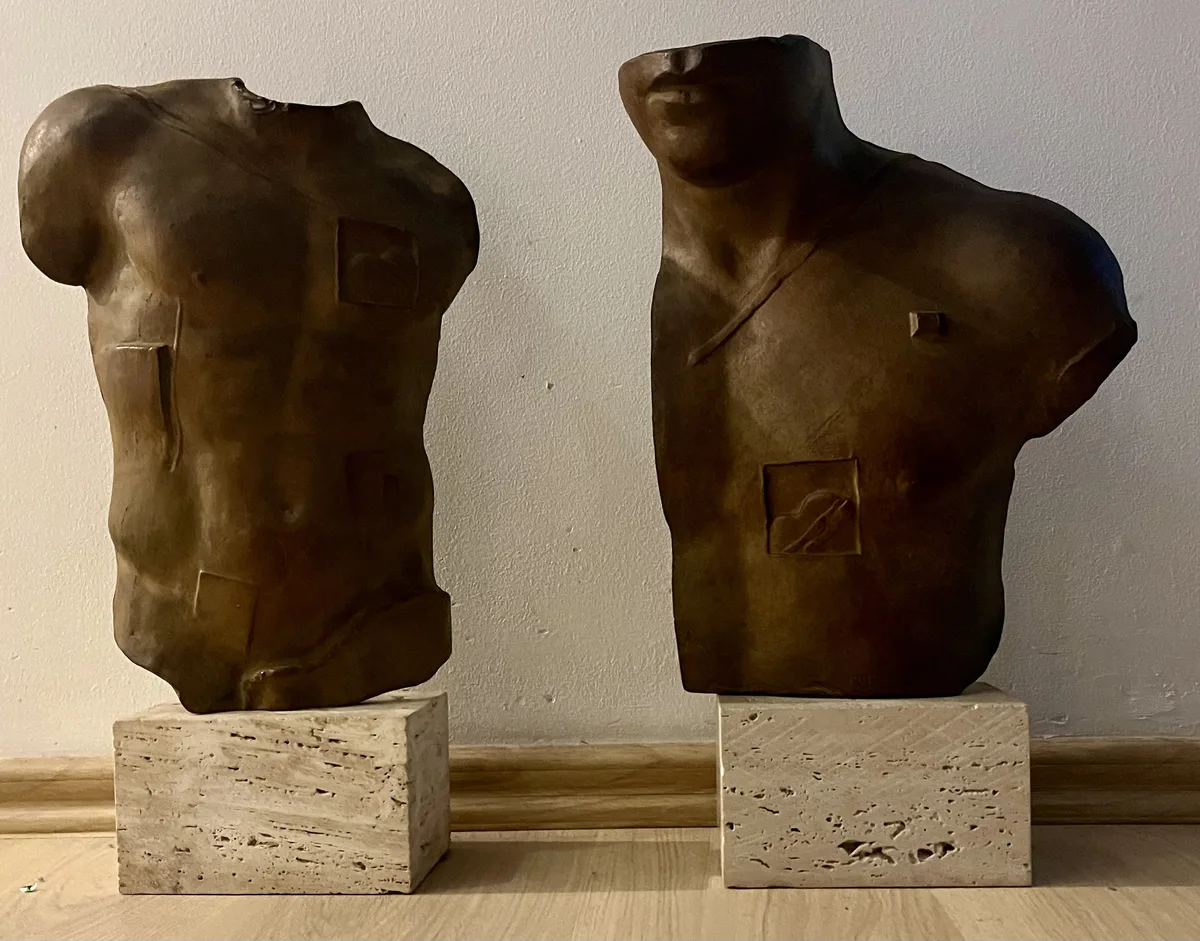
Persée (1988) and Asclépios (1988) side by side — both in warm brown patina, each on its travertine base. The two canonical Mitoraj torsos of the late 1980s, united in a single view.
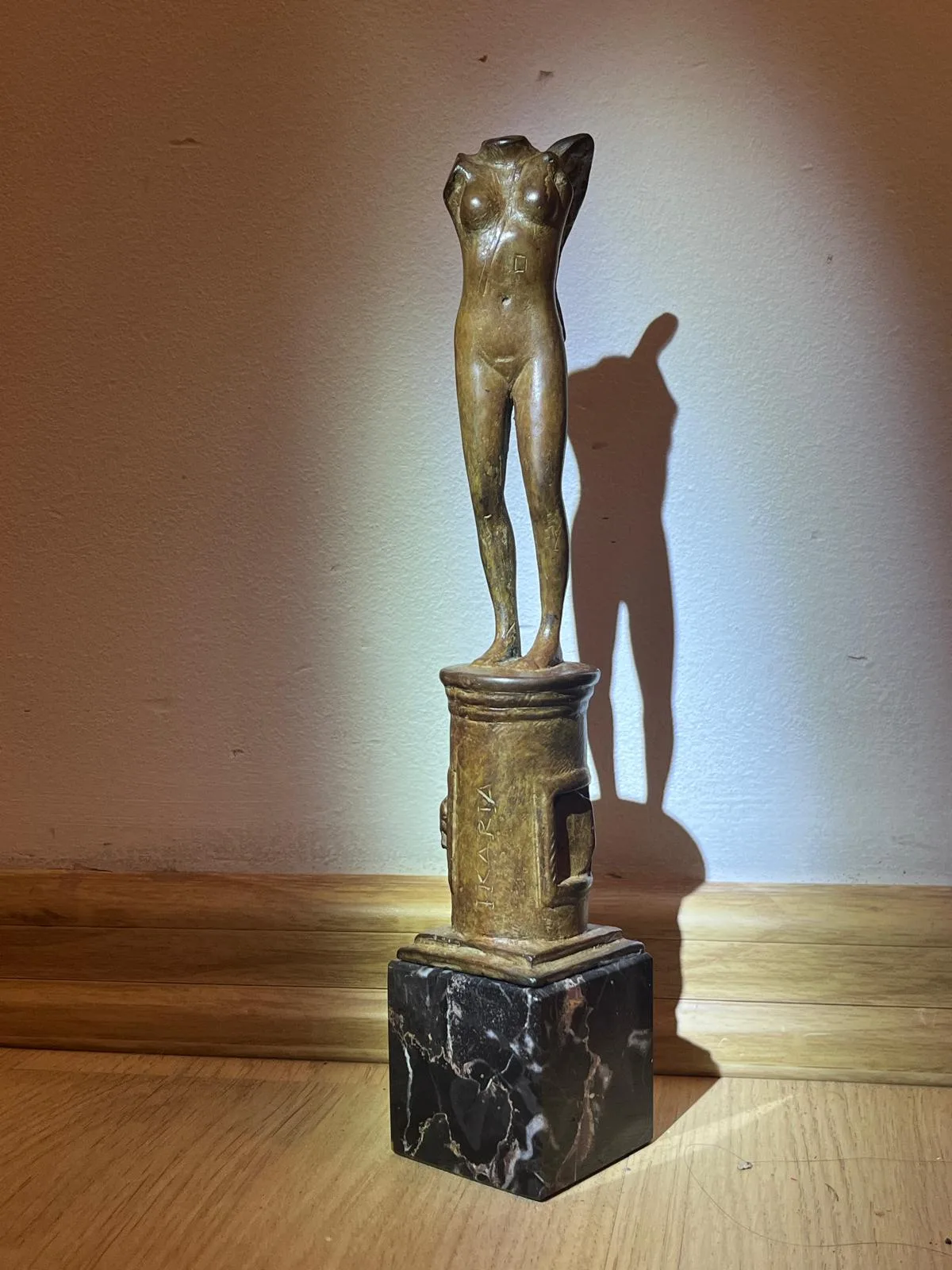
A small collector bronze of Ikaria — Mitoraj's winged figure, symbol of desire and flight that mirrors the myth of Icarus. Signed Mitoraj.
A bronze medal from the Conversation series — two faces in quiet dialogue across the disc. Signed Mitoraj.
Centurione II (1986) with its original presentation box. Ed. 1500 · signed MITORAJ.
Persée (1988) — signed MITORAJ on travertine base. Ed. 1000 + HC · 38 cm without base.
Persée (1988) — signed MITORAJ on travertine base. Ed. 1000 + HC.
Centurione II (1986) in its original foam-lined presentation box. Dark patina and MITORAJ signature clearly visible. Ed. 1500.
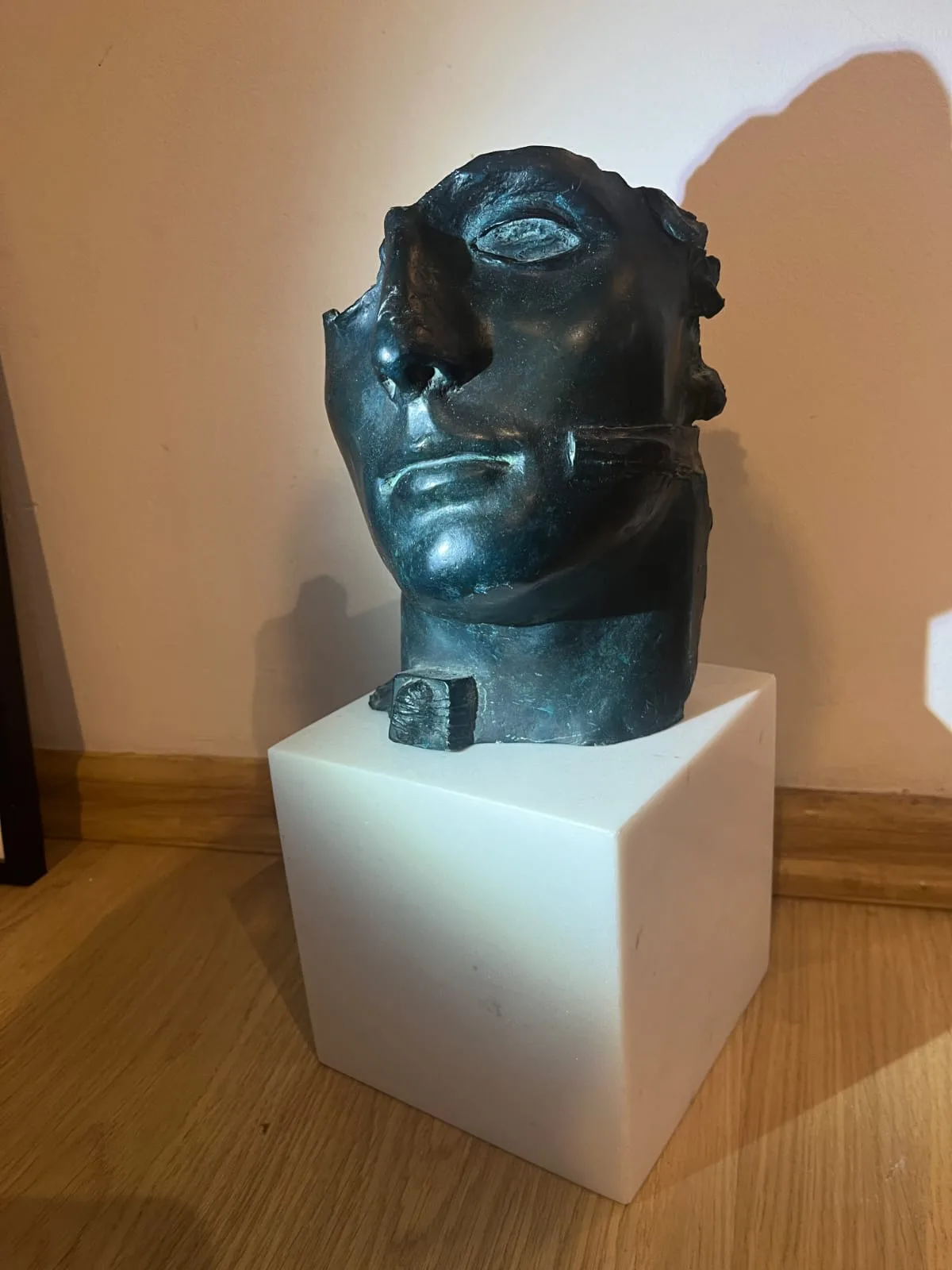
Large dark green-patinated Centurione I bronze head on a white marble cube base. The fragmented face tilted upward, characteristic of Mitoraj's centurion series. Ed. 250 · signed MITORAJ.
Dark copper-brown Kea bronze, 1979 — the two hands emerging from the fragmentary torso clearly visible, on the original round travertine base. Artcurial edition. Ed. 250 · signed Mitoraj.
Centurione II green-patinated bronze head, 1986 — the horizontal band across the face, Mitoraj's signature motif. Signed MITORAJ. Ed. 1500.
Centurione II green-patinated bronze head, second angle. Signed MITORAJ. Ed. 1500.
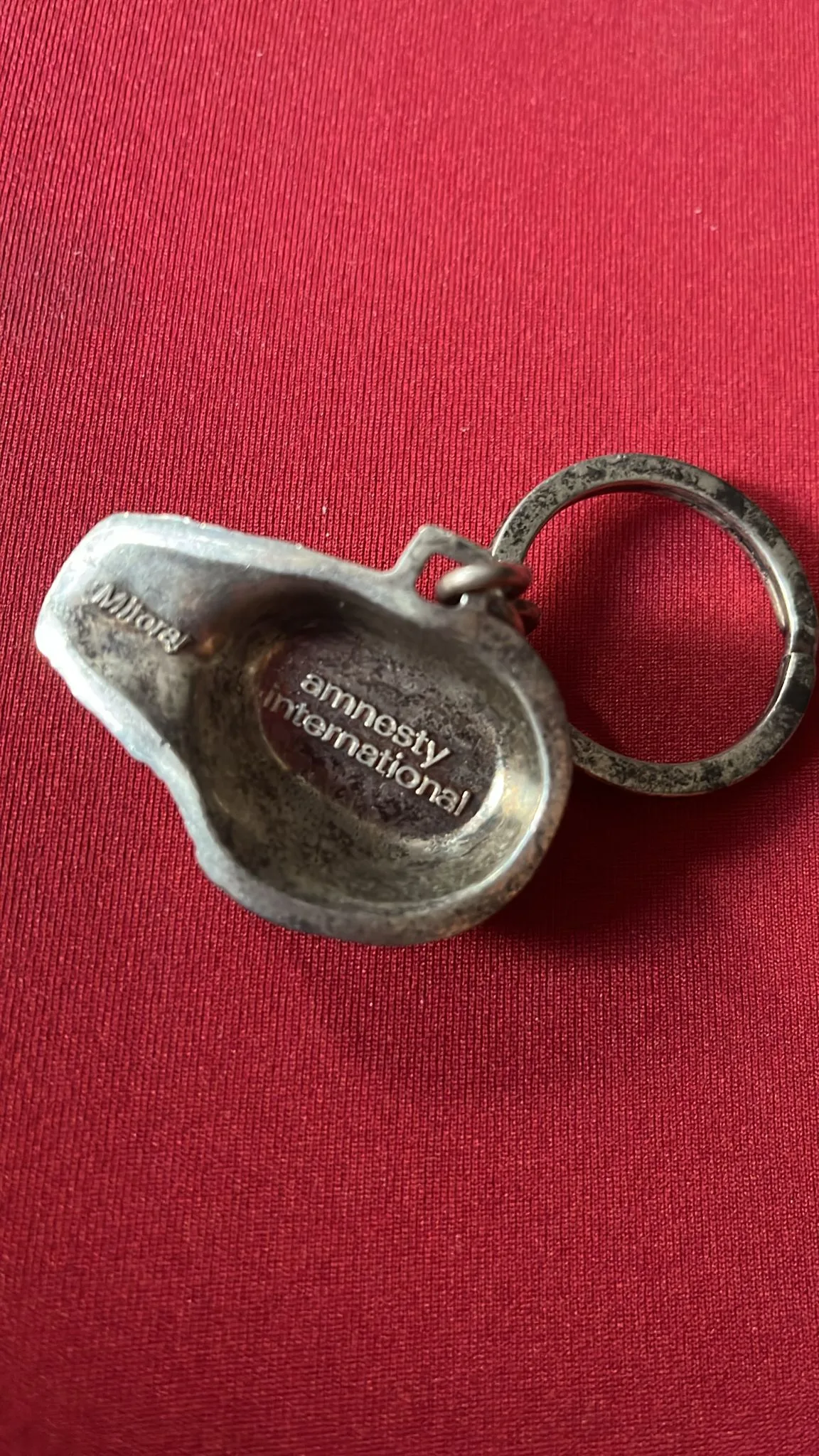
Silver keychain pendant — Testa Addormentata (Sleeping Head) created by Mitoraj for Amnesty International. Signed Mitoraj on the reverse with amnesty international inscription. A rare collectible piece.
Bronze torso wrapped in crossed straps — Mitoraj's armour motif. Warm gold-brown patina, black marble base. Signed MITORAJ.
Side-front angle showing the diagonal strap crossing the chest. Warm gold patina. Signed MITORAJ on the base.
Right-side profile emphasising the sculptural silhouette and the rich copper-gold surface. Black marble base.
Front view showing the deeper dark-bronze tonality, with the crossed shoulder strap and collar detail defined.
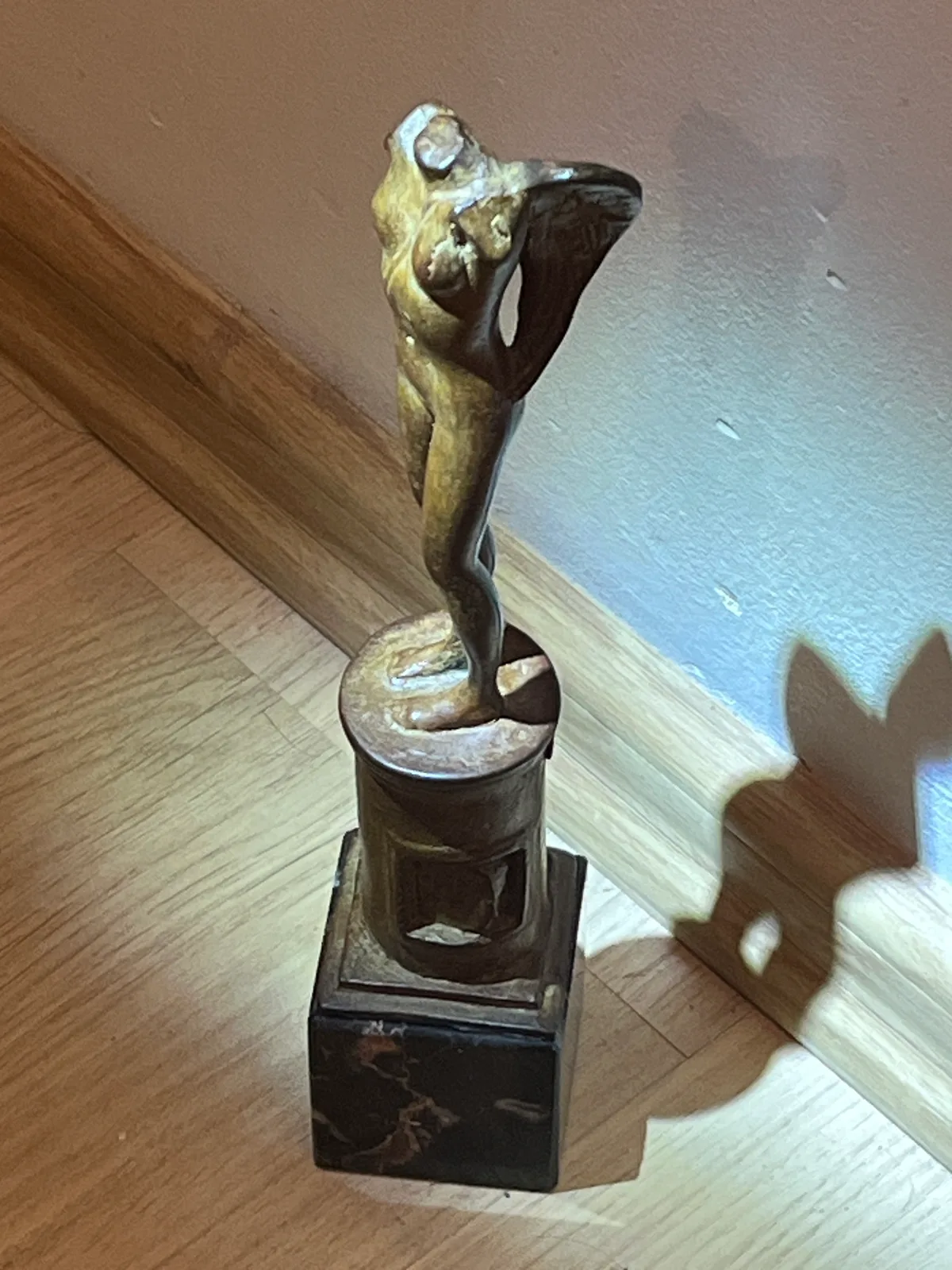
Small collector bronze of Ikaria — Mitoraj's winged figure, symbol of desire and flight. Warm brown-gold patina. Signed MITORAJ.
Ikaria small edition from a different angle — the figure's outstretched form and dark patina base clearly visible.
Reverse of the Ikaria small bronze — showing the back of the figure and the dark square base with MITORAJ signature.
© mitoraj-search.com — photos free to use under CC BY 4.0: credit and link to this page required.
Research by Series
Auction houses provide price transparency, but they charge sellers 10–18% commission on the hammer price, require 4–12 weeks for consignment processing, and then a further 4–8 weeks for payment after the sale. For a Mitoraj bronze that achieves €25,000 at hammer, a seller paying 15% commission nets around €21,000 — after a wait of four to six months. Selling directly to me means an offer the same day, payment within days, and no commission deducted from the price you receive.
I pay based on current auction market levels. I am not looking for bargains — I am looking for works to add to a serious collection, and I pay accordingly. Every enquiry is treated with complete discretion: your name, your address, and any details of the work you share are never disclosed to any third party.
Several factors determine the market value of any Mitoraj work. Edition size is the most important: an Artcurial edition of 8 (Prométhée) is incomparably rarer than an edition of 1500 (Centurione II). Scale matters enormously — a 40 cm bronze is worth three to four times more than a 20 cm example of the same subject. Condition of the patina is critical; over-cleaned or restored bronzes lose significant value. Provenance — a certificate from Atelier Mitoraj, or an auction record — adds confidence but is rarely decisive for well-documented editions. The original base(travertine, marble, or wood depending on the work) adds to the value of most desktop bronzes.
I consider works in any condition, with or without certificates, with or without original bases. If you are unsure whether what you own is genuine, I will give you an honest assessment — there is no obligation to sell.
The Mitoraj market has strengthened considerably since the record 2025 Warsaw auction in which Tindaro achieved PLN 6.89 million (approximately €1.6 million) — the highest price ever paid for a Mitoraj at Polish auction. This result confirmed the depth of Polish and international collector interest in his work. Early Artcurial editions (Tête Secrète, Kea, Prométhée) are among the most sought-after in the secondary market.
판매 여부가 확실하지 않아도 괜찮습니다 — 메시지와 사진을 보내주세요. 모든 분께 직접 답변드리며, 어떤 의무도 없습니다.
독일에서 폴란드인 어머니와 프랑스인 아버지 사이에서 태어난 Mitoraj는 크라쿠프 미술 아카데미에서 Tadeusz Kantor 밑에서 공부한 후, 이탈리아 Pietrasanta에 스튜디오를 설립했습니다 — 미켈란젤로에게 대리석을 공급했던 바로 그 채석장 근처.
그의 단편적인 형상들 — 붕대로 감긴, 절단된, 고요한 — 고전 고대에서 영감을 받으면서도 현대적 조건을 완전히 대변했습니다. 그의 작품은 런던, 파리, 폼페이, 전 세계 컬렉션에 서 있습니다.
귀하의 신원과 모든 작품은 완전히 비공개입니다. 어떠한 세부사항도 제3자에게 공유되지 않습니다.
솔직하고 정직한 제안을 드립니다. 복잡한 감정, 압박감 없이 — 공정하고 간단한 대화.
합의되면 지급이 신속하고 직접적입니다. 경매 사이클 없음, 갤러리 수수료 없음.
Igor Mitoraj는 1944년 독일 Oederan에서 폴란드인 어머니와 프랑스인 아버지 사이에서 태어나 폴란드 크라쿠프 근처에서 자랐습니다. 크라쿠프 미술 아카데미에서 Tadeusz Kantor 밑에서 회화를 공부한 후, 1968년 파리로 이주하여 École Nationale Supérieure des Beaux-Arts에서 공부했습니다. 1976년 파리 Galerie La Hune에서의 개인전으로 조각가로서의 경력을 시작했습니다.
그의 특징적 어휘 — 절단된 토르소, 붕대로 감긴 두상, 단편적인 사지, 몸을 관통하는 직사각형 개구부 — 그리스와 로마 조각에서 영감을 받으면서도 현대적 조건을 완전히 대변했습니다. 그의 공공 작품은 폼페이, 런던, 파리, 로마, 밀라노, 바르샤바, 크라쿠프, 아시아 전역에 서 있습니다.
Mitoraj는 2014년 10월 6일 파리에서 세상을 떠났고 Pietrasanta에 안장되었습니다. 그의 사망 이후, 그의 시장은 크게 강화되었습니다 — 2025년 바르샤바 경매에서 그의 기념비적 Tindaro가 160만 유로라는 기록적인 가격에 낙찰되었습니다.
Authentic Mitoraj bronzes carry an incised (not cast) signature — MITORAJ in capitals, or igor mitoraj in lowercase for early works — at the base of the neck or lower torso. An edition number in the format n/total appears on the reverse. Foundry marks from Pietrasanta foundries are common. Send me a photograph of the signature, edition number, and overall piece and I will give you an honest assessment free of charge.
가치는 작품, 에디션 크기, 규모, 상태, 현재 시장에 따라 달라집니다. 초기 Artcurial 에디션이 가장 많이 찾습니다. 사진을 보내주시면 솔직한 평가를 드리겠습니다.
No. Certificates from Atelier Mitoraj in Pietrasanta are valuable but not required — the signature, edition number, and foundry mark are the primary authentication markers. Many genuine works circulate without certificates, particularly those sold through galleries in the 1980s and 1990s. I buy works with and without documentation and will advise on obtaining a certificate if needed.
I respond to every message personally, usually within a few hours and always within 24 hours. There is no automated response system — you will hear from me directly. If you send a photograph, I will include a specific assessment of your work in my reply.
Collector Guides
Public sculptures in the Polish capital
Wikimedia Commons, CC BY-SA 3.0 PL
Bronze · Zoliborz, ul. Wybrzeze Gdynskie 4
A monumental bronze Icarus stands before the Olympic Centre — armless, missing one wing. Mitoraj's meditation on human fragility and the myth of hubris.
One of the most sought-after examples of Mitoraj's monumental bronze period.
Wikimedia Commons, CC BY-SA
22 bronzes · Skwer Hoovera
Open-air exhibition of 22 sculptures including casts from the bronze doors of the Basilica of Santa Maria degli Angeli in Rome, installed weeks before the Angel Doors unveiling.
Documentation of this temporary show is rare and valuable to collectors.
✦
No public domain photo available
Bronze · ul. Swietojanska 10, Old Town
Four-metre bronze doors depicting the Annunciation, created for the 400th anniversary of the Sanctuary of Our Lady of Grace. Two wingless angels flank the figure of Mary.
A unique sacred commission, permanently installed in historic Warsaw.
✦
No public domain photo available
Bronze, 5 metres · ul. Bobrowiecka 6, Mokotow
A five-metre male torso cast with Mitoraj's first earned money — his homage to Tuscany. The chest is pierced by a void; inside, a female face gazes outward. Third and final cast; the others stand in Paris and Milan.
Unveiled personally by Mitoraj in 2009. Its private location makes this period especially sought after.
If you hold a work by Mitoraj — contact us.
Private collector · Warsaw, Poland · Seeking works by Igor Mitoraj worldwide
Igor Mitoraj Bronze Sculptures Mitoraj Lithographs & Drawings 🗺 유럽 지도 | 모든 도시 | London | Rome | Pompeii | Pietrasanta | Paris | Kraków | Mitoraj in Poland & Warsaw Mitoraj Auction Prices
Keywords: Igor Mitoraj sculpture wanted · buy Mitoraj bronze · sell Mitoraj Poland · Mitoraj kolekcjoner Warszawa · Mitoraj Pietrasanta · Mitoraj Asclépios · Mitoraj Tindaro · Mitoraj Eros Bendato · Mitoraj auction · Mitoraj private sale
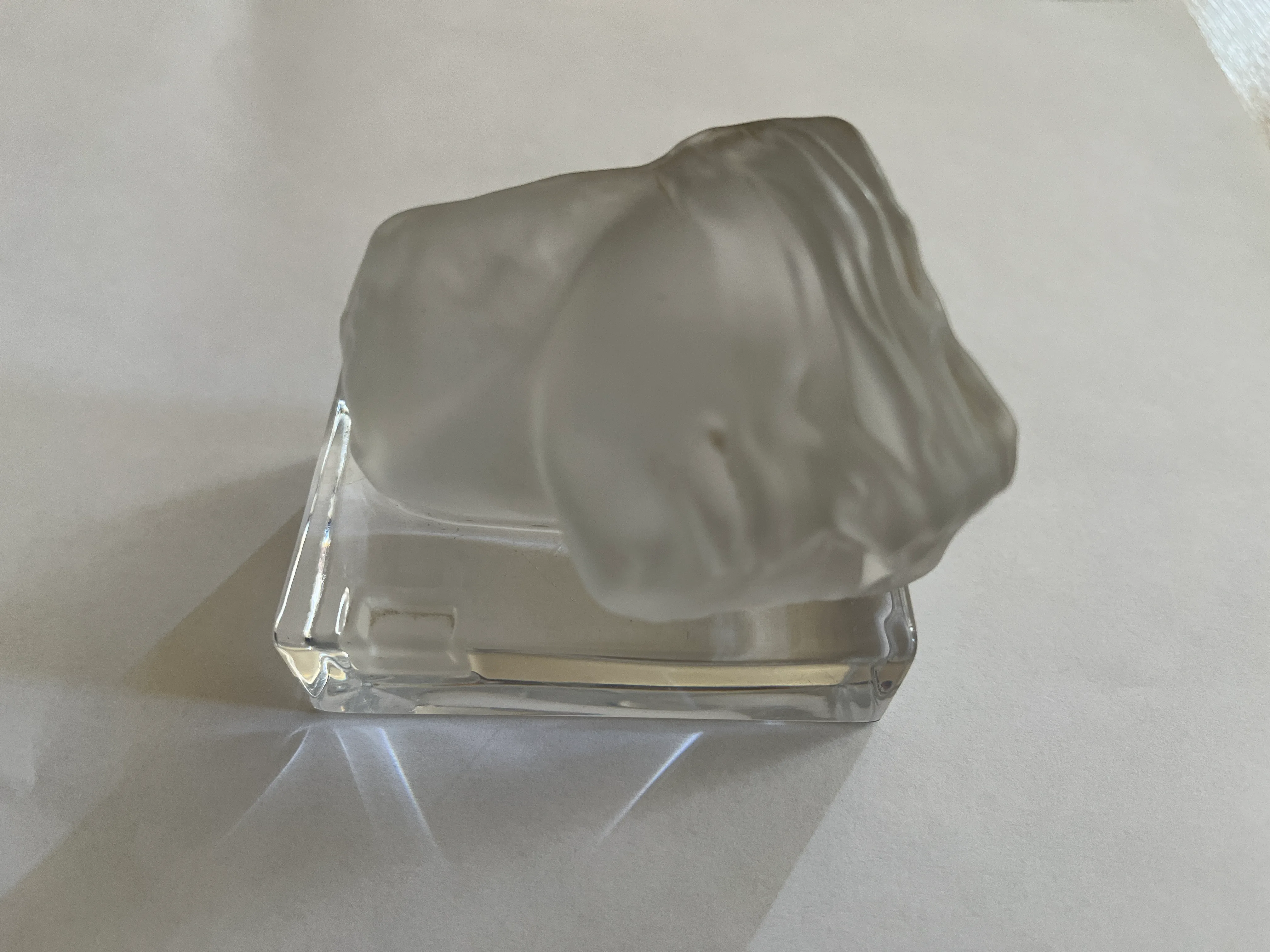
Conversation with a Shadow (1994) stands as one of Mitoraj's most compelling bronze sculptures. Cast in patinated bronze with characteristic classical proportions, this monumental work exemplifies his dialogue between ancient forms and contemporary alienation. The figure's smooth, idealized surfaces contrast with fragmented elements, creating psychological tension. For collectors, this piece represents Mitoraj's mature period when his work gained international recognition. Its museum-quality provenance and thematic depth make it a cornerstone acquisition for serious contemporary sculpture enthusiasts.
The Mitoraj market demonstrates stable growth through 2025-2026, with bronze sculptures commanding premium valuations. Major auction houses report increased interest from European and Asian collectors. Works from his 1990s period—his artistic peak—appreciate consistently. Market demand favors pieces with documented exhibition history and impeccable provenance. Investment-grade bronzes ranging from 100,000 to 500,000 EUR show strongest liquidity. Polish institutional recognition enhances long-term value stability for collectors.
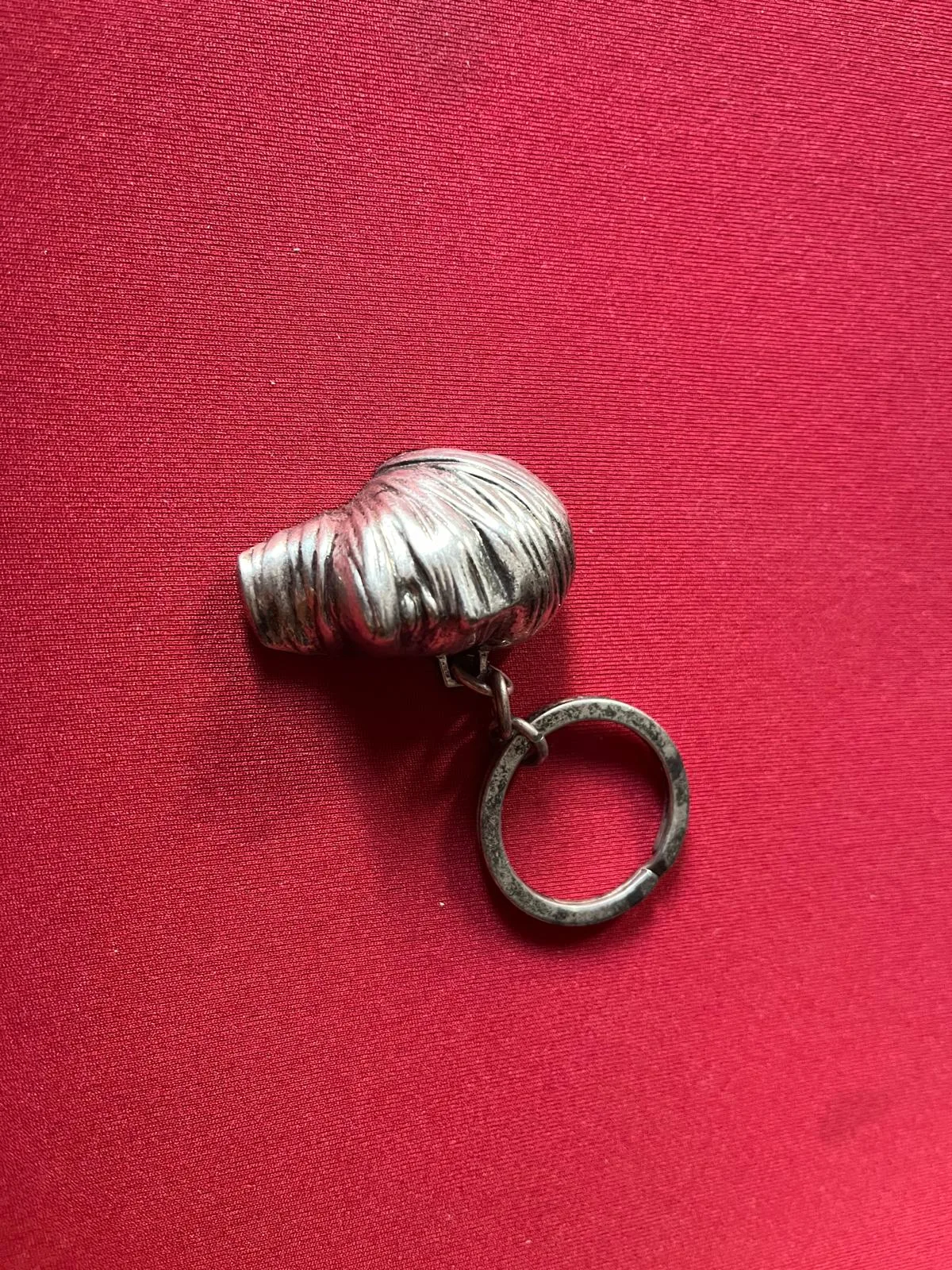
Prometheus (1999), a monumental bronze sculpture, exemplifies Mitoraj's mythological engagement. This work merges classical heroism with modern existential themes. The figure's powerful yet vulnerable posture speaks to contemporary audiences. Currently held in selective private collections, museum interest continues rising. Acquisition potential remains exceptional for forward-thinking collectors seeking major sculptural statements.
Igor Mitoraj trained extensively in Italy and deeply studied classical sculpture. His bronze-casting techniques derived from Renaissance masters, yet his aesthetic vocabulary remained distinctly modern. This fusion of ancient methods with contemporary sensibility defines his artistic legacy and distinguishes his works from peers.