連絡
ブロンズ彫刻 作品一覧 🗺 地図 都市 お問い合わせ
ENFRDE ITESNL SVNOPL 日本語

🇮🇹 ポンペイのミトライ

イタリア · イーゴル・ミトライの公共彫刻

1996年から、ミトライの大型ブロンズ彫刻が古代ポンペイの遺跡に設置されました——おそらく彼の最も共鳴する公共プロジェクト。断片化した彫刻たちが、同様に断片化したローマ都市の中に置かれることで、二つの不完全性が対話します。

主要作品と設置場所

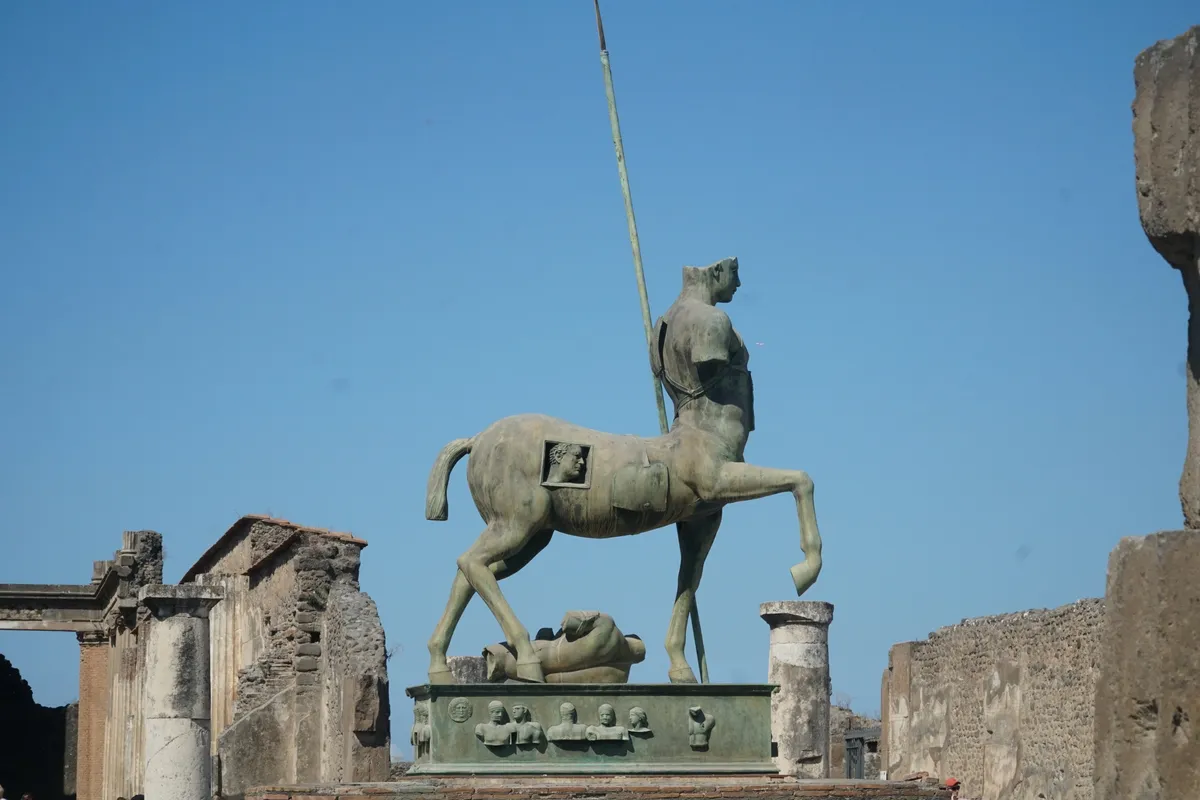
Igor Mitoraj Centauro monumental bronze sculpture in the Forum of Pompeii — permanent installation, gifted to Italy
Centauro in the Forum of Pompeii. Photo: Adam Harangozó, CC BY-SA 4.0
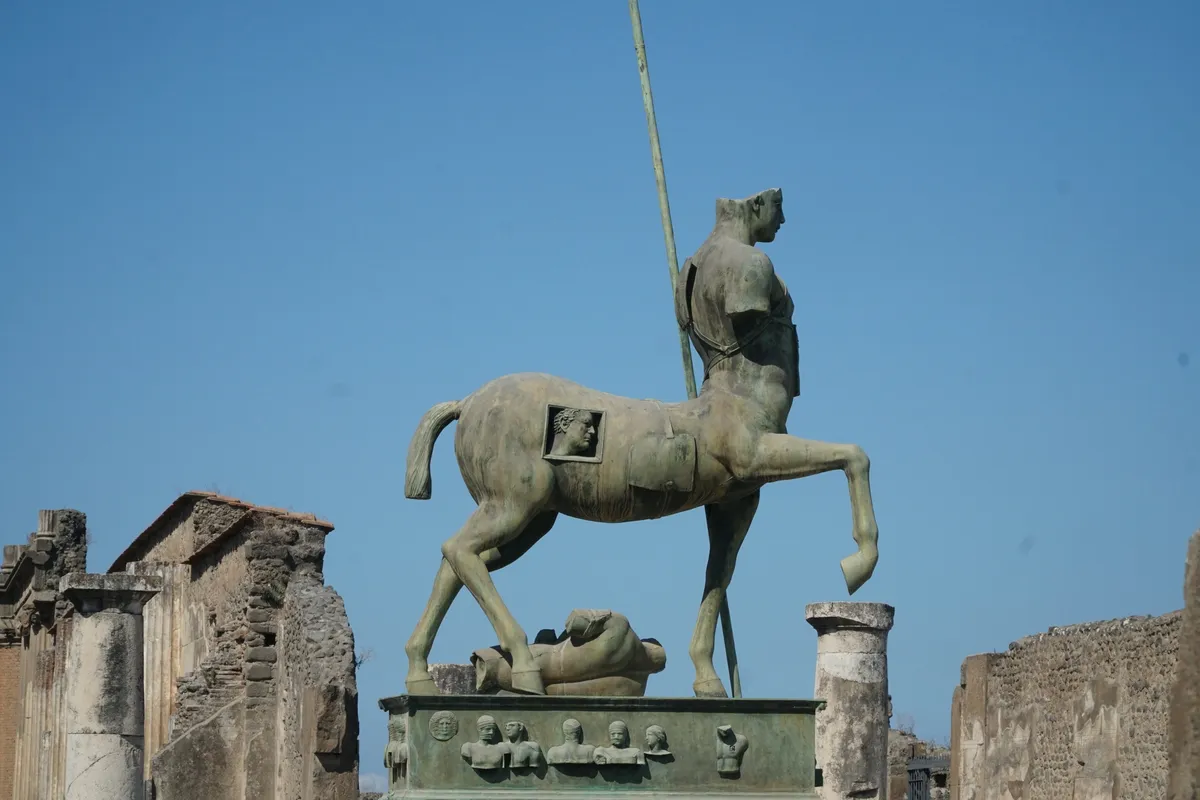
Igor Mitoraj Centauro bronze centaur sculpture among the ruins of Pompeii — permanent public collection
Centauro among the ruins. Photo: Adam Harangozó, CC BY-SA 4.0

The Pompeii installation, which opened in June 1998 as a temporary exhibition before several works were granted permanent placement, was organised in collaboration with the Soprintendenza Archeologica di Pompei under superintendent Pietro Giovanni Guzzo. Mitoraj selected Pompeii specifically because the site's own fragmentation mirrored the deliberate incompleteness of his figures — a philosophical alignment he considered essential, not merely aesthetic. Collectors acquiring bronzes from this period often note the Pompeii provenance adds measurable resonance to comparable studio editions.

Among the works displayed at Pompeii, Ikaro — a monumental winged torso — drew particular critical attention for its placement near the ancient amphitheatre, where the figure's arrested fall resonated against the site's volcanic history. Mitoraj returned to Pompeii in 2002 to oversee repositioning of several pieces, a visit that directly informed subsequent studio bronzes in smaller editions, which dealers now identify by their Pompeii-period casting dates when establishing provenance.

The permanent works retained at Pompeii include Testa di Ikaro and Eros Bendato, both cast at the Pietrasanta foundry using the lost-wax method Mitoraj favoured throughout the 1990s. Collectors seeking studio editions from this period should note that bronzes carrying exhibition documentation from the 1998 Pompeii showing command a consistent premium at auction, with several passing through Sotheby's Milan between 2008 and 2015 with lot notes explicitly referencing the site installation.

The catalogue published to accompany the 1998 Pompeii exhibition, edited by Guzzo and distributed by Electa Napoli, remains the primary scholarly reference for the installation's original configuration and has itself become a collectible document — copies with Mitoraj's personal inscription occasionally surface through Italian antiquarian dealers at prices reflecting both the book's scarcity and its direct provenance value for collectors contextualising studio bronzes from the same period.

The 1998 Pompeii catalogue, edited by Guzzo and published by Electa Napoli, remains one of the more sought-after Mitoraj reference texts among serious collectors, partly because it reproduces installation photographs documenting original placements that were subsequently altered. Copies in fine condition with the accompanying exhibition map intact have appeared at antiquarian book fairs in Milan and Rome, typically priced between €120 and €280 depending on condition — a modest but steady market that reflects the catalogue's utility in establishing period context for studio bronzes from the same years.

The 1998 Pompeii catalogue, titled Mitoraj a Pompei and published by Electa Napoli, remains one of the more sought-after reference texts among serious collectors, partly because it includes Mitoraj's own written account of the site selection process alongside foundry documentation for the exhibited bronzes. Copies in fine condition appear infrequently at specialist book dealers, typically priced between €180 and €350 depending on whether the original exhibition invitation is present. Dealers at Galleria d'Arte Il Gabbiano in Rome stocked the catalogue at the time of the opening and can occasionally assist with provenance verification for works from this period.

ミトライ作品をお持ちですか?

ワルシャワのプライベートコレクターが直接購入します。オークション手数料なし。迅速・秘密厳守。

✉ ご連絡はこちら

Mitoraj in Other Cities

Rome Venice Pietrasanta Paris → All cities