איגור מיטוראז' בפוזנן
בפוזנן שלושה פסלי מיטוראז' קבועים — כולם בתוך שטארי בראוואר (המבשלה הישנה), אחד מיעדי התרבות והמסחר המפורסמים ביותר של פולין ברחוב Półwiejska. המתחם, שנוצר על ידי האספנית והיזמת גראז'ינה קולצ'יק על עיקרון "50/50" — חצי מסחר, חצי תרבות — נפתח ב-2003 עם פסל מיטוראז' במרכזו. כיום, Thsuki-no-hikari באטריום הכניסה הפך לנקודת המפגש הספונטנית ביותר בעיר: תושבי פוזנן אומרים "נפגש תחת המיטוראז'" וכולם יודעים בדיוק לאן ללכת.
שטארי בראוואר — אמנות בלב המסחר
שטארי בראוואר (המבשלה הישנה) תופסת מתחם מבשלה מהמאה ה-19 ברחוב Półwiejska, שנבנה על ידי משפחת הוגר מהיער השחור החל ב-1844. המבשלה פעלה עד 1980, ולאחר מכן נתרדדה. ב-1998 רכשה גראז'ינה קולצ'יק — אחת האספנות הפרטיות החשובות ביותר בפולין — את האתר והציעה רעיון קיצוני: מרכז שבו אמנות ומסחר מתקיימים בתנאים שווים. הרעיון "50/50" התחייב שמחצית מאופי הבניין תוקדש לתכנות תרבותי: תערוכות, הופעות ויצירות אמנות קבועות השזורות בבד המרחב.
כשנפתח האטריום ב-5 בנובמבר 2003, מסכת הפנים המונומנטלית של מיטוראז' הייתה מוקד תשומת לבו המיידי. אוסף קולצ'יק, המנוהל כיום על ידי קרן Art Stations, כולל יצירות של אמנים פולנים ובינלאומיים חשובים — אך פסלי מיטוראז' הם אלה שהפכו לזהות החזותית המגדירה של הבניין. המתחם מושך תשעה מיליון מבקרים בשנה ומדורג באופן עקבי בין מרכזי הקניות המעוצבים ביותר בעולם.
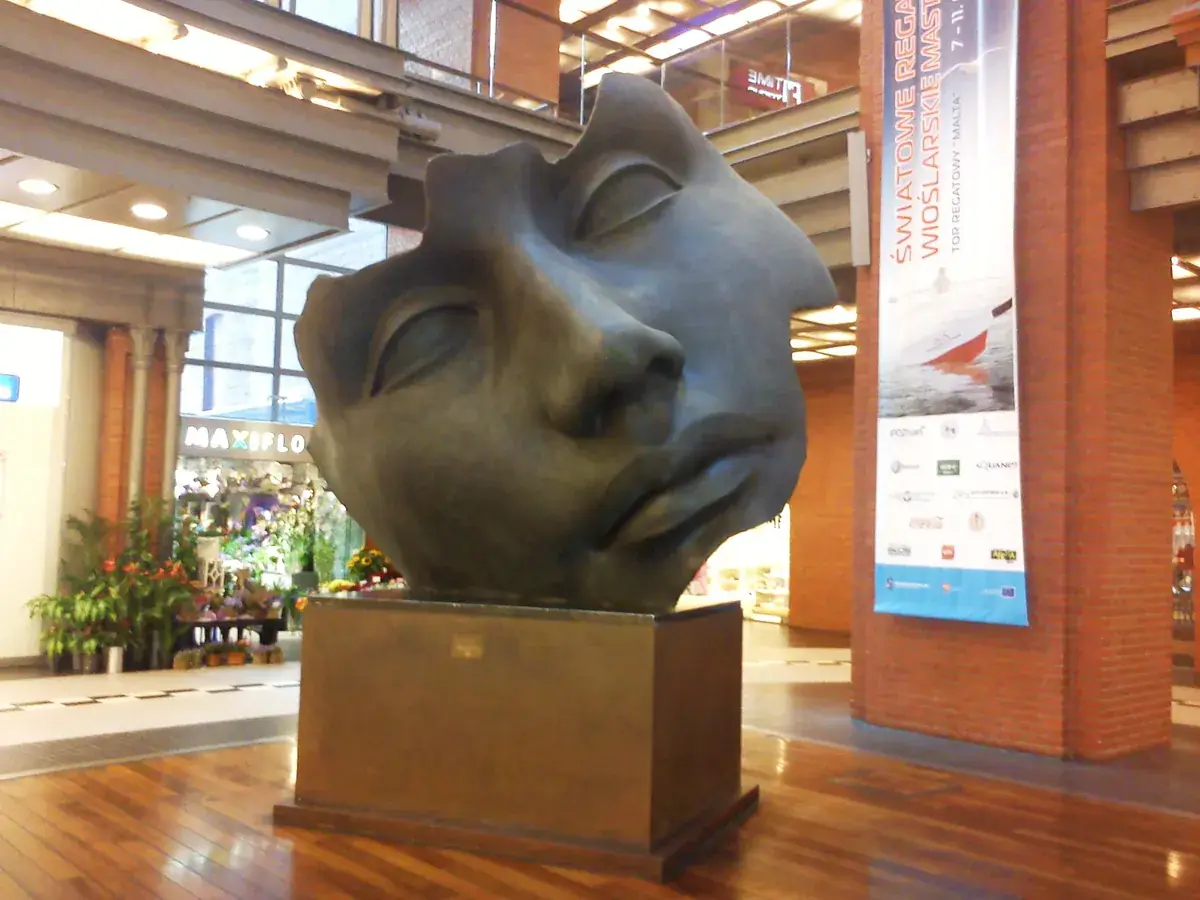
Thsuki-no-hikari (Blask Księżyca / אור הירח) — 1991
Thsuki-no-hikari — ביפנית "אור הירח", בפולנית Blask Księżyca — הוא מסכת פנים מונומנטלית מברונז העומדת באטריום הכניסה של שטארי בראוואר. מיטוראז' נתן ליצירה כותרת יפנית בתקופה שבה הציג רבות ביפן ועסק עמוקות בסגנוניות האסתטית היפנית, במיוחד הרעיון של יופי הצומח מחוסר שלמות — הקשור קרובות לאסתטיקת ה-wabi-sabi היפנית שהעריץ.
הפנים מיד מזוהה כפנים של מיטוראז': שבר של ראש נוער מאידיאליזציה — חצי עתיק, חצי תוי פניו של הפסל עצמו — עם הסדקים האופייניים והנזק המכוון הרצים לאורך כל יצירתו. השפתיים, תמיד מעוצבות לפי פיו של מיטוראז', בקושי נראות. היצירה מותקנת אנכית במרחב האטריום, מתרוממת לגובה ניכר, וקולטת את האור הטבעי השוטף מהתקרה הזכוכית של הבניין.
הפסל הפך כה מרכזי לגיאוגרפיה החברתית של פוזנן עד ש"תחת המיטוראז'" היא הוראת מפגש אוניברסלית בין תושבי העיר — טבעית כמו "תחת השעון" או "ליד המזרקה" בערים אחרות.
Tors nad jeziorem (גזע ליד האגם)
Tors nad jeziorem — גזע ליד האגם — הוא היצירה השנייה של מיטוראז' באטריום שטארי בראוואר, מוצגת לצד Thsuki-no-hikari. גזע זכרי מברונז, אופייני בטיפולו הפרגמנטרי, היצירה חולקת את אותו אוצר מילים של יופי קלאסי הנתון לנזק מכוון וחוסר שלמות המאפיין את כל סדרת הגזעים של מיטוראז'. הכותרת מרמזת על קשר רפלקסיבי, מהורהר בין הפסל למרחב הסובב אותו — הגזע נראה כאילו על ידי מים, באור לא ודאי.
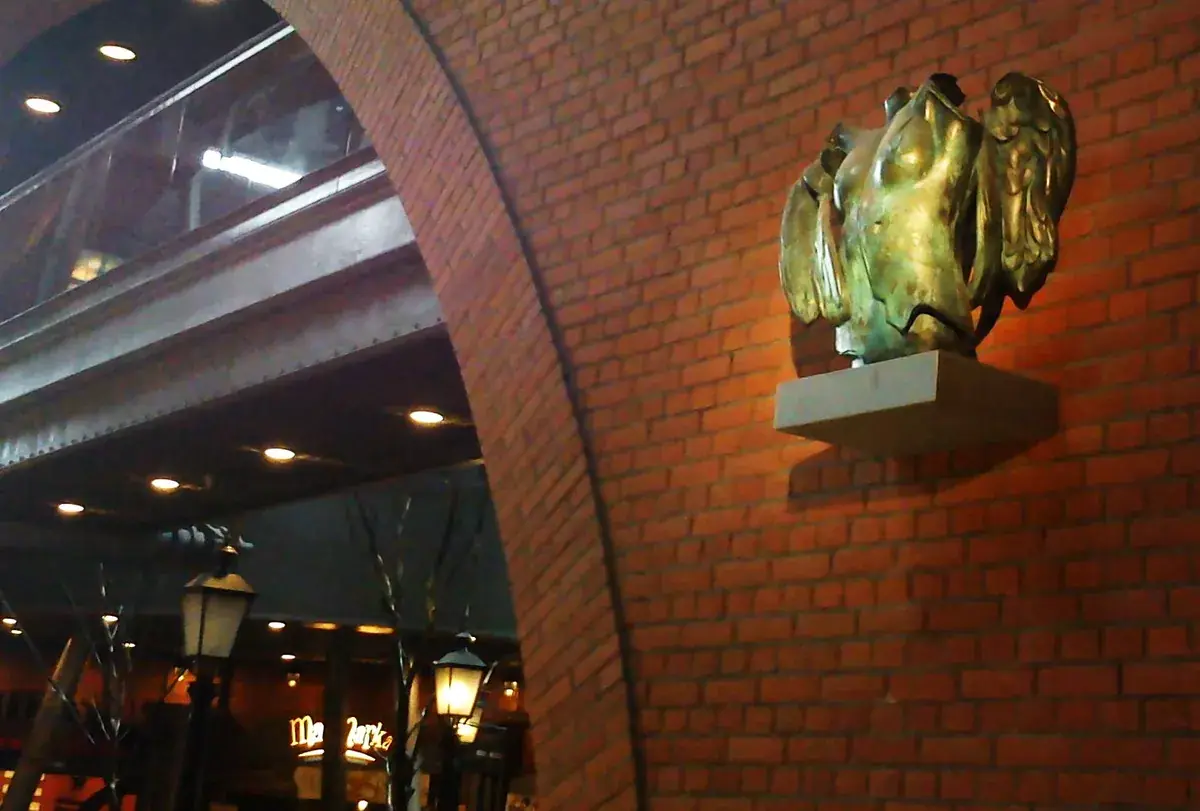
Eros Alato (Eros Skrzydlaty / ארוס כנוף) — 1984
Eros Alato — ארוס כנוף, בפולנית Eros Skrzydlaty — הוא אחד הטיפולים המוקדמים ביותר של מיטוראז' בנושא ארוס, קודם ב-15 שנה ל-Eros Bendato (ארוס כבול) המפורסם משנת 1999. בעוד שהארוס המאוחר הוא אופקי, שוכב על צדו, כבול ומכוסה עיניים, ארוס הכנוף משנת 1984 נמצא ברגיסטר קומפוזיציה שונה — כנפי ארוס, אל הרצון היווני הקדום, נוכחות אך לא פונקציונליות, הגוף מפוצל ופגוע באופן האופייני למיטוראז'.
נוכחות Eros Alato מוקדם באוסף קולצ'יק היא בעלת משמעות היסטורית: היא מראה על השקעת אספן עיקרי ביצירתו של מיטוראז' מתקופה מוקדמת, לפני פריצות הדרך הבינלאומיות שלו באמצע שנות ה-80. תיארוך ה-1984 ממקם יצירה זו בשנת תערוכת קסטל סנט'אנג'לו של מיטוראז' ברומא — ההופעה שהשיקה את קריירתו הבינלאומית.
הקשר של פוזנן עם מיטוראז'
המפגש של פוזנן עם מיטוראז' היה בעיקרו דרך אוסף קולצ'יק ולא דרך חסות אזרחית — הבחנה משמעותית. בקראקוב, העיר עצמה ויכחה ובסופו של דבר קיבלה את Eros Bendato כמתנה אזרחית; בעלות ומשמעות היצירה נדונו בציבור. בפוזנן, פסלי מיטוראז' שייכים לאוסף פרטי במתחם תרבות-מסחר בבעלות פרטית. הם נגישים למיליונים, אך ההקשר שלהם הוא תרבות מסחרית ולא מרחב אזרחי.
לאספנים באזור פוזנן, ההקשר הזה חשוב. לעיר יש מסורת חזקה של אספנות פרטית ושוק אמנות מתוחכם. אם ברשותך יצירת מיטוראז' באזור פוזנן — שנרכשה בכל ערוץ, בכל פורמט — אני קונה פעיל ואשמח לקשר.
Grażyna Kulczyk acquired Tsuki-no-hikari directly from Mitoraj during a period when his bronze editions were being distributed through a small network of European galleries, most notably Marlborough Gallery and Galleria d'Arte Il Ponte in Florence, which represented him for decades. By the early 2000s, monumental Mitoraj bronzes had become difficult to acquire outside of direct studio commissions, as the artist maintained strict control over edition sizes — typically limiting large-format works to three to five casts. The Stary Browar placement was therefore exceptional: a permanent, site-specific installation rather than a circulating edition. For collectors tracking Mitoraj's institutional placements, Poznań sits alongside Pompeii, the Tuileries Garden in Paris, and Piazza della Repubblica in Rome as locations where works were installed with the artist's direct involvement and approval. Mitoraj visited Stary Browar personally during the installation process, a detail that significantly distinguishes the Poznań pieces from posthumous placements.
Grażyna Kulczyk acquired Tsuki-no-hikari directly from Mitoraj during a period when the sculptor was actively cultivating relationships with Central European collectors, a market he considered strategically important alongside his established Italian and French patronage base. The Stary Browar commission was notable for its permanence: unlike gallery loans or temporary placements, Kulczyk negotiated full ownership and integration rights, meaning the work was designed with its atrium site in mind rather than adapted to it afterward. Mitoraj's studio in Pietrasanta, where he worked with master bronze-casters from the late 1970s until his death in 2014, produced the work using the lost-wax casting method favored across his monumental series. For collectors researching provenance, works acquired directly from the Pietrasanta studio during the 1988–1995 period — when Mitoraj was producing his most sought-after fragmentary bronzes — carry the most consistent auction performance, with comparable monumental masks achieving between €180,000 and €420,000 at major European houses in recent years. The Stary Browar piece remains one of the most publicly accessible examples of this output outside a traditional museum context.
Grażyna Kulczyk's decision to anchor Stary Browar's identity around Mitoraj was not incidental. By 2003, she had already assembled one of Central Europe's most ambitious private contemporary collections, and Mitoraj's bronzes represented a deliberate curatorial argument: that monumental figurative sculpture could anchor commercial space without being diminished by it. The three permanent works at Stary Browar — Tsuki-no-hikari among them — were acquired directly from the artist during his lifetime, giving them provenance documentation that places them among the most securely traced Mitoraj pieces in any institutional collection. Kulczyk's foundation, Art Stations, has since formalized its stewardship under a conservation agreement that prohibits relocation of the bronzes outside the complex, a condition that significantly affects their appraised valuation: institutional, site-specific works cannot circulate through auction, and their worth is therefore assessed through replacement cost and comparable studio-sale records rather than hammer prices. For collectors researching market comparables, this distinction matters. Mitoraj's monumental bronzes that do appear at auction — primarily through Christie's and Sotheby's Paris — have achieved consistent results in the €80,000 – €400,000 range depending on scale and edition size, with unique or single-cast pieces commanding a substantial premium over numbered editions.
Grażyna Kulczyk's decision to anchor Stary Browar's identity around Mitoraj was not incidental. By 2003, Mitoraj's bronze editions were already commanding significant prices at European auction houses, and placing a monumental work at the threshold of a mixed-use development was a deliberate act of cultural positioning rather than mere decoration. Kulczyk had assembled works by Miró, Warhol, and Magdalena Abakanowicz for her Art Stations collection, yet it was Mitoraj she chose for the building's most visible point of encounter. The Poznań installation of Tsuki-no-hikari is one of several monumental versions of the composition; Mitoraj frequently authorized large-scale cast editions of his most resolved works, with foundry work carried out primarily at the Fonderia Artistica Battaglia in Milan, which produced bronzes for him from the 1980s onward. Collectors acquiring Mitoraj works on the secondary market should be aware that edition documentation varies considerably between pieces produced before and after the establishment of his Pietrasanta studio in the early 1980s, and that provenance records from Italian private collections tend to be more complete than those routed through Central European dealers in the 1990s. The two additional permanent works at Stary Browar — displayed in different areas of the complex rather than the main atrium — attract considerably less visitor attention than Tsuki-no-hikari, yet represent equally characteristic examples of the fragmented-torso vocabulary that defines his mature output and that continues to sustain collector demand well after his death in Pietrasanta in 2014.
Grażyna Kulczyk's decision to anchor Stary Browar's permanent collection around Mitoraj was not incidental. By 2003, Mitoraj had already achieved significant auction visibility in Western Europe, with bronze works changing hands at Sotheby's and Christie's Paris through the 1990s, and his Pietrasanta studio had become a pilgrimage destination for serious collectors seeking direct acquisition. Kulczyk, who had been building her collection since the mid-1980s, recognized that monumental bronze installations by Mitoraj carried a dual weight: they functioned simultaneously as blue-chip cultural assets and as genuinely transformative spatial objects. The three works she placed within Stary Browar were acquired during a period when Mitoraj's market was consolidating rather than speculating — prices were firm but not yet at the levels seen after his death in 2014, when secondary market demand sharpened considerably. For collectors researching provenance, it is worth noting that Mitoraj maintained tight control over his bronze editions throughout his career, working exclusively with foundries in Pietrasanta, Tuscany, where he had lived and worked since 1983. Works cast under his direct supervision at those foundries carry documentation distinct from earlier Paris-period pieces, and this distinction matters significantly in current valuations. The Stary Browar sculptures represent the mature Pietrasanta phase: large-format, carefully patinated, with the deliberate surface fragmentation that defines his most sought-after bronzes. Beyond Tsuki-no-hikari, the complex holds Tindaro and a third work positioned within the courtyard garden, giving Poznań one of the highest concentrations of site-specific Mitoraj bronzes in any single private-institutional setting
Grażyna Kulczyk's decision to anchor Stary Browar's identity around Mitoraj was not arbitrary sentiment. By the early 2000s, Mitoraj had established a consistent secondary market presence at the major European auction houses, with bronze editions regularly achieving five- and six-figure results at Christie's and Sotheby's London. His work occupied a particular niche: classically legible enough to attract traditional collectors, yet sufficiently conceptual to satisfy contemporary tastes — a combination that gave institutional buyers confidence in long-term value. Kulczyk, who had been assembling her collection since the 1980s and whose holdings eventually encompassed works by Georg Baselitz, Miquel Barceló, and Marlene Dumas, understood that Mitoraj's sculptures carried a civic weight that purely abstract works rarely achieve. A monumental face at an entrance threshold does something specific: it creates an immediate human encounter that no painting behind glass can replicate. The three permanent works at Stary Browar — Tsuki-no-hikari in the main atrium and two additional bronzes integrated into the complex's interior passages — were acquired directly from the artist's studio in Pietrasanta, the Tuscan marble-working town where Mitoraj maintained his primary workshop from the mid-1980s until his death in October 2014. Pietrasanta's craftsmen, many of whom had collaborated with Henry Moore and Fernando Botero, brought a technical precision to the casting and surface patination that Mitoraj considered inseparable from the finished work's meaning. Collectors seeking comparable pieces should be aware that editions vary significantly in scale and finish: the monumental atrium version of a given composition is categorically distinct from the smaller table editions sometimes encountered at regional auction houses,
בבעלותך יצירת מיטוראז' בפוזנן או בפולין הגדולה?
שלח לי תצלום. אני מגיב אישית תוך 24 שעות — ישירות, בדיסקרטיות, ללא מתווכים.
צור איתי קשר ישירותראה גם: מיטוראז' בקראקוב · מיטוראז' בפולין וורשה · כל הערים